Termites cause more than $5 billion in property damage across the United States every year. And here in Central Florida, our warm, humid climate makes us one of the most termite-active regions in the country. These pests work silently behind walls, under floors, and inside wood structures, often causing significant damage before homeowners notice anything wrong.
The good news is that termites leave clues. Knowing what signs to look for helps you catch an infestation early, before repair costs spiral out of control.
Whether you’re a longtime local homeowner or buying your first place in Central Florida, understanding termite warning signs protects your biggest investment.
Are Central Florida Homes at High Risk?
Termites thrive in warm, moist environments, which makes Central Florida ideal termite territory. Our subtropical climate, frequent afternoon rain showers, and high humidity create perfect conditions for colonies to flourish year-round.
Factors that increase termite risk in our area:
- Climate: Warm temperatures allow termites to remain active all 12 months
- Soil conditions: Sandy Florida soil is easy for subterranean termites to tunnel through
- Moisture: Humidity and rain create the damp wood that termites prefer
- Mature landscaping: Established trees and mulch beds near homes provide food sources and pathways
Homes throughout the Central FL region face consistent termite pressure, making regular vigilance essential.
Common Signs of Termites in Your Home
Termites are secretive by nature. They avoid light and open air, which means you’re unlikely to see the insects themselves until an infestation is well established. Instead, look for these telltale signs.
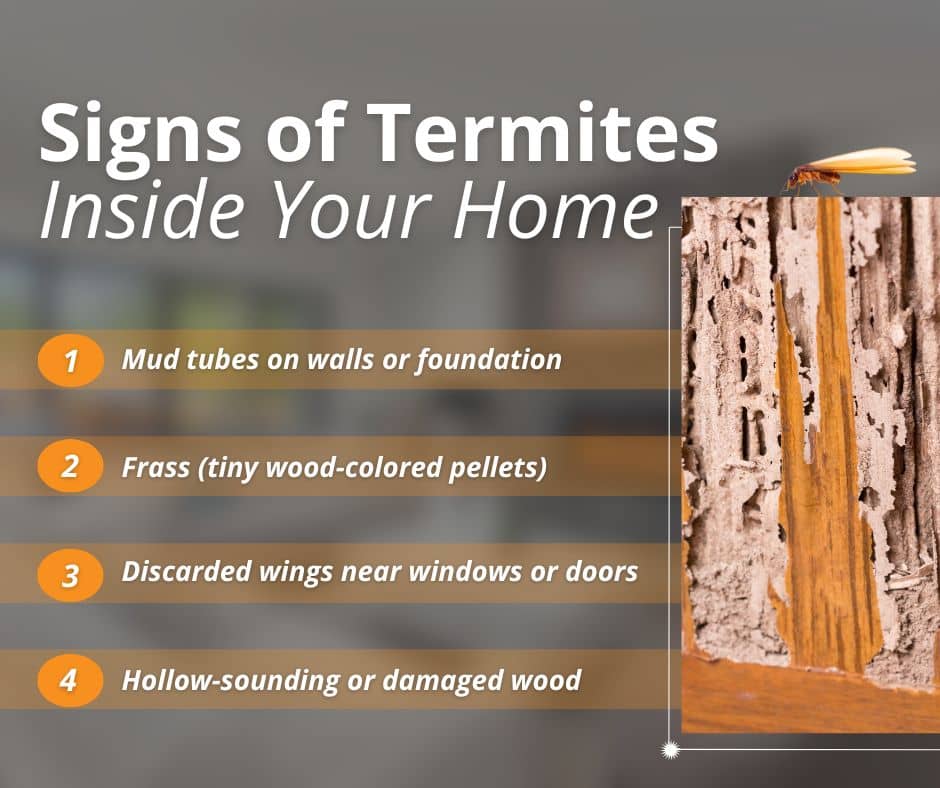
Mud Tubes on Walls or Foundation
Subterranean termites, the most common and destructive type in Florida, build pencil-sized mud tubes to travel between their underground colonies and food sources. These tubes protect them from predators and dry air.
Check your foundation walls, crawl spaces, and areas where concrete meets wood. Mud tubes may appear on interior or exterior walls, often in corners or along pipes where they’re less noticeable.
Discarded Wings Near Windows and Doors
Termite swarmers, the reproductive members of a colony, emerge to mate and start new colonies. After landing, they shed their wings. If you or your inspector find small piles of translucent wings near windowsills, door frames, or light fixtures, that indicates termites are nearby.
In Central Florida, swarm season typically peaks in spring, though our warm climate can trigger swarms almost any time of year.
Hollow-Sounding or Damaged Wood
Termites eat wood from the inside out, leaving a thin outer shell intact. Tap on wooden baseboards, door frames, and window sills. If they sound hollow or papery rather than solid, termites may have been feeding inside.
- Wood that crumbles easily when probed
- Blistering or peeling paint on wood surfaces
- Tiny holes in drywall or wood
- Sagging floors or ceilings
Frass (Termite Droppings)
Drywood termites, also common in Florida, push their droppings out of small holes near their nests. These droppings, called frass, look like tiny wood-colored pellets or sawdust piles.
Finding frass near wooden furniture, door frames, or window areas indicates drywood termite activity. Unlike subterranean termites that stay connected to soil, drywood termites live entirely within the wood they consume.
Stuck Doors and Windows
As termites consume wood around door and window frames, the structural changes can cause frames to warp. If doors or windows that previously operated smoothly now stick or won’t close properly, termites could be the culprit.
Of course, Florida’s humidity also causes wood to swell seasonally. But if sticking is combined with other warning signs, termite damage becomes more likely.
Subterranean vs. Drywood Termites in Florida
Central Florida homeowners need to watch for two main termite types. Understanding their differences helps you recognize signs specific to each.
| Characteristic | Subterranean Termites | Drywood Termites |
| Colony location | Underground, in soil | Inside wood, no soil contact needed |
| Entry point | Foundation, ground contact | Can occur anywhere, often in furniture or framing |
| Telltale sign | Mud tubes | Frass pellets |
| Damage pattern | Any exposed wood, often on the upper floors | Can occur anywhere, often furniture or framing |
| Colony size | Large (up to millions) | Smaller (thousands) |
| Moisture needs | High (requires soil contact) | Lower (extracts moisture from wood) |
Both types cause serious damage, but subterranean termites typically work faster due to larger colony sizes. At CFBI, we find that many Central Florida homes face pressure from both species simultaneously.
What to Do If You Spot Signs of Termites
Discovering potential termite evidence is alarming, but quick action limits damage. Here’s what to do.
- Don’t disturb the area. Your instinct might be to poke at mud tubes or damaged wood, but disturbing termites can cause them to relocate and continue feeding elsewhere in your home.
- Document what you found. Take photos of mud tubes, frass, damaged wood, or discarded wings. Note the location and when you discovered it. This information helps inspectors assess the situation.
- Schedule a professional inspection. A qualified WDO (wood-destroying organism) inspector can identify termite species, locate colony activity, and assess damage extent. This inspection goes beyond what’s visible to untrained eyes.
- Get multiple treatment quotes. If termites are confirmed, obtain estimates from licensed pest control companies. Treatment options vary based on termite type, infestation severity, and your home’s construction.
- Address moisture issues. Termites need moisture to survive. Fixing leaky pipes, improving drainage, and ensuring proper ventilation make your home less hospitable to future infestations.
How Do Professional Termite Inspections Work?
A WDO inspection is a thorough evaluation specifically designed to detect termites and other wood-destroying organisms like carpenter ants, wood-boring beetles, and wood-decay fungi.
What our inspectors examine:
- Foundation walls and slab edges
- Crawl spaces and accessible attic areas
- Wood framing, baseboards, and trim
- Door and window frames
- Areas where wood contacts soil
- Garage and carport structures
- Wooden fences and decks attached to the home
Inspectors use specialized tools, including moisture meters, probing devices, and sometimes thermal imaging, to detect hidden activity. We know where termites typically enter Central Florida homes and focus attention on high-risk areas.
After the inspection, you’ll receive a detailed report documenting any evidence of current or previous termite activity, visible damage, and conditions conducive to future infestations.
Preventing Future Termite Problems
Once you’ve addressed an active infestation or confirmed your home is clear, prevention becomes the priority.
- Reduce wood-to-soil contact. Keep mulch, firewood, and debris at least 12 inches away from your foundation. Ensure wooden siding, lattice, and door frames don’t directly contact the ground.
- Control moisture around your home. Fix leaky faucets, air conditioners, and irrigation systems promptly. Ensure gutters drain away from the foundation and that crawl spaces are properly ventilated.
- Seal entry points. Caulk cracks in your foundation and gaps around utility penetrations. While termites can breach most barriers eventually, eliminating easy entry points helps.
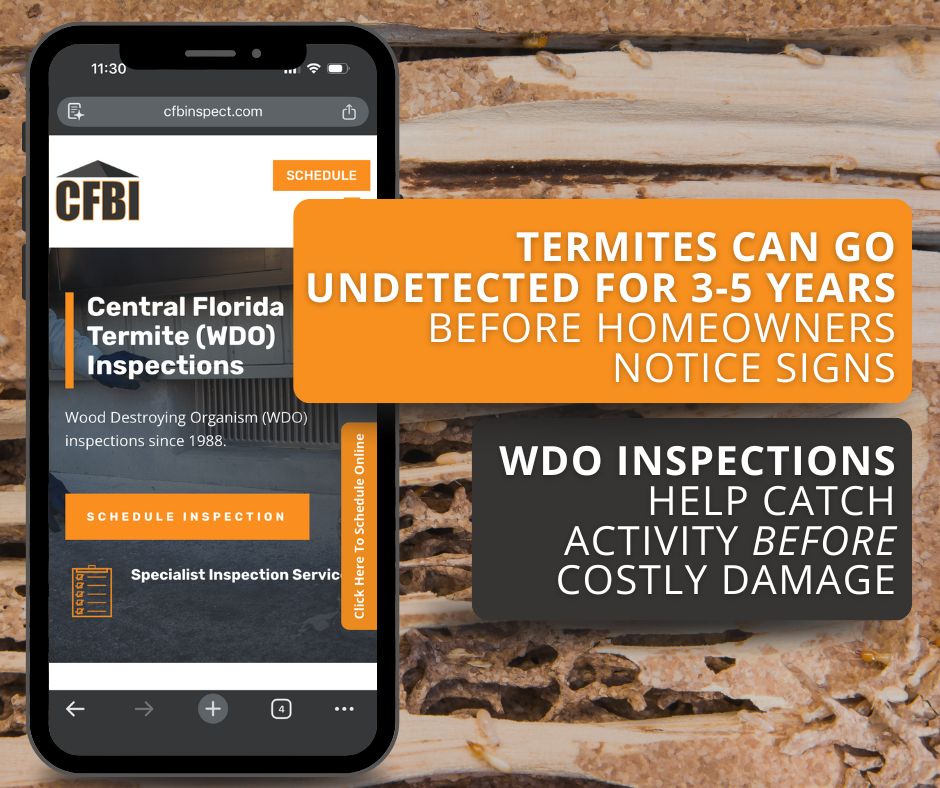
- Schedule regular inspections. Annual WDO inspections catch new activity before it becomes a major problem. In Central Florida’s high-risk environment, this preventive step is well worth the investment.
- Consider ongoing treatment plans. Many pest control companies offer monitoring and baiting systems that provide continuous protection. These can be especially valuable for homes with a previous termite history.
Other Related Questions for Florida Homes
What’s the difference between a WDO inspection and a full home inspection?
A WDO inspection focuses specifically on wood-destroying organisms like termites, carpenter ants, and wood-decay fungi. A comprehensive home inspection evaluates all major systems, including roofing, electrical, plumbing, HVAC, and structural components. Many buyers schedule both to get a complete picture of a property’s condition.
How does moisture affect a home’s structure beyond attracting termites?
Excess moisture leads to mold growth, wood rot, foundation issues, and poor indoor air quality. Florida’s humidity makes proper ventilation, drainage, and waterproofing essential. Addressing moisture problems protects against multiple threats, not just termites.
Should I get an inspection before buying a home in Florida?
Absolutely. A pre-purchase home inspection reveals issues that aren’t visible during a typical walkthrough, from roof damage and electrical problems to plumbing leaks and foundation concerns. Knowing what you’re buying helps you negotiate repairs or budget for future maintenance.
When to Call a Professional
Schedule a WDO inspection with CFBI if you notice:
- Mud tubes on your foundation or walls
- Piles of discarded wings indoors
- Frass pellets near wood surfaces
- Hollow-sounding wood or visible damage
- Doors and windows that suddenly stick
- Any signs during the spring swarm season
Even without visible signs, annual inspections make sense for Central Florida homeowners. Termites work invisibly, and catching activity early saves thousands in repair costs.
Conclusion
Termites are a fact of life in Central Florida, but serious damage doesn’t have to be. Knowing what signs to watch for puts you ahead of most homeowners who don’t discover infestations until significant harm is already done.
If you’ve spotted mud tubes, frass, damaged wood, or swarmer wings, don’t wait to take action. Early detection protects your home’s structure and your wallet.
CFBI provides thorough home inspections and WDO evaluations throughout Central Florida communities. Our inspectors are ready to deliver clear, detailed reports you can trust: schedule your visit today.