Wind mitigation matters for Florida homes because it does two things at once: it documents the features that help your house survive a hurricane, and it unlocks insurance discounts that Florida law requires insurers to offer.
A wind mitigation inspection records those features on a state form, and for most Central Florida homeowners it pays for itself in the first year through lower premiums.
If your homeowners insurance keeps climbing, this is one of the few inspections that can actually bring the bill back down.
What Is a Wind Mitigation Inspection?
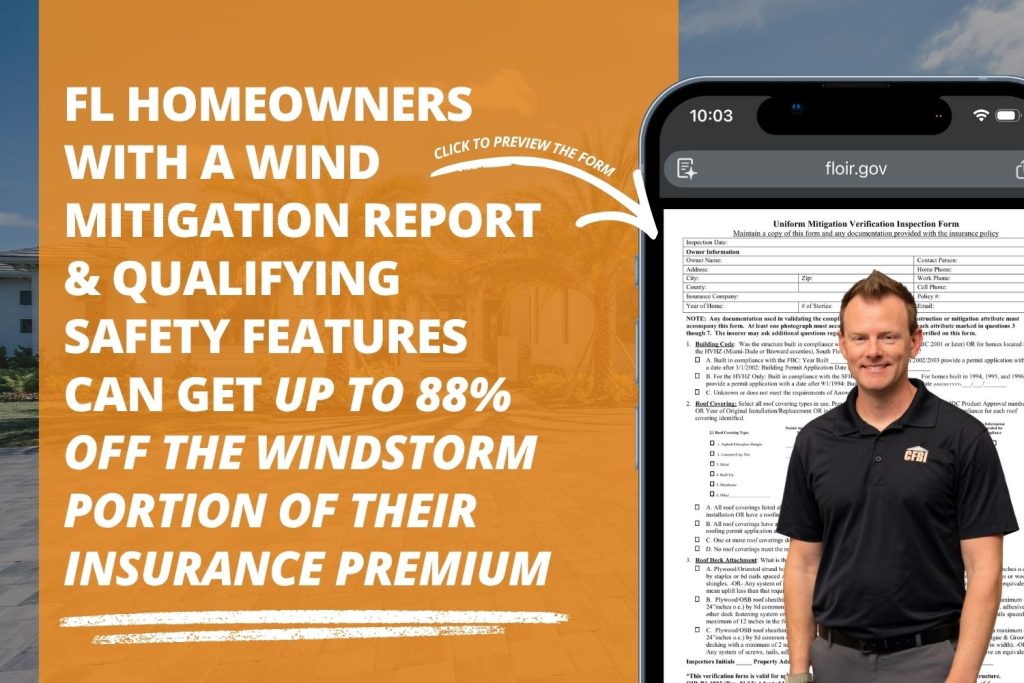
A wind mitigation inspection is a focused evaluation that documents the wind-resistant construction features of your home. The inspector records what they find on Florida’s Uniform Mitigation Verification Inspection Form, the OIR-B1-1802, which is the standard document insurers accept statewide. You hand that completed form to your insurance company, and they apply any credits your home qualifies for.
A few things set it apart from a regular inspection:
- It is not pass or fail. The form only records the features your home already has. A weaker result means no discount, never a penalty or a higher premium.
- It is not a code inspection or a repair list. The inspector is documenting, not grading.
- The report is good for up to five years, as long as you have not made structural changes to the roof or openings.
For a home in Orlando or anywhere across Central Florida, that form is the key that opens the door to mandated insurance savings.
Why Wind Mitigation Matters for Florida Homes
Here is where the importance comes in. Florida is one of the most hurricane-exposed states in the country, and it is also in the middle of a homeowners insurance crisis. Wind mitigation sits right at the center of both problems.
It lowers your insurance premium
Under Florida Statute 627.0629, insurers are required to offer discounts, credits, or deductible reductions to homeowners whose houses have wind-resistant features. This is not a favor your insurer chooses to do; it is state law.
Since October 2023, residential insurers also have to post their discount information on their websites. A wind mitigation inspection is how you prove your home qualifies, and the credits can stack across several features at once.
It reflects how well your home handles a storm
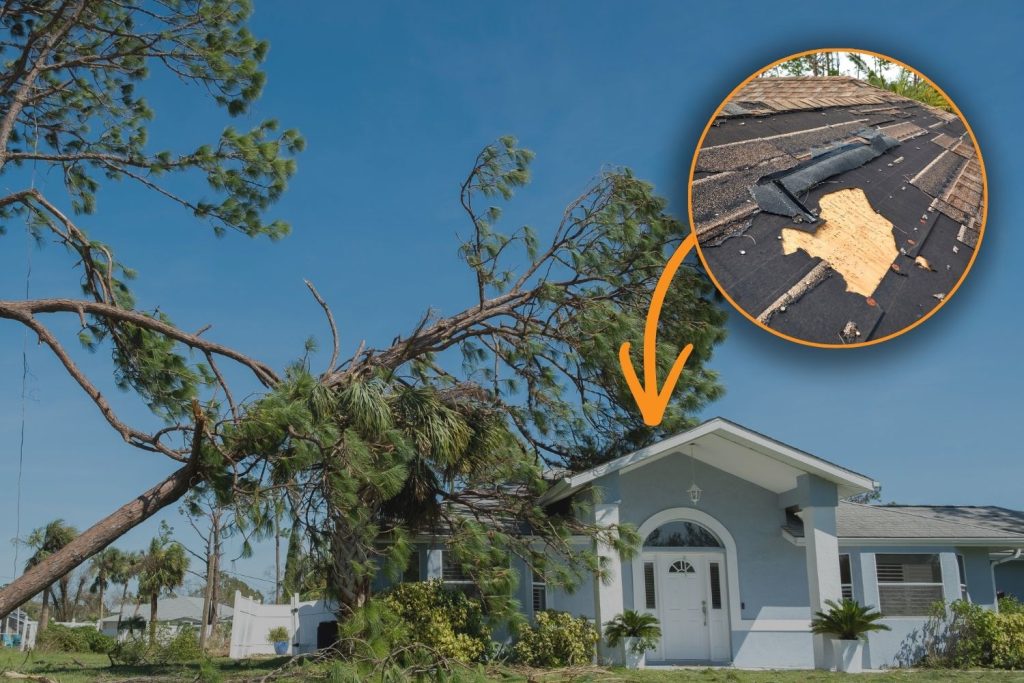
The same features that earn you a discount are the ones that keep your roof on and the water out during a hurricane. A hip roof, a properly strapped roof-to-wall connection, and impact-rated windows are not just line items on a form; they are the difference between minor damage and a destroyed home when a storm comes through. The inspection gives you an honest picture of where your home stands.
It tells you what to upgrade next
If your home earns few credits today, the report shows you exactly which features would earn more. That turns a vague worry about storm safety into a clear, prioritized list, and some of those upgrades may qualify for separate grant programs like My Safe Florida Home.
What Do Inspectors Check in a Wind Mitigation Inspection?
The inspection focuses on seven construction features that determine how your home performs in high wind. Each one can carry its own insurance credit.
- Roof covering. Whether the shingles or tiles meet current Florida building code for wind resistance.
- Roof deck attachment. How the plywood or sheathing is fastened to the trusses, since nail type and spacing matter under uplift.
- Roof-to-wall connection. Whether the roof is tied to the walls with toe nails, clips, single wraps, or double wraps. This is often the single biggest credit.
- Roof geometry. The shape of the roof. Hip roofs, which slope on all four sides, resist wind far better than gable roofs and earn the strongest credit.
- Secondary water resistance. Whether there is a sealed barrier under the roof covering that keeps water out if the shingles blow off.
- Opening protection. Whether windows, doors, and garage doors are protected by impact-rated glass or shutters.
- Home and roof age. Newer construction built to stricter codes generally performs better.
The inspector documents each feature with photos and records it on the form. Undocumented features earn nothing, which is why the inspection has to be done by a qualified inspector, not self-reported.
How Does the Wind Mitigation Inspection Process Work?
The process is quick and low-effort on your end. Here is what it looks like from start to savings:
- Schedule the inspection. Book with a qualified Central Florida inspector. You do not need to prepare the house, though clear access to the attic and electrical panel helps.
- The inspection. Most single-family homes take about 30 to 45 minutes. The inspector examines the roof, attic, and openings, and photographs each qualifying feature.
- Receive the form. You get the completed OIR-B1-1802 with supporting photos, usually within a day or two.
- Submit it to your insurer. Send the form to your insurance agent or company, and they apply any credits your home qualifies for to your policy.
That is the whole cycle. One short visit, one form, and the credits stay in place for up to five years.
How Much Can You Save, and What Does It Cost?
A wind mitigation inspection in Central Florida typically runs a modest flat fee, and the savings usually dwarf it.
- Cost: generally around $75 to $150 for a standard single-family home.
- Savings: commonly several hundred dollars a year, and often $1,000 or more, depending on your insurer, your home, and how many features qualify.
The exact number depends on your specific policy and home, so treat any figure as an estimate rather than a promise. Still, for most homeowners, the math is simple: a one-time fee, valid for up to five years, against annual savings that often exceed it in the first billing cycle. Ask your insurance agent what each credit is worth on your policy before you assume the inspection will not help.
Wind Mitigation vs. 4-Point Inspection: What Is the Difference?
These two get confused constantly, and they are often ordered together, but they do opposite jobs.
- A wind mitigation inspection documents wind-resistant features to earn you insurance discounts. It works in your favor and cannot raise your rate.
- A 4-point inspection assesses the condition and age of your roof, electrical, plumbing, and HVAC systems, usually on older homes, so an insurer can decide whether to write or renew a policy at all.
One is about savings, the other is about insurability. If you are buying an older Central Florida home, you may need both, and your inspector can handle them in a single visit.
Related Questions to Explore
Does wind mitigation actually lower my insurance?
Yes, in most cases. Florida law requires insurers to offer credits for qualifying wind-resistant features, and the wind mitigation form is how you document them. The size of the discount depends on your home and insurer, but for many homeowners the savings are significant.
How long is a wind mitigation inspection good for?
The form is valid for up to five years, as long as you do not make structural changes to the roof or openings. You do not need a new inspection every year.
Can a wind mitigation inspection raise my premium?
No. The inspection can only earn credits or earn nothing. A home with few qualifying features simply gets no discount; it never triggers a surcharge.
Do I need a wind mitigation inspection on a new home?
Often yes, and it usually pays off. Newer homes built to current code tend to have strong wind-resistant features, which means more credits to claim. Many builders provide a form at closing, but an independent inspection confirms it.
What if my home does not qualify for many credits?
That result is still useful. The form shows which features are missing, so you know exactly what to upgrade to earn credits later, whether that is a roof replacement, roof-to-wall straps, or impact-rated openings. Some of those improvements may also qualify for state grant programs, and you can have the home re-inspected once the work is done.
When to Call a Professional
A wind mitigation inspection is not something you can do yourself, because the credits only count when a qualified inspector documents the features on the state form.
If your homeowners premium has gone up, if you are buying or refinancing a home in Central Florida, or if you have replaced your roof or added shutters and want the credit for it, that is the moment to schedule one.
It is also worth doing simply to understand how your home would hold up in a hurricane, before the next one is on the forecast.
Conclusion
Wind mitigation matters because it connects the two things every Florida homeowner cares about right now: staying safe in a storm and getting insurance costs under control. A single inspection documents the features your home already has, earns the discounts state law entitles you to, and shows you where you stand for the next hurricane season.
If you want to lower your premium or get a straight answer on how your home would handle high winds, schedule a wind mitigation inspection with CFBI’s certified team.