Not every home issue leaves a visible mark. Moisture can spread behind walls, insulation can be missing in key areas, and electrical components can overheat long before damage shows on the surface. A thermal imaging camera helps inspectors detect these hidden conditions by identifying temperature differences that would otherwise go unnoticed.
In Central Florida, where heat, humidity, and heavy rain are part of everyday life, thermal imaging can add meaningful insight to a home inspection.
When used correctly, it helps inspectors spot patterns that may point to moisture intrusion, insulation gaps, air leakage, or electrical concerns.
This article explains what a thermal imaging camera can reveal during a home inspection, how inspectors interpret what they see, and what buyers, sellers, and homeowners should realistically expect from this technology.
What Thermal Imaging Actually Shows During an Inspection
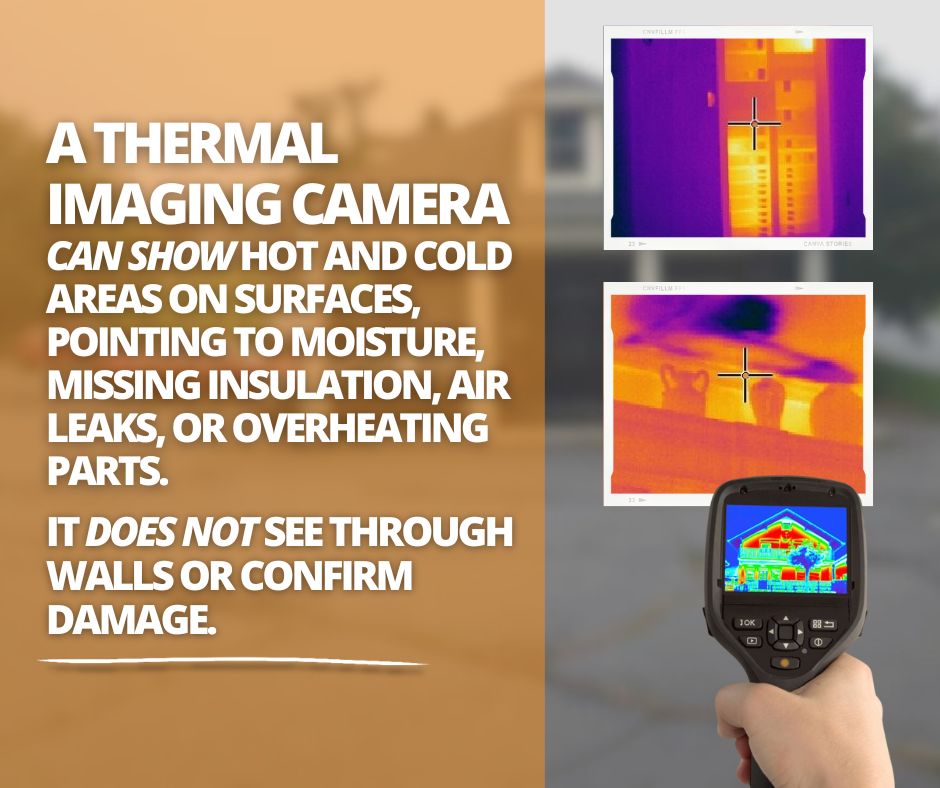
A thermal imaging camera does not see through walls or materials. Instead, it detects differences in surface temperature and displays them visually. These temperature variations can indicate that something behind the surface is behaving differently than expected.
During an inspection, the camera highlights warmer and cooler areas across walls, ceilings, floors, and system components. These patterns help inspectors identify areas that deserve closer attention.
Thermal imaging is best understood as a tool for pattern recognition, not diagnosis. It helps answer the question, “Does this area behave differently than it should?” From there, inspectors use experience, context, and visual confirmation to determine whether the pattern is significant.
Why Thermal Imaging Is Especially Valuable in Central Florida Homes
Central Florida homes face conditions that make hidden issues more likely to develop.
High humidity increases the risk of moisture intrusion and condensation inside walls and ceilings. Frequent rain events can allow water to enter through small openings around roofs, windows, or exterior walls without leaving immediate stains.
Warm temperatures can also mask moisture problems until damage progresses.
Thermal imaging helps inspectors identify temperature patterns that may suggest moisture presence, insulation gaps, or air leakage before visible damage appears. In a climate where moisture-related problems are common, this additional layer of insight can be especially valuable.
Moisture Patterns Thermal Imaging Can Help Identify
One of the most common uses of thermal imaging during inspections is identifying areas that may be affected by moisture.
Moisture changes the temperature of building materials. Wet areas often appear cooler than surrounding surfaces due to evaporation. These cooler patterns can help inspectors locate areas where water intrusion may be occurring.
Thermal imaging may highlight moisture-related concerns near:
- Windows and doors
- Roof penetrations and ceiling areas
- Plumbing fixtures and supply lines
- Exterior walls exposed to wind-driven rain
In Florida, early moisture detection matters. Prolonged moisture exposure can contribute to mold growth, material deterioration, and indoor air quality concerns.
While thermal imaging does not confirm the source of moisture, it helps inspectors identify where further evaluation may be needed.
Insulation and Energy Performance Clues
Thermal imaging can also reveal how well a home’s insulation is performing.
Missing, compressed, or uneven insulation often creates temperature inconsistencies that show up clearly on a thermal image. During an inspection, these patterns may indicate areas where heat is entering or escaping more easily than expected.
Common insulation-related findings include uneven attic coverage, wall sections with reduced insulation, or areas where insulation has shifted over time. In Central Florida, poor insulation performance can increase cooling costs and make it harder to control indoor humidity.
Thermal imaging does not measure insulation levels directly, but it helps identify areas where insulation may not be doing its job effectively.
Air Leakage and Comfort Issues
Air leakage is another issue thermal imaging can help reveal.
When conditioned air escapes or outside air enters the home, temperature differences often appear around windows, doors, attic access points, and wall penetrations. These patterns can help explain comfort complaints, uneven room temperatures, or higher energy bills.
In hot, humid climates like Central Florida, air leakage can also affect moisture control. Warm, humid air entering the home places additional strain on cooling systems and can contribute to condensation problems.
Thermal imaging helps inspectors visualize these patterns so homeowners can better understand where improvements may be beneficial.
Electrical Concerns That May Show Up on Thermal Imaging
Thermal imaging can assist inspectors in identifying potential electrical safety concerns.
Overheating electrical components often appear as localized hot spots on a thermal image. These temperature differences may suggest loose connections, overloaded circuits, or failing components.
Inspectors commonly use thermal imaging to scan areas such as electrical panels, breakers, and major connections. When abnormal heat patterns are observed, inspectors document the finding and recommend further evaluation by a licensed electrician.
Thermal imaging does not diagnose electrical problems, but it can help flag conditions that should not be ignored.
What Thermal Imaging Can and Cannot Tell You
Thermal imaging is a powerful inspection tool, but it has clear limitations.
It can help identify:
- Temperature differences that suggest moisture presence
- Insulation gaps or inconsistencies
- Air leakage patterns
- Overheating electrical components
Thermal imaging cannot:
- See through walls or materials
- Confirm the exact source of moisture
- Diagnose system failures
- Replace invasive testing or repairs
Understanding these limits helps set realistic expectations and prevents overreliance on the technology.
How Inspectors Interpret Thermal Images
Thermal images are not evaluated in isolation. Inspectors interpret them in context.
Factors such as weather conditions, recent system use, building materials, and visible conditions all influence how thermal patterns are read. A cooler area on a wall, for example, may indicate moisture, missing insulation, or air movement. The inspector’s role is to evaluate which explanation is most likely based on the full inspection.
When a thermal anomaly is identified, inspectors document the finding and explain what it may indicate. They also explain what additional steps may be appropriate to confirm the issue.
What Thermal Imaging Findings Mean for Buyers and Sellers
For buyers, thermal imaging can provide additional insight into potential hidden issues before purchasing a home. Findings may support requests for further evaluation, repairs, or credits during negotiations.
For sellers, thermal imaging can help identify concerns before listing. Addressing moisture intrusion, insulation gaps, or electrical issues ahead of time can reduce surprises during the inspection process and help transactions move more smoothly.
Related Questions Homeowners Ask
Does thermal imaging always find hidden water damage?
No. Thermal imaging helps identify temperature patterns that may suggest moisture, but it cannot confirm the source or extent of water damage on its own. If a suspicious pattern is found, further evaluation is usually needed to confirm what is causing it.
Can a thermal imaging camera see mold inside walls?
Thermal imaging cannot see mold directly. It may highlight temperature differences caused by moisture conditions that can support mold growth, which helps inspectors identify areas that may need closer attention.
Does every home inspection include thermal imaging?
Not always. Thermal imaging is an added inspection tool and may be offered as part of enhanced inspection services. Homeowners should confirm whether thermal imaging is included or available as an option.
When to Call a Professional
Thermal imaging helps identify unusual temperature patterns, but it does not provide final answers on its own.
A home inspection with thermal imaging added on is the right step when you want an overall evaluation of the home and professional insight into what thermal patterns may indicate. Inspectors use thermal imaging to document areas that behave differently than expected and explain whether those findings suggest moisture, insulation gaps, air leakage, or electrical concerns that may need closer attention.
If inspection findings or ongoing conditions raise concerns about mold, a mold professional should be consulted next. Mold specialists can perform targeted testing to determine whether mold is present and assess the extent of any contamination. This type of testing goes beyond the scope of a standard home inspection.
Central Florida Building Inspectors uses thermal imaging to help guide informed decisions, and Elite Mold Services provides specialized mold evaluation when confirmation is needed.
Conclusion
A thermal imaging camera can reveal important clues about a home that are not visible during a standard walk-through. In Central Florida, where moisture, heat, and humidity create unique challenges, this technology can add valuable insight during a home inspection.
When used responsibly, thermal imaging helps inspectors identify areas that deserve closer attention while setting clear expectations about what the technology can and cannot do.
Combined with a professional home inspection, it provides homeowners with a clearer understanding of a home’s condition and potential risks.