A double-tapped breaker is one of the most common electrical issues found during home inspections in Central Florida. Many homeowners do not know it is there until an inspector removes the panel cover and points it out.
It is a simple wiring mistake, but it can lead to bigger electrical problems if it is not corrected. This guide explains what a double-tapped breaker is, why it appears so often in Florida homes, how inspectors identify it, and what usually comes next once it is included in a report.
What a Double-Tapped Breaker Means
A double-tapped breaker is a breaker with two electrical wires secured under a terminal that was designed to hold only one wire.
Breakers are built to grip a single conductor at a time. The metal plate inside the terminal is shaped to clamp down on one wire so the connection stays steady when the system heats and cools.
When two wires are placed under the same screw, the terminal cannot grip both of them correctly. Even if the screw feels tight, the wires do not sit evenly, and the breaker is not operating the way the manufacturer intended.
The National Electrical Code requires electrical equipment to be used according to its listing, and most breakers are listed for one conductor only.
Double-taps often form when:
- Someone adds a new device or outlet and uses a nearby breaker instead of installing a new circuit.
- The electrical panel does not have enough open breaker spaces.
- Older circuits were altered during repairs or upgrades.
- A previous owner tried to make a quick connection without knowing the breaker could only take one wire.
A double-tapped breaker looks simple inside the panel, but it is a clear indicator that the wiring has been modified in a way that the equipment was not designed for.
Why Double-Tapped Breakers Are Common in Florida
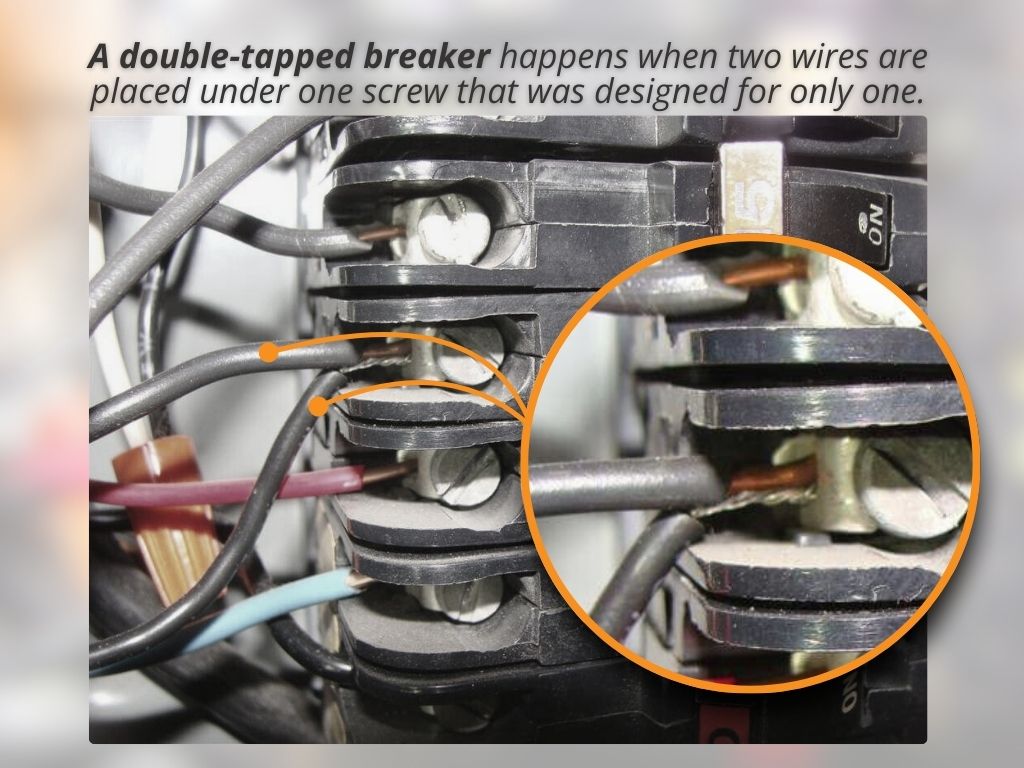
Double-tapped breakers appear nationwide, but several characteristics of Florida homes make them especially common during CFBI inspections.
Many Homes Have Aging Panels
Homes built in the 1980s, 1990s, and early 2000s still rely on their original panels. These panels were not built for modern electrical loads.
As families have added more appliances, lighting, and outdoor features, many circuits have been extended or changed. When panels run out of breaker slots, a wire may be added to an existing breaker instead of a new one being installed.
High Electrical Demand Year-Round
Florida homes use air conditioning almost every month. Pool pumps, irrigation systems, water heaters, and chargers for outdoor equipment also create steady demand.
As electrical loads grow over time, circuits sometimes get modified in ways that create double taps.
Frequent Home Additions and Upgrades
Outdoor kitchens, new lighting, enclosed patios, and whole-home renovations are common in this region. When electrical changes are made without expanding the panel, double taps can appear.
DIY Work or Unpermitted Modifications
Previous owners may have added outlets, lights, or external features without realizing that a breaker cannot safely hold two wires. These shortcuts are often uncovered during real estate inspections.
Limited Space in Older Panel Designs
Older panels provide fewer slots and fewer expansion options. When homeowners or contractors face a full panel, the temptation to combine wires under one breaker increases.
These patterns explain why double-tapping is one of the most frequently documented electrical findings throughout the Orlando area.
How Inspectors Identify a Double-Tapped Breaker
Double taps are identified during the electrical panel inspection, which is part of a standard home inspection, commercial inspection, or four-point inspection.
Inspectors look for:
- Two wires under one terminal screw: This is the clearest sign. Most breakers are listed for one conductor only.
- Breaker labeling: Some breakers are approved for two wires, but this is uncommon. These breakers are labeled clearly. Inspectors check the labeling to determine whether the setup is allowed.
- Wire size and placement: If the wires are different sizes or appear misaligned under the screw, it confirms the connection is not installed correctly.
- Signs of strain on the terminal: Visible shifting, bent copper, or a wire slipping to one side indicate the terminal is not holding both wires evenly.
- Overall panel condition: Double taps often appear in panels that are aging, full, or altered over time. Inspectors note these patterns because they help explain why the issue formed.
An inspector’s goal is not only to identify the double tap but to help the homeowner understand what it means and what steps usually follow.
Why a Double-Tapped Breaker Is a Safety Risk
A double-tapped breaker is a safety risk because the connection is unstable, which can lead to overheating, arcing, or electrical failure.
Here are the specific risks, supported by widely recognized electrical safety organizations:
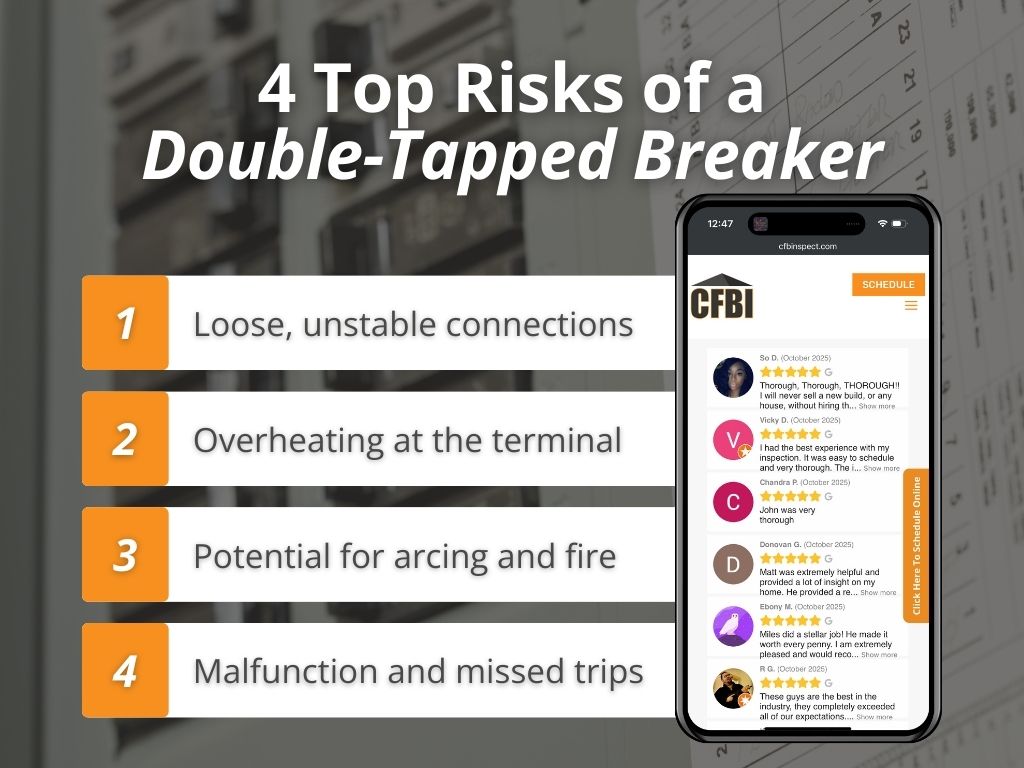
Loose Connections
With two wires under one screw, the pressure is uneven. A loose wire is one of the most common causes of resistance and heat buildup in a panel, according to the Electrical Safety Foundation International.
Overheating at the Breaker Terminal
As resistance increases, the terminal can heat up. Heat damages wire insulation and may damage surrounding components.
Arcing Risk
The National Fire Protection Association explains that arcing can reach temperatures high enough to ignite surrounding materials. A loose double tap creates the kind of unstable contact where arcing can occur.
Breaker Malfunction
If the connection is compromised, the breaker may not sense a fault correctly. A breaker that does not trip on time creates a higher risk of electrical fire or equipment damage.
Double-tapped breakers are not always in failure mode when discovered, but they have the right conditions to become a problem if not corrected.
What Usually Happens After a Double-Tap Is Found?
When an inspector finds a double-tapped breaker, the next step is to have a licensed electrician correct the connection. The electrician chooses the proper method based on the breaker type, panel age, and available space.
Typical next steps include:
- Separating the two wires onto separate breakers
- Installing a breaker that is listed for two wires, if the panel allows
- Adding a sub-panel if the main panel is full
- Evaluating whether other panel upgrades are needed
The inspector’s role is to identify the condition and explain why it matters. The electrician determines the safest correction.
Other Questions Homeowners Often Have
These questions help support internal linking across CFBI’s electrical and structural content.
Why are electrical panels inspected during a four-point inspection?
Insurance companies rely on four-point inspections to confirm that the electrical system is safe and working as intended.
Can outdated wiring cause similar problems?
Yes. Older wiring types can loosen or degrade, creating risks that inspectors often explain in detail during the electrical portion of the inspection.
Does panel age affect home insurance?
In many cases, yes. Some insurers have age limits for panels or require documentation when problems are present.
When to Call an Inspector vs an Electrician
Call an inspector when:
- You are buying or selling a home
- You need a four-point inspection for insurance
- You want a full evaluation of the panel, wiring, and electrical safety
- You need documentation for repairs or home maintenance
Inspectors identify the issue, explain the safety concerns, and help you understand what should happen next.
Call a licensed electrician when:
- A double-tapped breaker has been confirmed
- You see signs of heat, corrosion, or repeated breaker tripping
- The panel is full or appears outdated
- New electrical equipment needs to be added
- You want the defect corrected safely
Electricians perform the actual repair and confirm that the system is updated correctly.
Conclusion
A double-tapped breaker is a simple wiring error with real safety impact. It appears when two wires share a breaker terminal that was designed for one, and it is one of the most common issues inspectors find in Central Florida homes.
Understanding what a double-tapped breaker is, why it forms, and what steps follow helps homeowners stay informed and make safe decisions about their electrical system.
Central Florida Building Inspectors identify these conditions clearly so homeowners know what is happening inside the panel and what next steps to expect from an electrician.