Solar panels are showing up on rooftops all across Central Florida, and it makes sense. Long sunny summers, rising utility costs, and strong state incentives have pushed solar adoption well past the early-adopter crowd. But the solar panel is a significant investment, and like any major home system, they need inspection, not just admiration from the driveway.
Whether you are buying a home with an existing solar array, selling a property with panels installed, or simply want to know the condition of your own system, a solar panel inspection gives you the factual picture.
Here is what that process actually involves and why it matters in Florida.
Why Solar Panel Inspections Matter in Florida
Florida’s climate is ideal for solar energy production, but hard on the equipment itself. Intense UV exposure, high humidity, frequent thunderstorms, and hurricane-force winds all place ongoing stress on solar arrays and the systems that support them.
A solar panel inspection evaluates not just whether the panels produce power, but whether the entire system is structurally sound, safely wired, and performing at the level it should. In a state where rooftop solar appears in real estate transactions regularly, skipping that evaluation means accepting unknowns that tend to be expensive to discover after closing.
Buyers may inherit a system nearing the end of its productive life, improperly installed roof penetrations, or wiring that falls short of current code. Sellers benefit from a documented inspection that adds credibility to the system’s claimed value. For current homeowners, it serves as a maintenance checkpoint that protects a significant investment.
What Does a Solar Panel Inspection Cover?
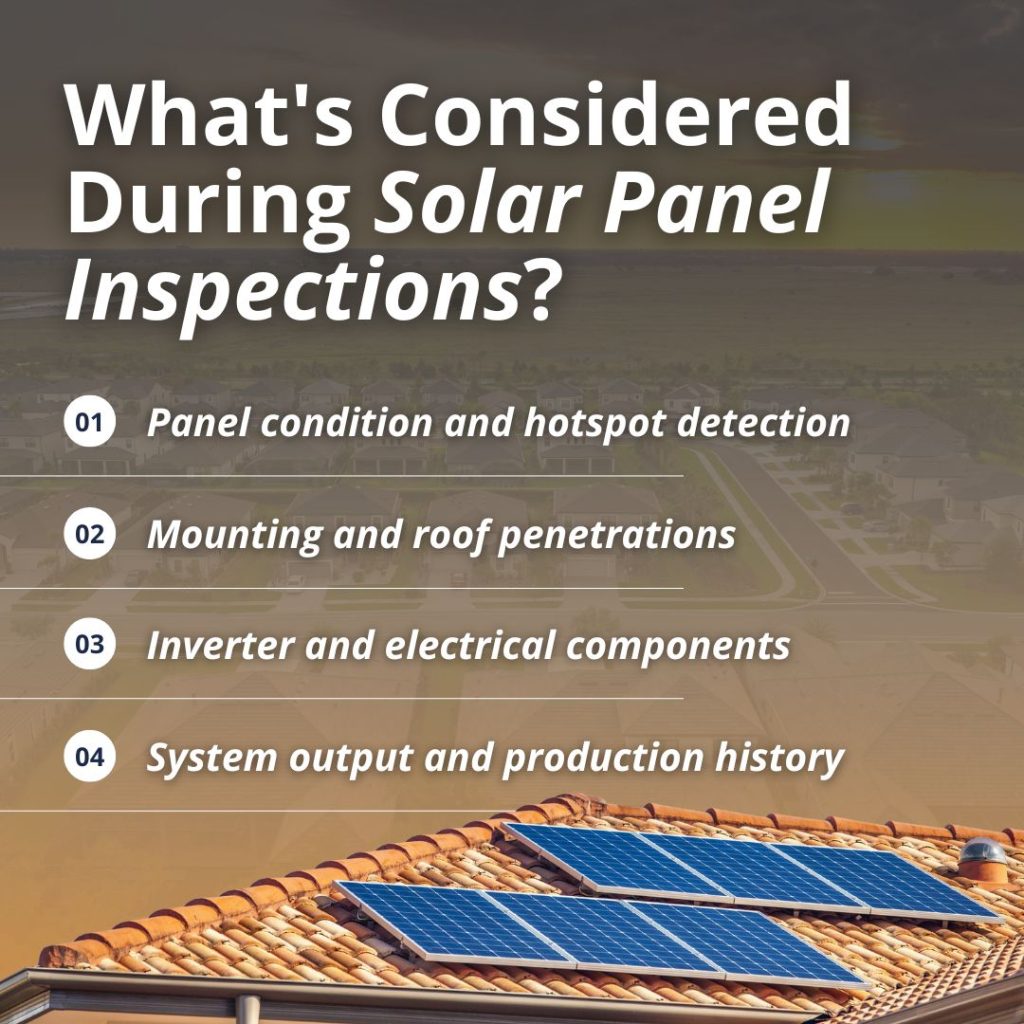
A thorough solar panel inspection goes well beyond a visual glance at the panels. Here is what a qualified inspector evaluates…
Panel Condition and Performance
Inspectors examine each panel for physical damage, including cracks, delamination, discoloration, and soiling that affects output. Hotspots are a common finding in Florida arrays.
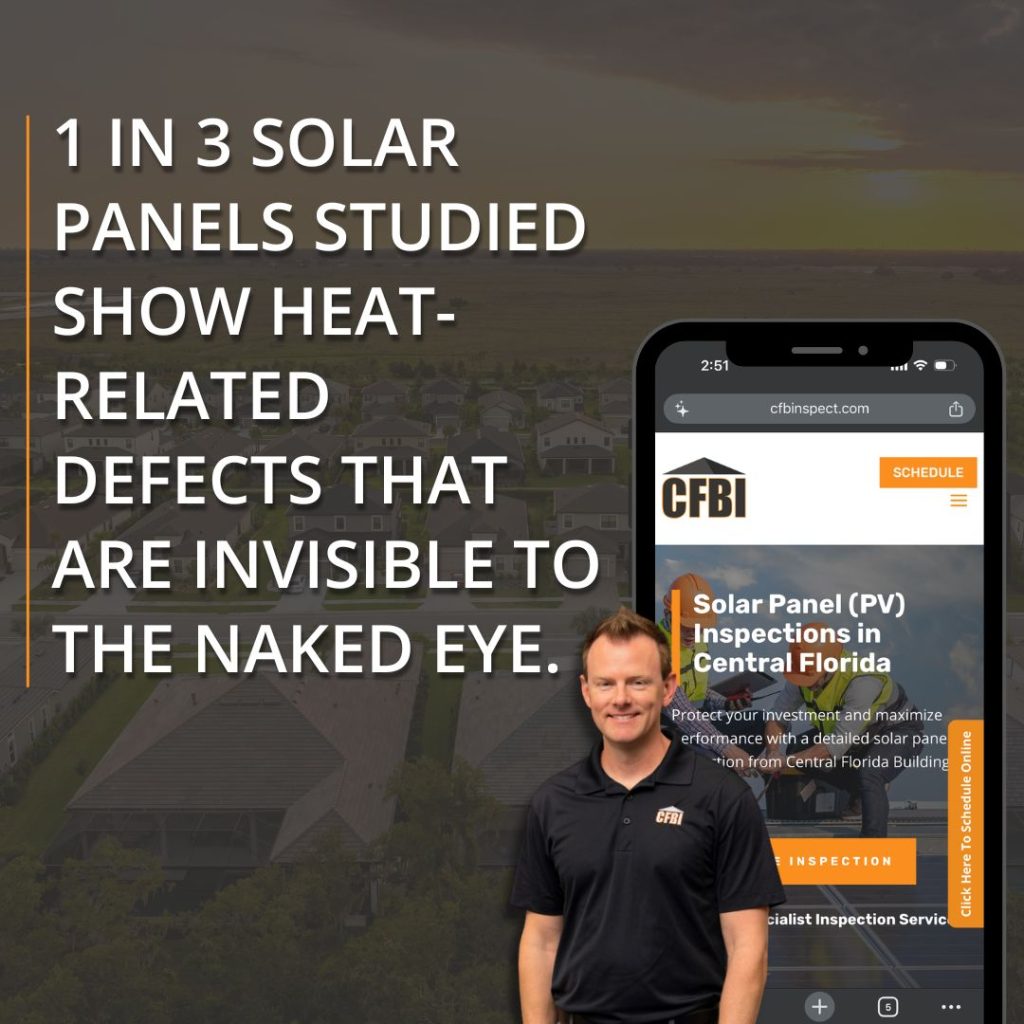
These are localized areas of heat caused by cell damage or shading, and they significantly reduce panel efficiency over time. Thermal imaging is a valuable tool here, revealing temperature anomalies across the array that are invisible to the naked eye.
Mounting and Structural Integrity
How panels attach to the roof matters as much as the panels themselves, particularly in a state where hurricane preparedness is a way of life. Inspectors check mounting hardware for corrosion, loose connections, and proper spacing.
Roof penetrations get evaluated for adequate sealing and signs of water intrusion, which is a critical concern in Florida, where any compromise in the roof assembly can lead to significant moisture damage.
Inverter and Electrical Components
The inverter converts DC power generated by the panels into AC power usable in the home. Inspectors evaluate the inverter’s condition, age, and error codes, along with disconnect switches, conduit runs, and wiring connections throughout the system.
Electrical deficiencies in solar installations rank among the more serious findings because they affect both system performance and safety.
Roof Condition Below the Array
Panels can obscure roof deterioration that would otherwise be visible during a standard inspection. The inspector examines accessible roof surfaces around and beneath the array for signs of wear, damage, or moisture intrusion that may have developed unseen.
This is especially relevant in older Florida homes where the roof and the solar installation may be at very different points in their lifespans.
System Output and Monitoring Data
Most modern solar systems track how much power they produce over time. When that data is available, the inspector reviews it to see whether the system is actually generating what it should be, based on its size and Florida’s sun exposure.
If the numbers are lower than expected, that gap is worth investigating. It could mean the panels are aging faster than normal, something nearby is casting shade on the array, or a component is not working the way it should. Any of those findings is worth resolving before a sale closes.
Solar Panels and Florida Real Estate Transactions
Solar systems add complexity to real estate transactions that a standard home inspection is not designed to address in depth. A few Florida-specific considerations are worth understanding before buying or selling.
- Owned vs. leased systems: Many Florida homeowners installed solar under a lease or power purchase agreement rather than owning the system outright. In a sale, a leased system transfers to the buyer along with the contract obligations. Before closing, buyers need to understand the remaining term, monthly payments, and any transfer fees. An inspection clarifies physical condition regardless of ownership structure.
- Insurance implications: Florida insurers have become increasingly attentive to rooftop solar in recent years. Installation method, panel condition, and roof integrity beneath the array can all affect insurability and premium rates. A documented inspection gives buyers and their agents clear information before those conversations begin.
- 4-point inspections: Many Florida insurance companies require a 4-point inspection for homes above a certain age before issuing coverage. The 4-point covers roof, electrical, plumbing, and HVAC systems. A solar panel inspection is separate and more detailed, but the two are often coordinated when a home has panels going through the insurance process simultaneously.
| Situation | Why a Solar Inspection Matters |
| Buying a home with solar | Confirms system condition and identifies defects before closing |
| Selling a home with solar | Documents system value and reduces buyer uncertainty |
| Refinancing or insuring | Provides third-party condition assessment for lender or insurer |
| Routine owner maintenance | Identifies performance issues and extends system lifespan |
How Long Do Solar Panels Last in Florida?
Most solar panels carry a manufacturer’s warranty of 25 years and are rated to produce at least 80 percent of their original output by the end of that period.
Real-world performance in Florida depends on installation quality, maintenance history, and the environmental stress the system has experienced.
Inverter Lifespan
Inverters typically have shorter lifespans than the panels themselves. String inverters often last 10 to 15 years, while microinverters and power optimizers tend to run somewhat longer.
A mid-system inverter replacement is a normal maintenance cost, but it is worth knowing about before buying a home with an older installation.
Degradation rates in Florida run slightly higher than in milder climates due to heat and UV intensity. A system that is 10 or more years old and has never been professionally evaluated is worth inspecting before assuming strong performance continues for another decade.
Related Questions
Does a standard home inspection evaluate solar panels?
A standard home inspection covers visible and accessible components of the home’s major systems. Inspectors note solar panels in the report, but the evaluation is not in-depth. A dedicated solar inspection separately assesses panel condition, mounting, electrical components, and system output in full detail.
What is a 4-point inspection, and does it cover solar?
A 4-point inspection evaluates four specific systems: roof, electrical, plumbing, and HVAC. Florida insurance companies commonly require it for older homes before issuing coverage. Solar panels fall outside the standard 4-point scope, though electrical components tied to the solar system may be noted where they affect the home’s overall electrical evaluation.
What does a wind mitigation inspection cover?
A wind mitigation inspection evaluates how well a home resists wind damage, including roof shape, roof covering, roof deck attachment, and opening protection. Insurers use it to determine premium discounts. For homes with solar, the mounting method and roof penetration integrity can factor into how the roof assembly is evaluated.
What is thermal imaging, and how does it apply to solar inspections?
Thermal imaging uses an infrared camera to detect temperature differences across surfaces. During a solar panel inspection, it identifies hotspots on the array that point to damaged cells or electrical issues. During a general home inspection, the same technology reveals moisture intrusion, insulation gaps, and electrical anomalies not visible to the naked eye.
Should buyers add a solar inspection to a pre-purchase home inspection?
Yes. Solar systems affect the roof, electrical system, and potentially the insurance and financing terms of a transaction. Scheduling a dedicated solar inspection alongside the general home inspection gives buyers a complete picture of the property before they commit to closing.
When to Call a Professional
Schedule a solar panel inspection from CFBI when:
- You are buying a home with an existing solar installation and want to know its true condition before closing
- You are selling a home with solar and want documented third-party confirmation of system quality
- Your panels are more than five years old and have never received a professional evaluation
- You have noticed a drop in energy production or received alerts from your monitoring system
- You are refinancing or updating homeowner’s insurance and need a current condition assessment
CFBI provides solar panel inspections throughout Central Florida, including Orlando and the Tampa and Gulf Coast region. Our inspectors evaluate solar systems as part of a comprehensive property review, giving buyers, sellers, and homeowners the information they need to move forward with confidence.
Conclusion
A solar installation is one of the most significant additions a homeowner can make to a Florida property. It affects energy costs, roof integrity, insurance terms, and resale value all at once. A thorough inspection gives everyone involved a clear, documented picture of what the system is doing and what condition it is actually in.
For buyers, sellers, and homeowners throughout Central Florida, CFBI’s solar panel inspection service delivers the detailed evaluation that a major investment deserves. Schedule your inspection today.