A commercial building inspection covers a lot more ground than a residential one: hence the need for a checklist, even as the investor. The buildings are larger, the systems are more complex, and the stakes for buyers, investors, and tenants are significantly higher.
Knowing what gets evaluated and how to prepare for the process can make a real difference in how smoothly things go and how useful the final report turns out to be.
This guide covers what a commercial inspection looks at, what clients can do to prepare, and what to expect from the report.
What Does a Commercial Building Inspection Cover?
A commercial inspection is a comprehensive evaluation of the property’s physical condition.
At CFBI, that means examining every major system and structural component, inside and out, using certified inspectors with commercial-specific training. Let’s go over what a thorough inspection addresses.
Structural and Foundation
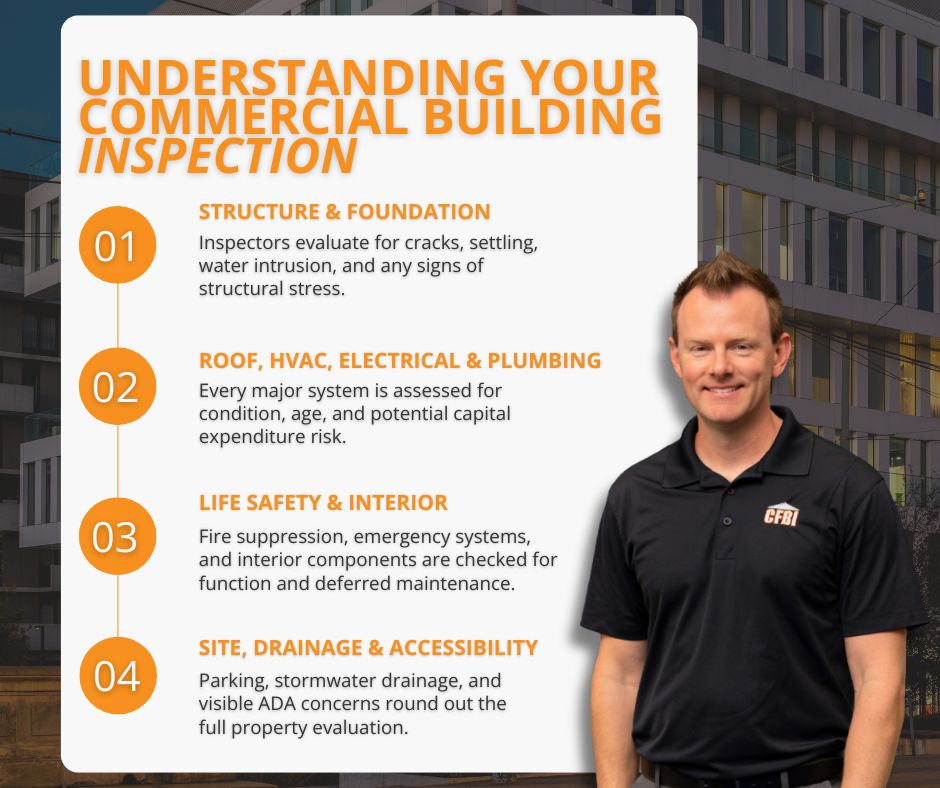
The structural system is evaluated first. Inspectors look for foundation cracks, uneven settling, signs of water intrusion at the base, bowing or bulging walls, and any visible indicators of structural stress.
In Central Florida, sinkhole activity and high water tables are regional factors that get particular attention.
Roof System
The roof is one of the most expensive components to replace on a commercial property and one of the most important to evaluate carefully. Inspectors assess the roofing membrane, drainage systems, penetrations, flashing, and overall condition.
CFBI uses drone technology for roofs that are unsafe or inaccessible to walk, ensuring no area goes unexamined.
Exterior Envelope
This covers the full exterior of the building: walls, windows, doors, caulking, sealants, and any cladding or facade materials. Inspectors look for signs of moisture intrusion, deterioration, poor sealing, and deferred maintenance that could lead to larger problems.
Electrical Systems
Commercial electrical systems are evaluated for code compliance, capacity, panel condition, wiring, grounding, and visible hazards.
Outdated wiring, overloaded panels, and improper installations are common findings in older Central Florida commercial buildings.
Plumbing
Inspectors check supply and drain lines for leaks, corrosion, and proper function. Water pressure is tested, fixtures are operated, and visible pipe conditions are documented.
In Florida’s climate, pipe deterioration from heat and humidity is a consistent issue in buildings that have not had recent plumbing updates.
HVAC Systems
Heating, ventilation, and air conditioning systems are evaluated for condition, age, apparent maintenance history, and operational status. In Central Florida, commercial HVAC systems run hard year-round.
Inspectors check rooftop units, air handlers, ductwork condition, and thermostat function. End-of-life HVAC equipment is one of the most common major capital expenditure findings in commercial reports.
Life Safety Systems
Fire suppression systems, sprinkler heads, alarm panels, emergency lighting, and exit signage are all evaluated during a commercial inspection. These systems are not just a code requirement; they are a liability issue for any buyer or tenant taking on a commercial property.
Interior Components
Walls, ceilings, floors, doors, and interior finishes are inspected for damage, deterioration, moisture staining, and deferred maintenance. Inspectors note cosmetic issues separately from functional or structural concerns so clients can prioritize accordingly.
Parking, Site, and Drainage
The exterior grounds are part of the inspection, too. Parking lot condition, accessible pathways, exterior lighting, landscaping, proximity to the building, and stormwater drainage are all evaluated.
In Florida, drainage issues around commercial properties are a frequent and significant finding given the state’s rainfall patterns and flat terrain.
ADA Accessibility
While CFBI inspectors are not certified ADA compliance specialists, the inspection will flag visible accessibility concerns at entrances, restrooms, ramps, and common areas. These observations can be a useful starting point for a formal ADA compliance review if needed.
How to Prepare for a Commercial Building Inspection
Preparation on your end makes the inspection more efficient and the report more complete. Here is what to have ready before the inspector arrives.
Gather Key Documents
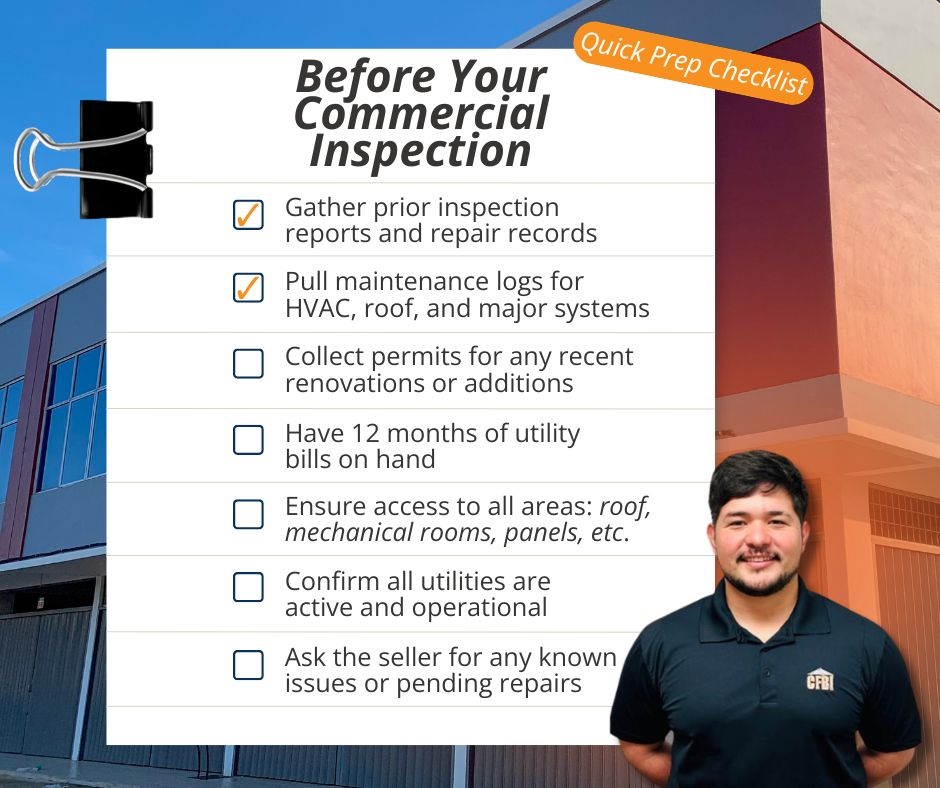
- Prior inspection reports or repair records for the property
- Maintenance logs for HVAC, roof, elevators, and other major systems
- Permits for any recent renovations or additions
- Utility bills from the past 12 months (helpful context for HVAC efficiency findings)
- Any environmental reports or Phase I/Phase II assessments that have been completed
- Existing warranties on roof systems, mechanical equipment, or appliances
Ensure Access to All Areas
This is one of the most important steps. The inspector needs access to every part of the property: the roof, attic spaces, mechanical rooms, electrical panels, crawl spaces, and any locked tenant areas.
Coordinate with current tenants or building managers in advance. Restricted access during an inspection means gaps in the report, and those gaps can create problems later.
Have Utilities Active
All utilities should be on and operational on the day of the inspection. Inspectors need live electricity to test outlets, panels, and lighting. Plumbing needs to be active to check pressure and drainage.
HVAC systems need to be operable to assess function. A property with utilities shut off will result in an incomplete inspection.
Make Mechanical Equipment Accessible
Clear the area around electrical panels, water heaters, HVAC units, and any rooftop access points. Equipment that is blocked or buried behind stored inventory cannot be properly evaluated.
Know the History of the Property
If you are the buyer, ask the seller or listing broker for any known issues, recent repairs, or pending maintenance.
Sellers are not always forthcoming, but disclosed information helps inspectors know where to look more closely and helps you ask better questions after the inspection is complete.
What to Expect from the Report
CFBI provides a detailed written report with photographic documentation of all findings. The report is organized to help clients distinguish between immediate concerns, deferred maintenance items, and items to monitor over time.
For commercial clients, the report also highlights potential major capital expenditures. A roof that has two years of useful life left is a very different financial picture than one that was replaced five years ago, and the report is structured to make those distinctions clear.
Optional add-ons are available depending on the scope of the transaction:
- Mold testing: Florida’s humidity and frequent moisture intrusion make mold a relevant concern in many commercial buildings, particularly in older properties or those with known water damage history.
- Termite and wood-destroying insect inspections: A common add-on for commercial properties with wood-framed components or significant landscaping close to the structure.
- Thermal imaging: Included in every CFBI inspection at no additional cost. Infrared scans help detect hidden moisture, electrical hotspots, and insulation gaps that are not visible to the naked eye.
- Drone roof inspection: Also included where applicable. Useful for large flat commercial roofs, multi-story buildings, and any structure where walking on the roof is not safe or practical.
- Property Condition Assessment (PCA): A more formal evaluation that follows ASTM E2018 standards, commonly required by lenders, investors, and institutional buyers as part of the due diligence process.
Related Questions
How is a commercial inspection different from a residential one?
Commercial inspections are more complex in scope, duration, and required expertise. They cover larger structures, varied building types, specialized systems like fire suppression and commercial HVAC, and often involve code considerations specific to commercial occupancy.
How long does a commercial inspection take?
It depends on the size and complexity of the property. Smaller commercial buildings may be completed in a few hours. Larger or multi-building properties can take a full day or longer, with additional time needed for report preparation. CFBI provides a customized scope and timeline with every commercial quote.
What happens if major issues are found?
The inspection report gives buyers documented, professional findings to use in negotiations. Options typically include requesting repairs before closing, negotiating a price reduction, asking for a credit at closing, or, in some cases, walking away from the transaction. The report itself is the leverage.
Do commercial properties in Central Florida have region-specific concerns?
Yes. Florida’s climate and geography create a consistent set of commercial inspection findings that inspectors in other regions rarely see as frequently.
These include sinkhole risk, high water table effects on foundations and drainage, aggressive HVAC wear from year-round heavy use, accelerated roof membrane deterioration from UV exposure and heat, and elevated humidity driving mold and moisture issues in buildings with any envelope deficiencies.
Conclusion
A commercial building inspection is one of the most important steps in any commercial real estate transaction. It protects buyers from costly surprises, gives investors and tenants a clear picture of what they are taking on, and provides the documentation needed to negotiate from a position of knowledge.
CFBI has provided commercial building inspections across Central Florida since 1988. Our certified inspectors bring commercial-specific training, advanced technology including thermal imaging and drone assessment, and a detailed reporting process designed to give clients exactly what they need to move forward with confidence.
If you are preparing for a commercial transaction in the Orlando area or anywhere in Central Florida, contact CFBI for a customized quote.