Wind mitigation matters for Florida homes because it does two things at once: it documents the features that help your house survive a hurricane, and it unlocks insurance discounts that Florida law requires insurers to offer.
A wind mitigation inspection records those features on a state form, and for most Central Florida homeowners it pays for itself in the first year through lower premiums.
If your homeowners insurance keeps climbing, this is one of the few inspections that can actually bring the bill back down.
What Is a Wind Mitigation Inspection?
A wind mitigation inspection is a focused evaluation that documents the wind-resistant construction features of your home. The inspector records what they find on Florida’s Uniform Mitigation Verification Inspection Form, the OIR-B1-1802, which is the standard document insurers accept statewide. You hand that completed form to your insurance company, and they apply any credits your home qualifies for.
A few things set it apart from a regular inspection:
It is not pass or fail. The form only records the features your home already has. A weaker result means no discount, never a penalty or a higher premium.
It is not a code inspection or a repair list. The inspector is documenting, not grading.
The report is good for up to five years, as long as you have not made structural changes to the roof or openings.
For a home in Orlando or anywhere across Central Florida, that form is the key that opens the door to mandated insurance savings.
Why Wind Mitigation Matters for Florida Homes
Here is where the importance comes in. Florida is one of the most hurricane-exposed states in the country, and it is also in the middle of a homeowners insurance crisis. Wind mitigation sits right at the center of both problems.
It lowers your insurance premium
Under Florida Statute 627.0629, insurers are required to offer discounts, credits, or deductible reductions to homeowners whose houses have wind-resistant features. This is not a favor your insurer chooses to do; it is state law.
Since October 2023, residential insurers also have to post their discount information on their websites. A wind mitigation inspection is how you prove your home qualifies, and the credits can stack across several features at once.
It reflects how well your home handles a storm
The same features that earn you a discount are the ones that keep your roof on and the water out during a hurricane. A hip roof, a properly strapped roof-to-wall connection, and impact-rated windows are not just line items on a form; they are the difference between minor damage and a destroyed home when a storm comes through. The inspection gives you an honest picture of where your home stands.
It tells you what to upgrade next
If your home earns few credits today, the report shows you exactly which features would earn more. That turns a vague worry about storm safety into a clear, prioritized list, and some of those upgrades may qualify for separate grant programs like My Safe Florida Home.
What Do Inspectors Check in a Wind Mitigation Inspection?
The inspection focuses on seven construction features that determine how your home performs in high wind. Each one can carry its own insurance credit.
Roof covering. Whether the shingles or tiles meet current Florida building code for wind resistance.
Roof deck attachment. How the plywood or sheathing is fastened to the trusses, since nail type and spacing matter under uplift.
Roof-to-wall connection. Whether the roof is tied to the walls with toe nails, clips, single wraps, or double wraps. This is often the single biggest credit.
Roof geometry. The shape of the roof. Hip roofs, which slope on all four sides, resist wind far better than gable roofs and earn the strongest credit.
Secondary water resistance. Whether there is a sealed barrier under the roof covering that keeps water out if the shingles blow off.
Opening protection. Whether windows, doors, and garage doors are protected by impact-rated glass or shutters.
Home and roof age. Newer construction built to stricter codes generally performs better.
The inspector documents each feature with photos and records it on the form. Undocumented features earn nothing, which is why the inspection has to be done by a qualified inspector, not self-reported.
How Does the Wind Mitigation Inspection Process Work?
The process is quick and low-effort on your end. Here is what it looks like from start to savings:
Schedule the inspection. Book with a qualified Central Florida inspector. You do not need to prepare the house, though clear access to the attic and electrical panel helps.
The inspection. Most single-family homes take about 30 to 45 minutes. The inspector examines the roof, attic, and openings, and photographs each qualifying feature.
Receive the form. You get the completed OIR-B1-1802 with supporting photos, usually within a day or two.
Submit it to your insurer. Send the form to your insurance agent or company, and they apply any credits your home qualifies for to your policy.
That is the whole cycle. One short visit, one form, and the credits stay in place for up to five years.
How Much Can You Save, and What Does It Cost?
A wind mitigation inspection in Central Florida typically runs a modest flat fee, and the savings usually dwarf it.
Cost: generally around $75 to $150 for a standard single-family home.
Savings: commonly several hundred dollars a year, and often $1,000 or more, depending on your insurer, your home, and how many features qualify.
The exact number depends on your specific policy and home, so treat any figure as an estimate rather than a promise. Still, for most homeowners, the math is simple: a one-time fee, valid for up to five years, against annual savings that often exceed it in the first billing cycle. Ask your insurance agent what each credit is worth on your policy before you assume the inspection will not help.
Wind Mitigation vs. 4-Point Inspection: What Is the Difference?
These two get confused constantly, and they are often ordered together, but they do opposite jobs.
A wind mitigation inspection documents wind-resistant features to earn you insurance discounts. It works in your favor and cannot raise your rate.
A 4-point inspection assesses the condition and age of your roof, electrical, plumbing, and HVAC systems, usually on older homes, so an insurer can decide whether to write or renew a policy at all.
One is about savings, the other is about insurability. If you are buying an older Central Florida home, you may need both, and your inspector can handle them in a single visit.
Related Questions to Explore
Does wind mitigation actually lower my insurance?
Yes, in most cases. Florida law requires insurers to offer credits for qualifying wind-resistant features, and the wind mitigation form is how you document them. The size of the discount depends on your home and insurer, but for many homeowners the savings are significant.
How long is a wind mitigation inspection good for?
The form is valid for up to five years, as long as you do not make structural changes to the roof or openings. You do not need a new inspection every year.
Can a wind mitigation inspection raise my premium?
No. The inspection can only earn credits or earn nothing. A home with few qualifying features simply gets no discount; it never triggers a surcharge.
Do I need a wind mitigation inspection on a new home?
Often yes, and it usually pays off. Newer homes built to current code tend to have strong wind-resistant features, which means more credits to claim. Many builders provide a form at closing, but an independent inspection confirms it.
What if my home does not qualify for many credits?
That result is still useful. The form shows which features are missing, so you know exactly what to upgrade to earn credits later, whether that is a roof replacement, roof-to-wall straps, or impact-rated openings. Some of those improvements may also qualify for state grant programs, and you can have the home re-inspected once the work is done.
When to Call a Professional
A wind mitigation inspection is not something you can do yourself, because the credits only count when a qualified inspector documents the features on the state form.
If your homeowners premium has gone up, if you are buying or refinancing a home in Central Florida, or if you have replaced your roof or added shutters and want the credit for it, that is the moment to schedule one.
It is also worth doing simply to understand how your home would hold up in a hurricane, before the next one is on the forecast.
Conclusion
Wind mitigation matters because it connects the two things every Florida homeowner cares about right now: staying safe in a storm and getting insurance costs under control. A single inspection documents the features your home already has, earns the discounts state law entitles you to, and shows you where you stand for the next hurricane season.
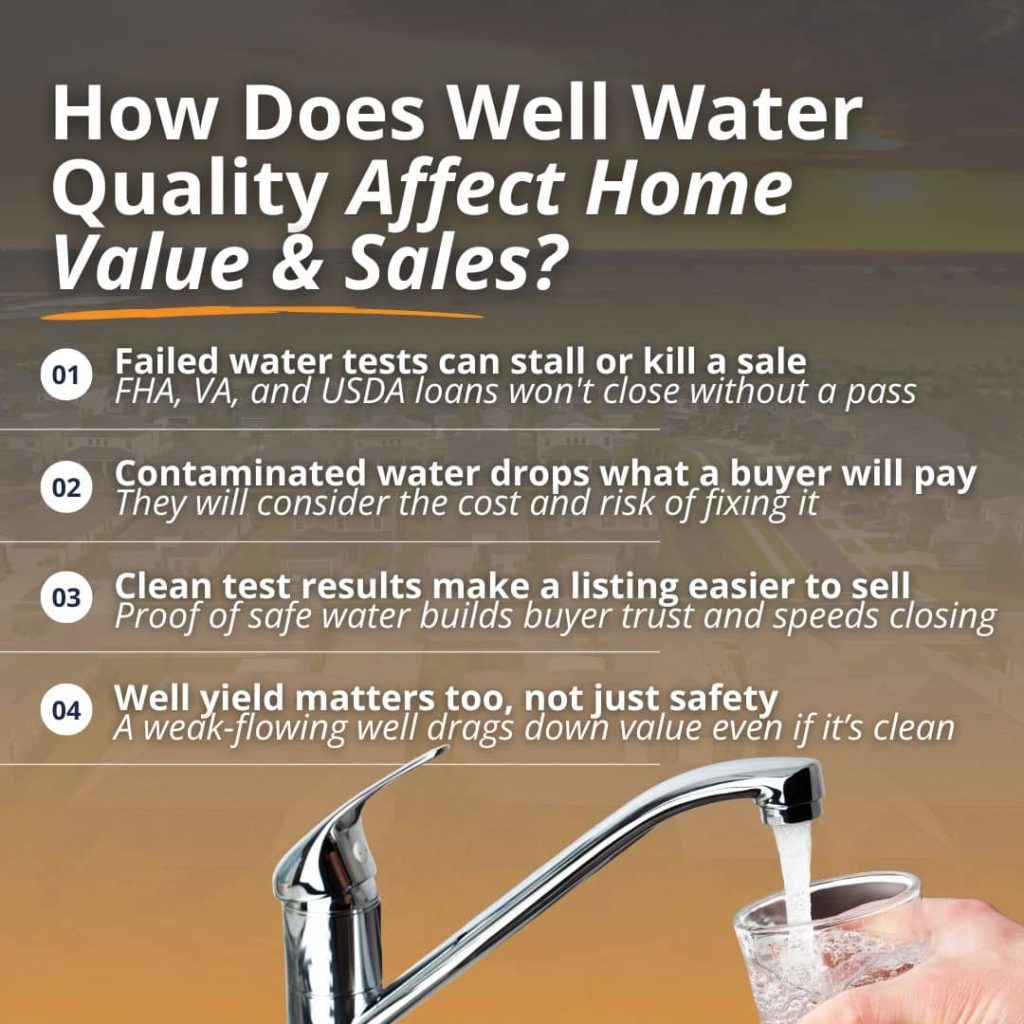
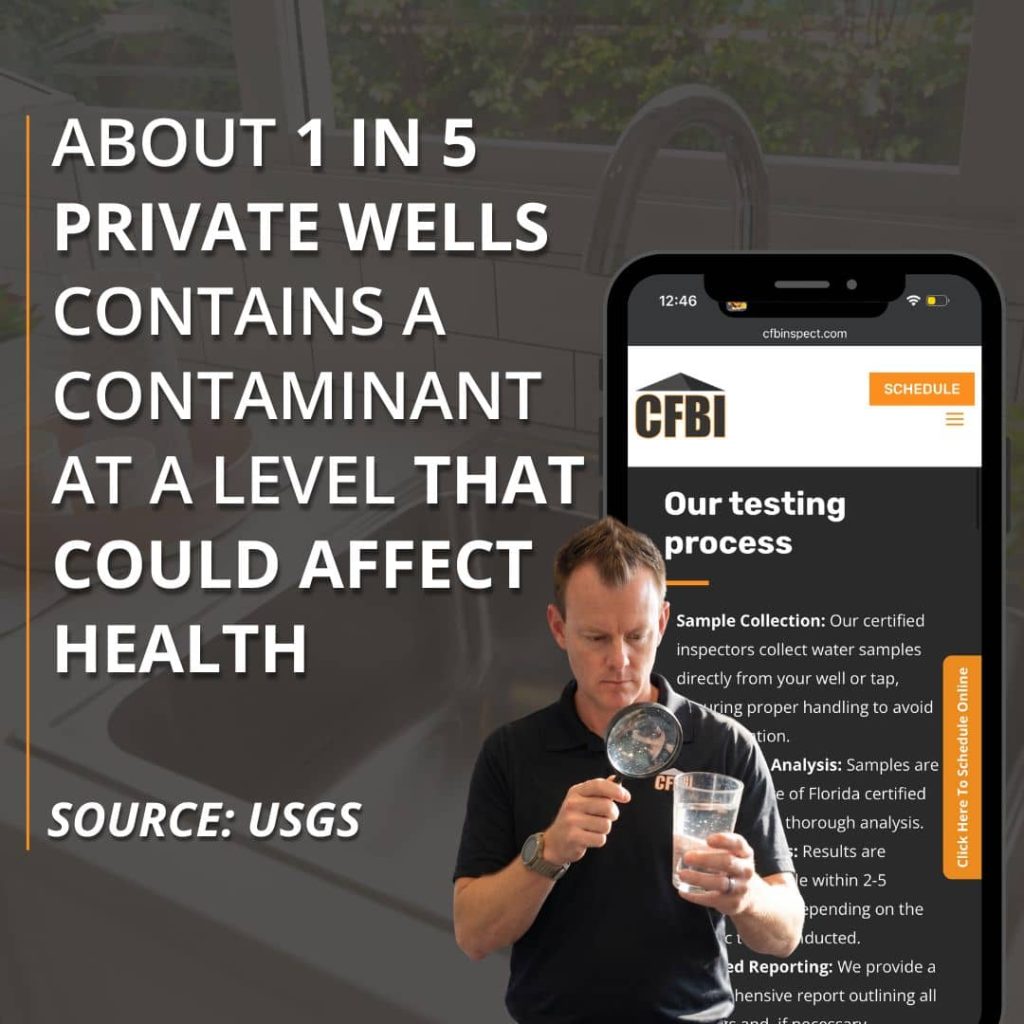
Well water quality has a direct effect on what a home is worth and how smoothly it sells. Clean, safe well water protects a property’s value and reassures buyers, while contaminated water can lower the price, delay closing, or end a deal entirely. For homes bought with an FHA, VA, or USDA loan, a passing water test is not optional, because the lender requires it before closing.
If you are buying or selling a home with a private well in Central Florida, here is how water quality shapes the sale and what you can do to stay ahead of it.
Why Does Well Water Quality Affect a Home’s Value?
A home is only as valuable as it is livable, and safe drinking water is part of that. A property with clean, well-maintained well water holds its value and appeals to today’s health-conscious buyers.
A home with contaminated water or a failing well is worth far less than a comparable property, because the buyer inherits the cost and the risk of fixing it. In the most serious cases, a home without a reliable source of safe water is considered uninhabitable, and the value drops sharply.
Buyers actually weigh two things when it comes to a well. The first is quality, meaning whether the water is safe to drink. The second is quantity, meaning whether the well produces enough water for the household. Both affect value. A well that tests clean and delivers a steady flow supports the full appraised value of the home. A well with bacteria, high nitrates, or a weak yield becomes a bargaining chip that pulls the price down.
Documented proof of good water works in your favor. Because private wells are not regulated the way city water is, the responsibility for proving the water is safe falls on the homeowner. That means a recent, clean water test carries real weight with buyers and helps a listing stand out from comparable homes.
How Does Well Water Quality Affect a Home Sale?
Water quality does not just affect price. It affects whether the sale closes at all. Water testing problems are one of the most common reasons FHA and VA closings get delayed. When a test comes back with bacteria, high nitrates, or another issue, the deal can stall while the seller arranges treatment, the parties renegotiate, or the buyer walks away.
Here is how a water issue usually plays out during a sale:
The water is tested as part of the buyer’s due diligence or a loan requirement.
Results come back. A clean result keeps the timeline on track. A failed result starts the clock on a fix.
The seller addresses the problem, for example, shock chlorination for bacteria or a treatment system for nitrates, and the water is retested.
If the fix works and there is enough time, the sale moves forward. If not, the buyer can renegotiate or use an inspection contingency to walk away.
For buyers, this is why water testing belongs in your due diligence from the very start. It helps to understand what a well inspection can reveal about your water quality before you commit to a property. Catching problems early keeps you in control of the timeline instead of racing a closing deadline.
Well Water Testing Requirements for FHA, VA, and USDA Loans
If a buyer is financing a home with a government-backed loan and the property uses a private well, the lender requires a water test before closing. The exact rules vary by program.
Loan program
Standard the water must meet
Who collects the sample
Good to know
FHA
Local health authority standard, or EPA drinking water standards if no local one exists (HUD Minimum Property Requirements)
Independent third party
No passing test, no approval
VA
VA Minimum Property Requirements; may require connecting to public water if it is available and affordable
Disinterested third party (not buyer, seller, or agent)
Test is valid for 90 days
USDA
EPA minimum thresholds
Independent third party
Required when the financed home uses a well
All three programs typically test for total coliform bacteria, E. coli, nitrates, nitrites, and lead. The common thread is simple: no passing test, no loan approval.
That third-party rule matters in practice. Because the sample cannot be collected by anyone involved in the sale, a licensed home inspector is often the one who collects it as part of professional well water quality testing and sends it to a state-certified lab. That keeps the result clean, neutral, and acceptable to the lender.
What Central Florida Buyers and Sellers Should Know
Central Florida sits on porous limestone, which makes the groundwater that feeds private wells especially vulnerable to contamination. Agricultural runoff from groves and farms, nearby septic systems, and the region’s frequent heavy rain can all push contaminants into a well.
The most common problems around Orlando and the surrounding counties include bacteria, nitrates, hard water, iron, and a sulfur or rotten-egg smell.
Florida does not require ongoing well testing once you have closed and moved in, which surprises a lot of homeowners. The Florida Department of Health recommends testing private well water every year for bacteria and nitrates, and the EPA makes the same annual recommendation.
For buyers, that means a single passing test at closing is a starting point, not a lifetime guarantee. Plan to test yearly once the home is yours.
For sellers in Orange, Seminole, Lake, and Osceola counties, a recent clean water test is one of the easiest ways to build buyer trust and keep a deal moving. It shows the water has been cared for and removes a common last-minute surprise that can stall a closing.
Common Well Water Contaminants That Affect Value
A well water test can flag several contaminants, and each one affects safety, livability, and value in a different way.
Contaminant
Where it comes from
Why it matters
Total coliform & E. coli
Surface water intrusion, a cracked well cap, nearby septic
Signals a contamination pathway and fails most loan tests
Nitrates & nitrites
Fertilizer, agricultural runoff, septic systems
Health risk, especially for infants, and common in farm areas
Lead
Older plumbing and fixtures
Serious health risk, flagged on FHA and VA tests
Arsenic & heavy metals
Naturally occurring in some groundwater
Long-term health risk
Iron & manganese
Naturally occurring minerals
Staining, metallic taste, and appliance wear
Low pH (acidic) & sulfur
Local geology and decaying organic matter
Corrosion, rotten-egg odor, and shorter equipment life
Some of these you can taste or smell. Many you cannot, which is why testing is the only reliable way to know what is in the water. Water quality also affects the equipment that delivers it, since sediment and minerals influence how long a well pump lasts.
A buyer is inheriting both the water and the system behind it, so both deserve a look before closing.
What Should Sellers and Buyers Do?
A little preparation keeps a water issue from derailing a sale. Here is where each side should focus.
If you are selling
If you are buying
Test the water before you list
Add a water test to your inspection contingency
Keep records of past tests and well work
Use a neutral third party to collect the sample
Treat and retest any issues early
Ask for the well log, age, and depth
Share clean results with buyers up front
Budget for annual testing after you move in
The theme on both sides is the same: test early and keep records. Time is what turns a small water problem into a deal-breaker, and good documentation is what keeps a buyer confident.
Related Questions to Explore
Does well water lower a home’s value? Not on its own. Clean, safe well water does not lower value, and many buyers prefer it. What lowers value is poor water quality or a failing well, because the buyer takes on the cost and the health risk. Documented proof of clean water can actually be a selling point.
Do you need a water test to sell a house with a well? Florida does not require a test simply to sell, but if the buyer uses an FHA, VA, or USDA loan, a passing test is required before closing. Many sellers test before listing anyway to avoid last-minute delays.
Who can collect the water sample during a home sale? For VA and most lender-required tests, the sample must be collected by a neutral third party, not the buyer, seller, or agent. A licensed home inspector or local health authority typically handles it.
How often should well water be tested in Florida? The Florida Department of Health and the EPA both recommend testing private well water at least once a year for bacteria and nitrates, and more often if you notice a change in the water’s taste, smell, or color.
What happens if the well water fails the test? The sale does not have to fall through. The seller can install treatment, the parties can renegotiate, or the buyer can request repairs. The key is leaving enough time before closing to address it and retest.
When to Call a Professional
If you are buying or selling a home with a private well in Central Florida, have the water tested by a licensed professional rather than a store-bought kit, especially when a loan is involved. A professional collects the sample correctly, sends it to a state-certified lab, and delivers results that lenders will accept.
A pro can also spot well and equipment problems that a water sample alone will not reveal, like a cracked cap or an aging pump. Central Florida Building Inspectors has been inspecting Orlando-area homes since 1988 and can handle well water quality testing as part of your inspection.
Conclusion
Well water quality is not a small detail in a home sale. It can raise a property’s value and reassure buyers, or it can delay closing and cost thousands to fix. Whether you are listing a home with a well or buying one, testing the water early puts you in control of the timeline and the negotiation.
Schedule well water quality testing with Central Florida Building Inspectors and know exactly what is in the water before it affects the deal.
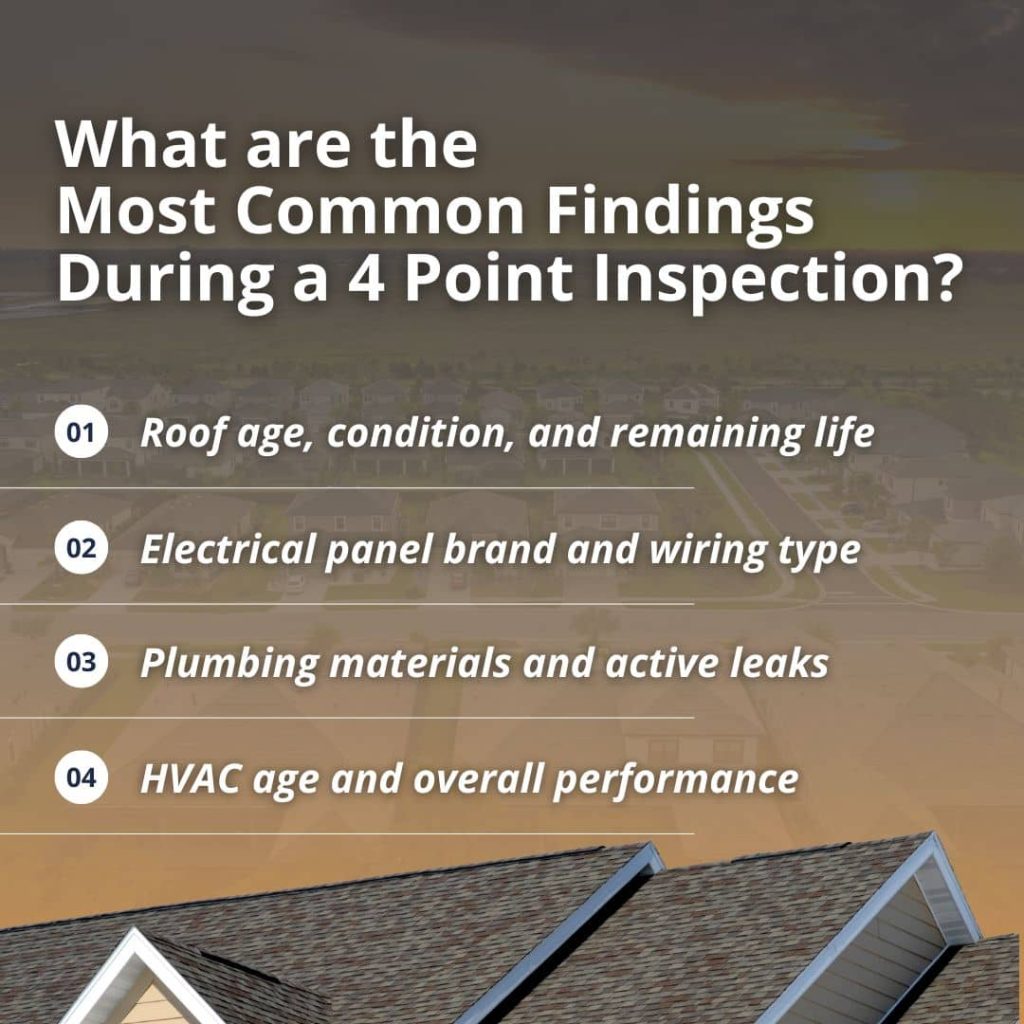
The most common findings on a 4-point inspection involve the roof, electrical system, plumbing, and HVAC: the four systems Florida insurers use to decide whether to write or renew a homeowners policy.
Older homes in Central Florida frequently turn up at least one issue, and knowing what inspectors typically document prepares you for what comes next. This post breaks down what CFBI inspectors find most often on each of the four systems, and what those findings mean for your coverage.
What Does a 4 Point Inspection Actually Cover?
A 4-point inspection is a focused evaluation of four systems: the roof, electrical system, plumbing, and HVAC. It is not a full home inspection. The inspector is not evaluating every accessible component of the property. They are documenting the condition, age, and materials of these four systems so your insurer can make an underwriting decision.
Florida insurers require this inspection for most homes 20 to 30 years old or older.
Some carriers now request it on homes as young as 15 years, particularly in the Central Florida market, where the insurance landscape has tightened considerably. The completed report is submitted on a standardized form.
Typically, the Citizens Property Insurance form, or a carrier-specific version for insurers like State Farm, which has its own 4-point inspection requirements.
The inspector photographs every section of each system, including the electrical panel with the cover removed. That documentation is what your insurer reviews. For a full overview of what the inspection includes and when you need one, see our 4-point insurance inspection page.
Roof Findings
The roof is the most common source of findings on a 4-point inspection in Florida, and it is the system insurers scrutinize most closely. Hurricanes, intense UV exposure, and heavy seasonal rainfall wear roofs down faster here than in most of the country.
Age and Limited Remaining Life
The most frequent roof finding is simply age. Most Florida insurers want to see a roof with at least 3 to 5 years of remaining useful life. Inspectors estimate remaining life based on visible wear, material type, and installation date. A 20-year-old asphalt shingle roof in Central Florida may only have a few years left, even if it has not started leaking yet.
Tile and metal roofs generally get more favorable treatment because of their longer lifespans, but any roof with widespread granule loss, curling, or significant weathering will be flagged regardless of material.
Some insurers will decline coverage once a roof falls below their minimum remaining life threshold. Others will offer coverage at a higher premium or with a roof exclusion attached.
Missing Shingles, Leaks, and Visible Damage
Beyond age, inspectors document active signs of deterioration: missing or broken shingles, staining on the roof decking, sagging sections, and any evidence of water intrusion at penetration points like vents, chimneys, and skylights. Poor flashing is a common finding that homeowners overlook. It is a frequent source of slow leaks that cause damage long before anyone notices inside the home.
Active leaks are flagged regardless of roof age. If the inspector documents evidence of water intrusion, most carriers will require proof of repair before issuing the policy.
Electrical Findings
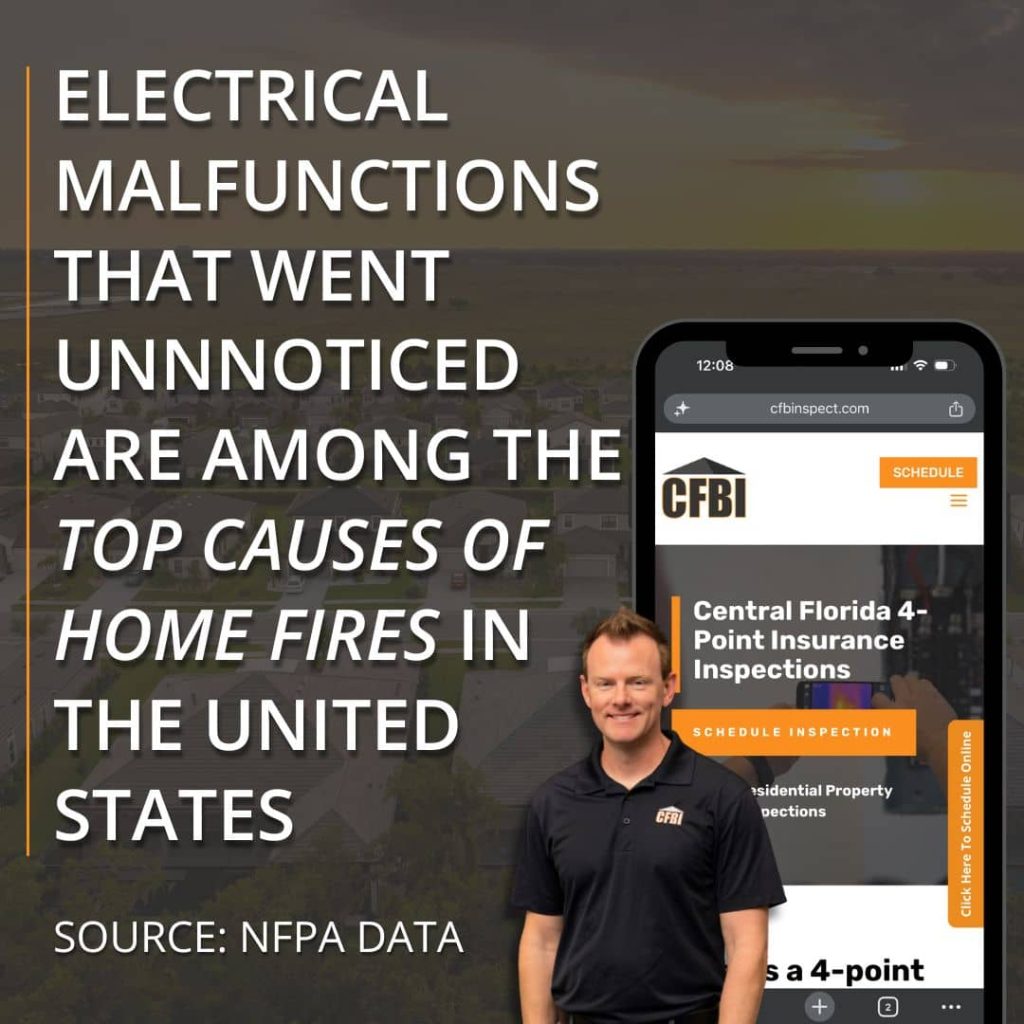
Electrical findings matter to insurers because electrical failures are a leading cause of residential fires. The National Fire Protection Association (NFPA) consistently identifies electrical malfunctions among the top causes of home fires in the United States, which is why the electrical section of a 4-point inspection gets close attention.
Problem Panel Brands
Certain electrical panel brands have documented safety defects and are flagged by most Florida carriers. The most common are:
Federal Pacific Electric (FPE) panels: Known to fail to trip during an overload, which creates a fire risk. Most standard carriers will not write a policy until the panel is replaced.
Zinsco panels: Similar issue to FPE: breakers can fail to trip or weld themselves in place. Also, an automatic flag with most insurers.
Challenger and Sylvania panels: Flagged by some carriers, though not as universally as FPE and Zinsco.
Fuse boxes: Common in homes built before the 1960s. Most insurers require a breaker panel before they will write a policy.
With these panel types, replacement is the only fix. An electrician cannot simply repair an FPE or Zinsco: the entire panel needs to be replaced.
Outdated Wiring Types
Two wiring types generate the most concern on 4-point inspections in Florida:
Knob-and-tube wiring is found in homes built before the 1940s. It is ungrounded and was not designed to handle modern electrical loads. Most insurers will not write a policy on a home with active knob-and-tube wiring. Some will accept coverage if the wiring has been fully deactivated and replaced, but the inspector needs to clearly document that.
Aluminum branch wiring, common in homes built during the 1960s and 1970s, expands and contracts at a different rate than the devices it connects to. Over time, that creates loose connections, which can overheat. Insurers typically flag aluminum branch wiring or require an electrician to install CO/ALR-rated devices at every outlet and switch before coverage is issued.
Double-Tapped Breakers
A double-tapped breaker (two wires sharing a single breaker terminal designed for one) is one of the more common findings on older panels. It is often inexpensive to fix, and most carriers will not deny coverage for this issue alone. It does, however, add to the overall picture of the electrical system’s condition and will appear in the report.
Plumbing Findings
Water damage is the most common insurance claim in Florida, which is why inspectors pay close attention to plumbing materials even when there is no visible leak at the time of the inspection.
Polybutylene Pipes
Polybutylene piping is one of the most significant plumbing findings an inspector can document. It was widely used in homes built from the late 1970s through the mid-1990s and was pulled from the market after widespread reports of failures. The material degrades from the inside out, which means it can look intact on the surface and fail suddenly.
Most Florida insurers will not write a policy on a home with polybutylene plumbing. Those that will typically attach a water damage exclusion, which is a significant gap in coverage. If polybutylene shows up on an inspection report, repiping is the standard path to getting standard coverage.
For more on how plumbing materials affect your 4-point inspection for insurance coverage, see our homeowner’s guide.
Galvanized Pipes, Active Leaks, and Water Heater Age
Galvanized steel pipes, common before copper became standard, corrode from the inside over time. Inspectors look for rust staining at joints, discoloration, and reduced water pressure as signs of deterioration. The pipes themselves may still be holding, but their remaining useful life is a concern for insurers.
Active leaks (even minor ones visible under a sink or at the water heater connections) are documented on the report. An insurer that sees an existing leak may require repair and a re-inspection before writing the policy.
Water heater age is also noted. A water heater over 15 to 18 years old will often raise premiums or be flagged as a condition of coverage, particularly if there is corrosion or sediment buildup visible at the connections.
HVAC Findings
Florida HVAC systems run harder than those in almost any other state. Year-round use accelerates wear, and most residential systems have a useful life of 15 to 20 years. When a system approaches or passes that range, it shows up as a finding on the inspection report.
Inspectors document the age and condition of both the air handler and the condenser unit. An aging but operational system typically results in a higher premium rather than a coverage denial. Signs of deferred maintenance (dirty coils, refrigerant leaks, rusted components, or poor airflow) add to the concern.
A system that is clearly non-functional or has been disconnected can lead to coverage being denied or conditioned on repair.
The HVAC finding most homeowners underestimate is how much a worn system signals the overall maintenance history of a property. Insurers read a neglected HVAC as a sign that other systems may have been treated the same way.
What Findings Mean for Your Insurance Coverage
Not every finding on a 4-point inspection has the same consequence. There are two categories worth understanding before you walk into the process.
Findings that typically block coverage until the issue is corrected include: Federal Pacific or Zinsco panels, knob-and-tube or aluminum branch wiring, polybutylene plumbing, a roof the inspector documents as having fewer than 3 years of remaining life, and active documented leaks.
Findings that typically raise your premium rather than blocking coverage include: an aging but functional HVAC, a roof with 5 to 8 years of life remaining, galvanized pipes without active leaks, a water heater in the 15 to 18 year range, and a double-tapped breaker without other electrical concerns.
Knowing which category your home falls into before you apply for coverage gives you time to negotiate, repair, or find the right carrier.
You can also request a wind mitigation inspection at the same time: unlike the 4 point, a favorable wind mitigation report can actually lower your premium.
Related Questions to Explore
Can you fail a 4-point inspection in Florida? A 4-point inspection does not produce a simple pass or fail result. The inspector documents the condition of four systems, and the insurer decides what to do with that information.
Findings involving certain panel brands, wiring types, or plumbing materials often result in coverage being denied until repairs are made. Other findings raise your premium without blocking coverage. The distinction depends on the severity of the finding and the insurer’s underwriting guidelines.
The inspector photographs each system, and the findings are submitted on a standardized form: either the Citizens form or a carrier-specific version. See the service page for more on what the report includes.
Is a 4-point inspection the same as a home inspection? No. A full home inspection covers 300 to 500 items across every accessible component of the property. A 4-point inspection covers only the four systems relevant to insurance underwriting. If you are buying an older Florida home, you need both. The 4-point tells your insurer whether they will write the policy. The full inspection tells you the condition of the property.
How do I prepare for a 4-point inspection? Address known issues before scheduling. Have a licensed roofer assess any roof over 15 years old. Confirm your electrical panel brand and have a licensed electrician evaluate it if you are not sure.
Fix visible plumbing leaks and check your water heater’s age from the manufacturer’s data plate. Schedule an HVAC tune-up so the system can be documented as operational. Proactive repairs result in a cleaner report and more carrier options.
When to Call a Professional
If you are buying or currently own a home in Central Florida that is 20 years old or older, a 4-point inspection should be scheduled before your insurance application or renewal deadline, not after. Waiting until the insurer requests it leaves no time to address findings that come up.
CFBI has completed 4-point inspections across the greater Orlando area since 1988. Our state-licensed inspectors know the exact format each carrier requires, including the Citizens form and State Farm’s separate documentation standards. If you are unsure which form your insurer needs, get in touch before scheduling, and we can confirm.
If a previous inspection flagged a system, get the repair completed by a licensed contractor first. Once the work is done, schedule a re-inspection so the updated report is ready to submit.
Conclusion
The most common 4-point inspection findings in Florida involve roofs with limited remaining life, electrical panels with documented safety defects, plumbing materials that insurers consider high-risk, and HVAC systems approaching the end of their useful life. Most of these findings are fixable: the key is knowing about them early enough to act.
Key takeaways:
The roof generates more findings than any other system on Florida 4-point inspections
Panel brand matters as much as wiring type: Federal Pacific and Zinsco are red flags
Polybutylene plumbing almost always blocks standard coverage until the home is repiped
Ready to schedule your inspection? Trust Central Florida Building Inspectors for a fast, accurate report your insurer will accept.
Termite inspections are not required by Florida law for most home purchases, but your lender almost certainly requires one before closing. VA loans and FHA loans both mandate a wood-destroying organism (WDO) inspection. Even with a conventional loan, your bank may request one depending on the property’s location and age.
At Central Florida Building Inspectors (CFBI), we perform licensed WDO inspections across the Orlando metro and Central Florida. Here is what every buyer needs to know about when termite inspections are required, what they cover, and what happens when issues are found.
Are Termite Inspections Required by Law?
Florida law does not require a termite inspection for cash purchases or private sales. The requirement comes from your lender and your insurance company, not the state.
That said, Florida statutes and the Florida Administrative Code do require that buyers using financing must file a WDO inspection report with their mortgage company before closing.
Per HUD’s guidelines for FHA and VA loan property requirements, wood-destroying organism inspections are a standard part of the underwriting process for government-backed loans in high-risk states like Florida.
This means that while the law itself does not mandate the inspection for every sale, the practical reality for most buyers is that their lender will require one. Skipping it is only an option if you are paying cash and your homeowner’s insurance policy does not have its own inspection clause.
When Does Your Lender Require a Termite Inspection?
Lender requirements vary by loan type. Here is how each one works in Florida:
VA Loans
VA loans require a WDO inspection for all Florida purchases. Florida is classified as a high-risk state for termite activity, which means the VA mandates the inspection before the loan can close.
The inspection must be completed by a licensed pest control professional and documented on the standard NPMA-33 form. The seller is typically required to pay for the inspection, though this can be negotiated in the purchase contract.
FHA Loans
FHA loans also require a WDO inspection in Florida. The inspection is a prerequisite before the mortgage insurance agent approves the loan.
If the inspector finds active infestation or significant damage, the mortgage company may hold the loan until the seller addresses the issues. This protects the lender’s investment and gives the buyer documented proof of the home’s condition before closing.
Conventional Loans
Conventional loans leave the WDO inspection requirement to the individual lender’s discretion. Many conventional lenders do require one, particularly for older homes or properties in areas where subterranean and drywood termites are common.
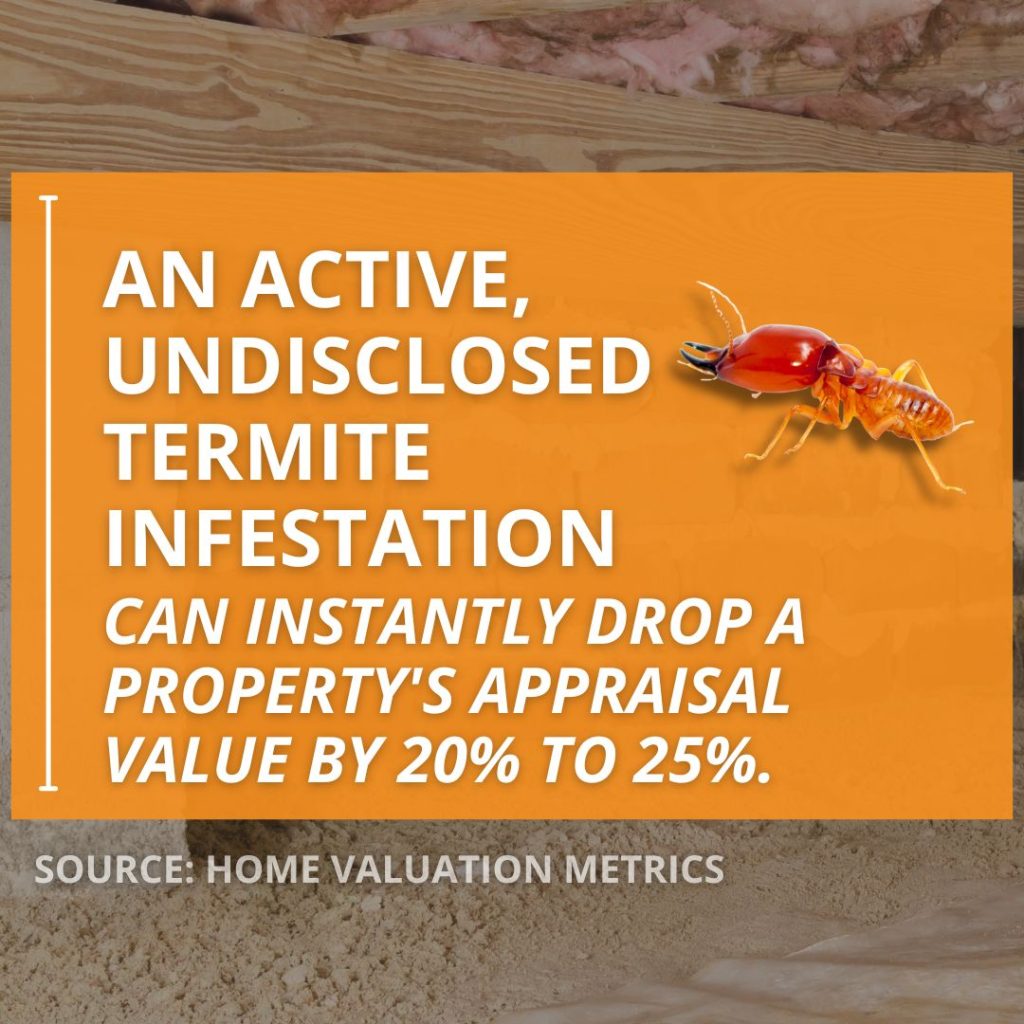
Even when not technically required, waiving the inspection on a conventional loan in Florida is a financial risk. Termite damage is typically not covered by homeowner’s insurance, and repairs can run into the thousands.
What Does a Termite Inspection Cover in Florida?
A Florida WDO inspection is broader than a basic termite check. It is a full evaluation for wood destroying organisms, which includes termites, wood decaying fungi, powderpost beetles, and carpenter ants. A licensed WDO inspector, not a standard home inspector, must perform the inspection.
What Inspectors Look For
The inspector will walk the interior and exterior of the property, including the attic and any crawlspace, looking for:
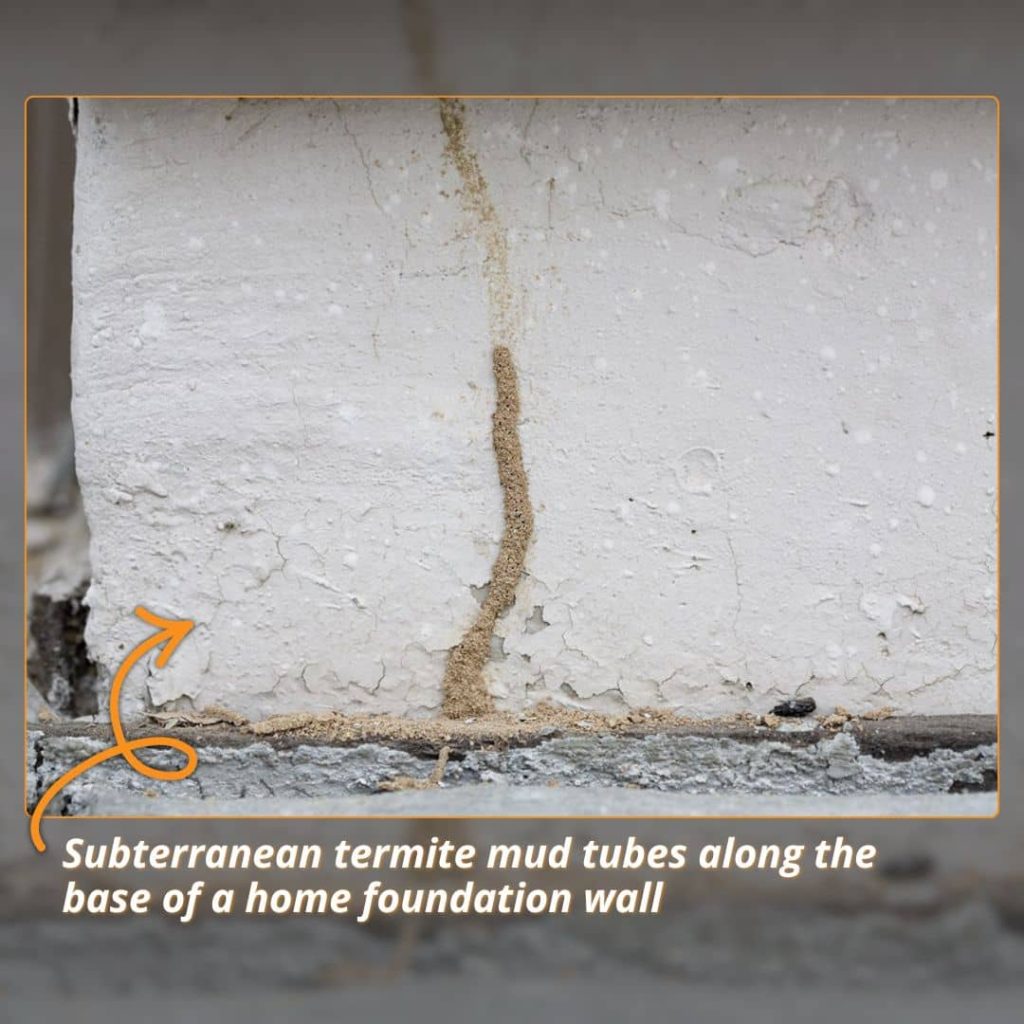
Mud tubes along the foundation or plumbing entry points (subterranean termites)
Wood decay or soft spots at sill plates, beams, and baseboards
Earth-to-wood contact, flower beds against the home, or wood debris near the foundation
Evidence of prior infestations that were treated but not disclosed
The interior portion covers baseboards, window and door frames, and visible wood structural members. The exterior covers foundation walls, deck posts, garage framing, and any wood that contacts soil. A thorough inspection of a home of average size takes 30 to 60 minutes.
The FDACS-13645 Form
After the inspection, the licensed inspector completes Florida State Form FDACS-13645, which is the official WDO inspection report. The form documents active infestations, past infestations, evidence of damage, and conditions that are conducive to future activity. Your lender will request this form directly.
If you are purchasing through CFBI’s WDO termite inspection service page, you will receive the completed form and a detailed report the same day.
What Happens If the Inspection Finds Termites?
Finding termite activity does not automatically kill the deal. What happens next depends on the extent of the damage and the type of loan you are using.
For VA and FHA loans, the seller is generally required to treat any active infestation and repair structural damage before the loan can close. The lender may require a clearance letter from the pest control company confirming the property is now free of active activity.
For conventional loans and cash purchases, the discovery is a negotiating point. You can ask the seller to remediate as a condition of closing, request a price reduction to cover treatment and repairs, or walk away if the damage is extensive enough.
Either way, knowing about a problem before closing is far better than finding it after. Termite damage often looks like water damage from the inside, with buckled floors, soft drywall, or sagging ceilings that do not show up until the problem is advanced. The CFBI inspection report includes photos of any findings along with a clear explanation of what the evidence means.
You can also review our home inspection pricing and rates [LINK] to see how WDO services are bundled with a standard inspection.
How Much Does a Termite Inspection Cost?
A standalone WDO inspection in Florida typically runs between $75 and $175, depending on the size of the property and whether it is bundled with a standard home inspection.
When added on as part of a full CFBI home inspection, the cost is lower than a standalone appointment because the inspector is already at the property.
The cost is small relative to the risk. Termite treatment alone can run from $500 for a localized treatment to several thousand dollars for tent fumigation on a larger home with drywood termites.
Structural repairs from long-term undetected infestations can reach $10,000 or more in severe cases. A $100 inspection is straightforward protection against that exposure.
Related Questions to Explore
What does a termite inspection include? A Florida WDO termite inspection covers the full interior, exterior, attic, and crawlspace of the home. The inspector checks all wood components and surrounding areas for active infestations, past damage, fungal decay, and conditions that attract wood-destroying organisms. The result is a completed FDACS-13645 form plus a photo-documented report. You can learn more about what to expect from a CFBI home inspection [LINK].
Should I get a termite inspection when buying a new home? Yes. New construction homes are not immune to termite activity. Termites can enter during construction through soil disturbed by grading, and builders sometimes leave wood debris under or near the foundation. New homes also may not yet show visible signs of an infestation that started during the build. A WDO inspection gives you a documented baseline.
How long does a termite inspection take? Most WDO inspections at a typical single-family home take 30 to 60 minutes. Larger homes, homes with extensive crawlspace areas, or properties with known prior activity may take longer. The inspector will not rush this: checking inside wall cavities, attic trusses, and foundation perimeter takes time to do correctly.
What is often mistaken for termites? Carpenter ants are the most common mix-up. They also swarm, produce frass, and cause wood damage, but they remove wood rather than eating it. Powderpost beetles leave behind a fine sawdust-like frass in wood grain. Winged carpenter ants have a pinched waist and bent antennae; winged termites have a straight body and straight antennae.
A licensed WDO inspector can tell the difference on sight. Grand Slam Pest Control in Texas has a useful breakdown of common termite look-alikes if you want to compare before scheduling an inspection.
When to Call a Professional for a Termite Inspection
If you are buying a home in Florida, do not wait until a lender requires the inspection to schedule one. Getting the WDO inspection done early in the due diligence period gives you more time to negotiate if problems are found.
It also means you are not rushing the inspection at the end of the contract window.
Call a licensed WDO inspector if you notice any of these signs before or after purchase:
Small piles of sawdust-like frass near baseboards or window sills
Wings discarded near windowsills or doorways (sign of a recent swarm)
Hollow-sounding wood when you knock on walls or floors
Buckling or soft spots in floors that are not explained by water damage
Mud tubes along the exterior foundation wall
CFBI’s WDO-licensed inspectors serve the Orlando area and across Central Florida, including Volusia County, Polk County, and Wesley Chapel. Inspections can typically be scheduled within a few business days. Use our online quote tool [LINK] to get an accurate price based on your home’s size and to book your appointment directly.
Conclusion
Most Florida buyers need a termite inspection before their loan can close. VA and FHA loans require one, and many conventional lenders do as well. Even when it is not required, a WDO inspection for $75 to $175 is one of the smartest protections a buyer can add to their due diligence checklist.
Key takeaways:
Florida law does not require a termite inspection for cash sales, but lenders almost always do
VA and FHA loans mandate a WDO inspection and the FDACS-13645 form before closing
A licensed WDO inspector, not a standard home inspector, must perform the inspection
Big changes are coming to Florida wind mitigation inspections. These changes could directly affect your insurance premiums. Whether you’re a first-time homeowner or a long-time resident, this update matters to you. Maybe you recently purchased a property. Maybe it’s been a few years since your last inspection. Either way, now is the time to pay attention. Understanding what’s changing - and acting on it - could put real money back in your pocket.
What Is a Wind Mitigation Inspection — and Why Does It Matter?
A wind mitigation inspection is a specialized assessment of your home’s construction features to determine how well it can withstand hurricane-force winds. In a state like Florida — where hurricane season runs from June 1 through November 30 and windstorm insurance is one of the biggest drivers of homeowner insurance costs — this inspection is one of the most financially powerful tools available to property owners.
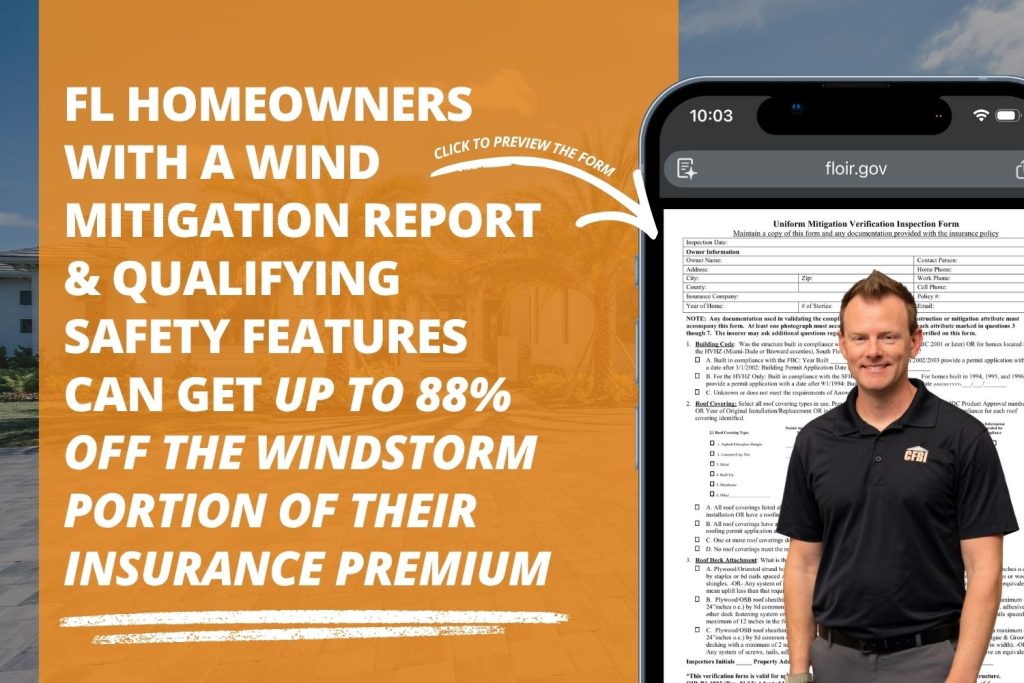
Under Florida Statute §627.0629, insurance companies are legally required to offer premium discounts and deductible reductions to homeowners whose properties include verified wind-resistant construction features. Those discounts can reach up to 88% off the windstorm portion of your policy — savings that, for many Central Florida homeowners, translate to hundreds or even thousands of dollars per year.
The official document used to capture and report these features is the Uniform Mitigation Verification Inspection Form, OIR-B1-1802, administered by the Florida Office of Insurance Regulation (OIR).
Major Update: The New OIR-B1-1802 Form Takes Effect April 1, 2026
Here’s the most important news for Florida homeowners right now: the OIR has proposed a significant update to the 1802 form, with the new version set to take effect April 1, 2026.
The Florida Office of Insurance Regulation has proposed an amendment to Rule 69O-170.0115 to adopt a new version of form OIR-B1-1802. The new form updates the fixtures and construction techniques that qualify for discounts, taking into account a 2024 Residential Wind-Loss Mitigation Study — which updates research conducted years ago when the mitigation discount program was still in its infancy.
What does this mean for you? The updated discount tables and qualifying criteria reflect more current building science and real-world hurricane performance data. Some features may qualify for higher discounts; others may be evaluated differently. The full impact on individual premiums is still being determined, but one thing is clear: homeowners who get ahead of this change will be best positioned to maximize their savings.
Florida Statute §627.0629 requires the OIR to review and update the fixtures or construction techniques demonstrated to reduce windstorm damage — along with the related insurance discounts and deductible reductions — by January 1, 2025, and every five years after that. The April 2026 form rollout is a direct result of that mandated review.
The 7 Key Categories Evaluated on Form OIR-B1-1802
A licensed inspector completing the 1802 form evaluates your home across seven critical areas. Understanding these categories helps you know what to expect — and what upgrades might boost your discount tier:
1. Building Code Compliance — Was your home built to Florida Building Code 2001 or later? Homes constructed in 2002 or after generally receive automatic baseline credits. Homes in Miami-Dade and Broward counties are evaluated against the South Florida Building Code (SFBC-94) for High Velocity Hurricane Zone (HVHZ) compliance.
2. Roof Covering — The type and installation method of your roofing material. Products that meet Florida Product Approval standards score higher.
3. Roof Deck Attachment — How the plywood or OSB decking is fastened to the rafters or trusses. Homes with 8d ring-shank nails on 6-inch spacing perform significantly better in windstorm events.
4. Roof-to-Wall Connection — The weakest connection point between your roof and your walls is assessed. Single wraps, double wraps, clips, and structural anchors each correspond to different credit tiers.
5. Roof Shape — Hip roofs (sloped on all four sides) are the most wind-resistant design and typically earn the largest discounts. Gable roofs receive lower credits due to their increased vulnerability to wind uplift.
6. Secondary Water Resistance (SWR) — A self-adhering membrane applied beneath the roof covering that prevents water intrusion if shingles are blown off. This feature is increasingly important to insurers after recent hurricane seasons.
7. Opening Protection — Impact-rated windows, doors, skylights, and garage doors — or properly documented storm shutters — protect against windborne debris. This is the all-or-nothing category: if even one opening lacks protection, the entire structure may receive no discount.
How Long Is a Wind Mitigation Report Valid?
The Uniform Mitigation Verification Inspection Form (OIR-B1-1802) is valid for up to five years, provided no material changes are made to the structure or inaccuracies are found on the form.
This five-year clock matters. If your report is approaching expiration — or if you’ve had roof work, new windows, or other structural upgrades — it’s time to schedule a fresh inspection. With the new form taking effect April 1, 2026, renewing your inspection now (under the current form) or after the transition (under the updated form) will be an important strategic decision to discuss with your inspector and insurance agent.
Who Qualifies to Perform a Wind Mitigation Inspection in Florida?
Not just anyone can complete a legally valid 1802 form. Under Florida Statute §627.711, qualified inspectors include:
Licensed home inspectors (under §468.8314) who have completed at least 3 hours of OIR-approved hurricane mitigation training and passed a proficiency exam
Licensed general, building, or residential contractors
Licensed professional engineers or architects
Certified building code inspectors
Citizens Property Insurance reserves the right to verify any wind mitigation form completed by a qualified inspector by ordering an independent inspection, and will not accept forms where the inspector’s Florida license is not active or cannot be verified. This is why choosing a reputable, licensed inspection company matters — an invalid or improperly completed form could cost you your discounts entirely.
Free Inspections and Matching Grants: My Safe Florida Home Program
If you haven’t upgraded your home’s wind-resistant features because of cost concerns, there’s good news. In 2025, Florida expanded the My Safe Florida Home program with $280 million in new funding to help families afford wind mitigation upgrades, offering free inspections and matching grants for improvements like impact windows, doors, and roof upgrades.
This program provides a two-step pathway: first, receive a free wind mitigation inspection, then apply for a matching grant to fund qualifying home hardening improvements. Visit MySafeFLHome.com to check eligibility and availability.
Don’t Wait — Schedule Your Inspection Before the April 2026 Form Change
With the updated OIR-B1-1802 form set to take effect April 1, 2026, Central Florida homeowners have a narrow window to act strategically. Whether your goal is to lock in current discount tiers, document recent upgrades, or simply get ahead of the changes before hurricane season, a wind mitigation inspection is one of the highest-ROI steps you can take as a homeowner.
At Central Florida Building Inspectors (CFBI), our licensed inspectors are certified in wind mitigation assessments and stay current on all OIR form requirements and Florida Building Code updates. We serve homeowners throughout the greater Central Florida area with thorough, photo-documented 1802 inspections that insurers trust.