Termite inspections are not required by Florida law for most home purchases, but your lender almost certainly requires one before closing. VA loans and FHA loans both mandate a wood-destroying organism (WDO) inspection. Even with a conventional loan, your bank may request one depending on the property’s location and age.
At Central Florida Building Inspectors (CFBI), we perform licensed WDO inspections across the Orlando metro and Central Florida. Here is what every buyer needs to know about when termite inspections are required, what they cover, and what happens when issues are found.
Are Termite Inspections Required by Law?
Florida law does not require a termite inspection for cash purchases or private sales. The requirement comes from your lender and your insurance company, not the state.
That said, Florida statutes and the Florida Administrative Code do require that buyers using financing must file a WDO inspection report with their mortgage company before closing.
Per HUD’s guidelines for FHA and VA loan property requirements, wood-destroying organism inspections are a standard part of the underwriting process for government-backed loans in high-risk states like Florida.
This means that while the law itself does not mandate the inspection for every sale, the practical reality for most buyers is that their lender will require one. Skipping it is only an option if you are paying cash and your homeowner’s insurance policy does not have its own inspection clause.
When Does Your Lender Require a Termite Inspection?
Lender requirements vary by loan type. Here is how each one works in Florida:
VA Loans
VA loans require a WDO inspection for all Florida purchases. Florida is classified as a high-risk state for termite activity, which means the VA mandates the inspection before the loan can close.
The inspection must be completed by a licensed pest control professional and documented on the standard NPMA-33 form. The seller is typically required to pay for the inspection, though this can be negotiated in the purchase contract.
FHA Loans
FHA loans also require a WDO inspection in Florida. The inspection is a prerequisite before the mortgage insurance agent approves the loan.
If the inspector finds active infestation or significant damage, the mortgage company may hold the loan until the seller addresses the issues. This protects the lender’s investment and gives the buyer documented proof of the home’s condition before closing.
Conventional Loans
Conventional loans leave the WDO inspection requirement to the individual lender’s discretion. Many conventional lenders do require one, particularly for older homes or properties in areas where subterranean and drywood termites are common.
Even when not technically required, waiving the inspection on a conventional loan in Florida is a financial risk. Termite damage is typically not covered by homeowner’s insurance, and repairs can run into the thousands.
What Does a Termite Inspection Cover in Florida?
A Florida WDO inspection is broader than a basic termite check. It is a full evaluation for wood destroying organisms, which includes termites, wood decaying fungi, powderpost beetles, and carpenter ants. A licensed WDO inspector, not a standard home inspector, must perform the inspection.
What Inspectors Look For
The inspector will walk the interior and exterior of the property, including the attic and any crawlspace, looking for:
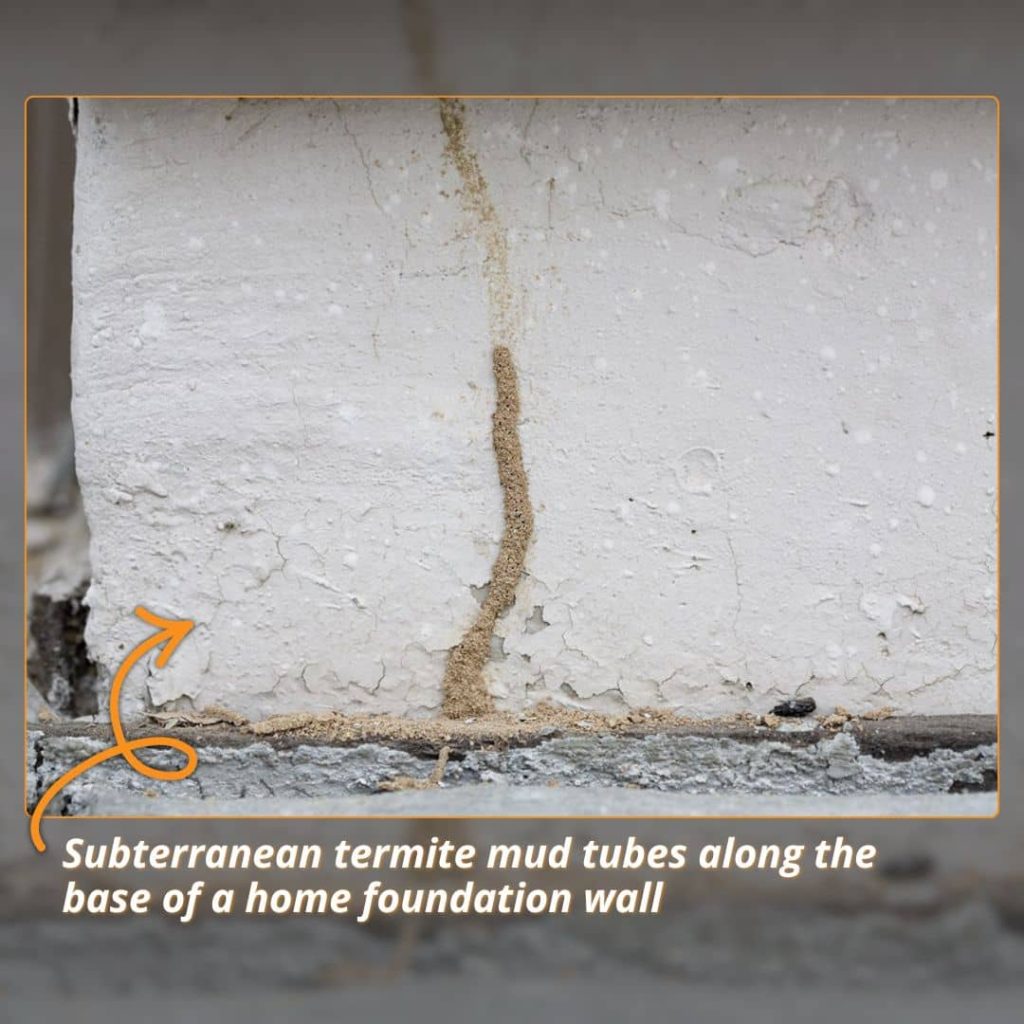
- Mud tubes along the foundation or plumbing entry points (subterranean termites)
- Frass, exit holes, or discarded wings (drywood termites)
- Wood decay or soft spots at sill plates, beams, and baseboards
- Earth-to-wood contact, flower beds against the home, or wood debris near the foundation
- Evidence of prior infestations that were treated but not disclosed
The interior portion covers baseboards, window and door frames, and visible wood structural members. The exterior covers foundation walls, deck posts, garage framing, and any wood that contacts soil. A thorough inspection of a home of average size takes 30 to 60 minutes.
The FDACS-13645 Form
After the inspection, the licensed inspector completes Florida State Form FDACS-13645, which is the official WDO inspection report. The form documents active infestations, past infestations, evidence of damage, and conditions that are conducive to future activity. Your lender will request this form directly.
If you are purchasing through CFBI’s WDO termite inspection service page, you will receive the completed form and a detailed report the same day.
What Happens If the Inspection Finds Termites?
Finding termite activity does not automatically kill the deal. What happens next depends on the extent of the damage and the type of loan you are using.
For VA and FHA loans, the seller is generally required to treat any active infestation and repair structural damage before the loan can close. The lender may require a clearance letter from the pest control company confirming the property is now free of active activity.
For conventional loans and cash purchases, the discovery is a negotiating point. You can ask the seller to remediate as a condition of closing, request a price reduction to cover treatment and repairs, or walk away if the damage is extensive enough.
Either way, knowing about a problem before closing is far better than finding it after. Termite damage often looks like water damage from the inside, with buckled floors, soft drywall, or sagging ceilings that do not show up until the problem is advanced. The CFBI inspection report includes photos of any findings along with a clear explanation of what the evidence means.
You can also review our home inspection pricing and rates [LINK] to see how WDO services are bundled with a standard inspection.
How Much Does a Termite Inspection Cost?
A standalone WDO inspection in Florida typically runs between $75 and $175, depending on the size of the property and whether it is bundled with a standard home inspection.
When added on as part of a full CFBI home inspection, the cost is lower than a standalone appointment because the inspector is already at the property.
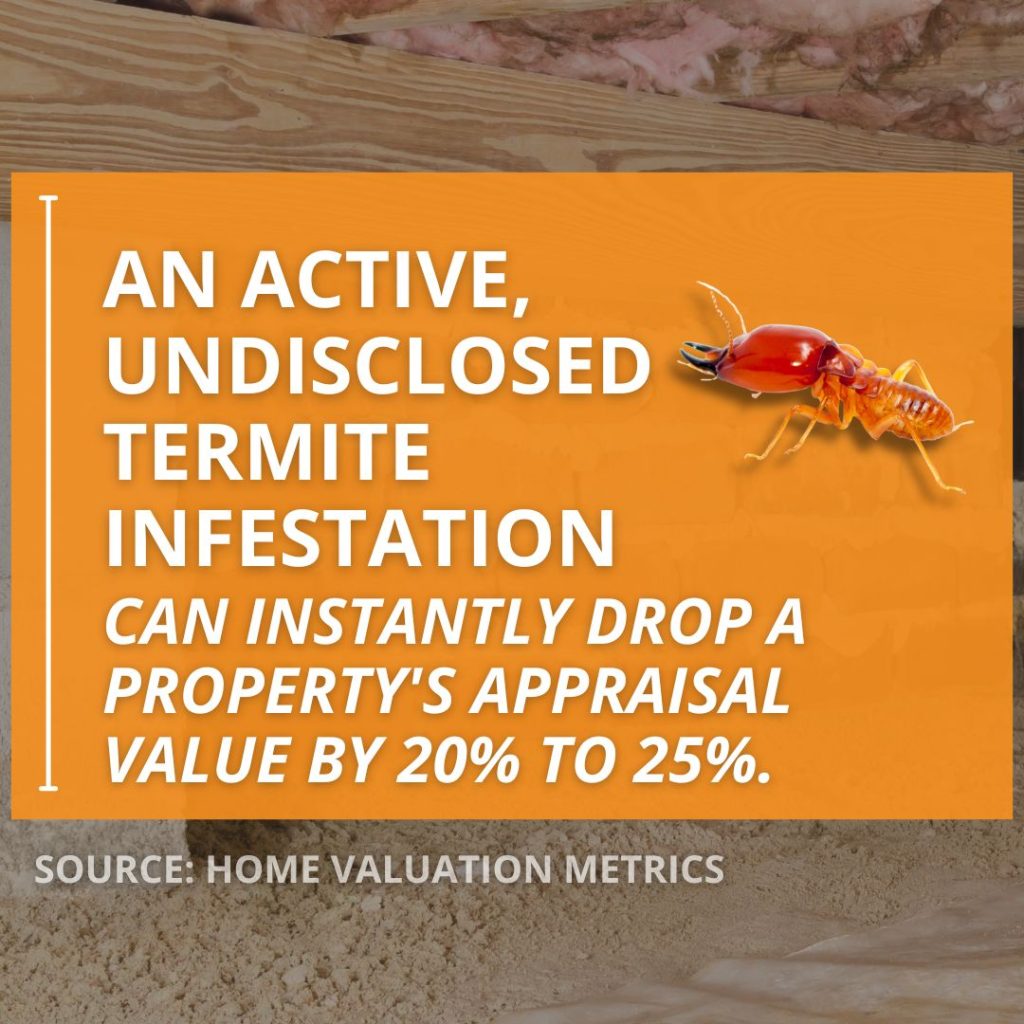
The cost is small relative to the risk. Termite treatment alone can run from $500 for a localized treatment to several thousand dollars for tent fumigation on a larger home with drywood termites.
Structural repairs from long-term undetected infestations can reach $10,000 or more in severe cases. A $100 inspection is straightforward protection against that exposure.
Related Questions to Explore
What does a termite inspection include? A Florida WDO termite inspection covers the full interior, exterior, attic, and crawlspace of the home. The inspector checks all wood components and surrounding areas for active infestations, past damage, fungal decay, and conditions that attract wood-destroying organisms. The result is a completed FDACS-13645 form plus a photo-documented report. You can learn more about what to expect from a CFBI home inspection [LINK].
Should I get a termite inspection when buying a new home? Yes. New construction homes are not immune to termite activity. Termites can enter during construction through soil disturbed by grading, and builders sometimes leave wood debris under or near the foundation. New homes also may not yet show visible signs of an infestation that started during the build. A WDO inspection gives you a documented baseline.
How long does a termite inspection take? Most WDO inspections at a typical single-family home take 30 to 60 minutes. Larger homes, homes with extensive crawlspace areas, or properties with known prior activity may take longer. The inspector will not rush this: checking inside wall cavities, attic trusses, and foundation perimeter takes time to do correctly.
What is often mistaken for termites? Carpenter ants are the most common mix-up. They also swarm, produce frass, and cause wood damage, but they remove wood rather than eating it. Powderpost beetles leave behind a fine sawdust-like frass in wood grain. Winged carpenter ants have a pinched waist and bent antennae; winged termites have a straight body and straight antennae.
A licensed WDO inspector can tell the difference on sight. Grand Slam Pest Control in Texas has a useful breakdown of common termite look-alikes if you want to compare before scheduling an inspection.
When to Call a Professional for a Termite Inspection
If you are buying a home in Florida, do not wait until a lender requires the inspection to schedule one. Getting the WDO inspection done early in the due diligence period gives you more time to negotiate if problems are found.
It also means you are not rushing the inspection at the end of the contract window.
Call a licensed WDO inspector if you notice any of these signs before or after purchase:
- Small piles of sawdust-like frass near baseboards or window sills
- Wings discarded near windowsills or doorways (sign of a recent swarm)
- Hollow-sounding wood when you knock on walls or floors
- Buckling or soft spots in floors that are not explained by water damage
- Mud tubes along the exterior foundation wall
CFBI’s WDO-licensed inspectors serve the Orlando area and across Central Florida, including Volusia County, Polk County, and Wesley Chapel. Inspections can typically be scheduled within a few business days. Use our online quote tool [LINK] to get an accurate price based on your home’s size and to book your appointment directly.
Conclusion
Most Florida buyers need a termite inspection before their loan can close. VA and FHA loans require one, and many conventional lenders do as well. Even when it is not required, a WDO inspection for $75 to $175 is one of the smartest protections a buyer can add to their due diligence checklist.
Key takeaways:
- Florida law does not require a termite inspection for cash sales, but lenders almost always do
- VA and FHA loans mandate a WDO inspection and the FDACS-13645 form before closing
- A licensed WDO inspector, not a standard home inspector, must perform the inspection
If you are buying a home in Central Florida and need a licensed WDO inspection, contact CFBI or use the online scheduler to get booked.