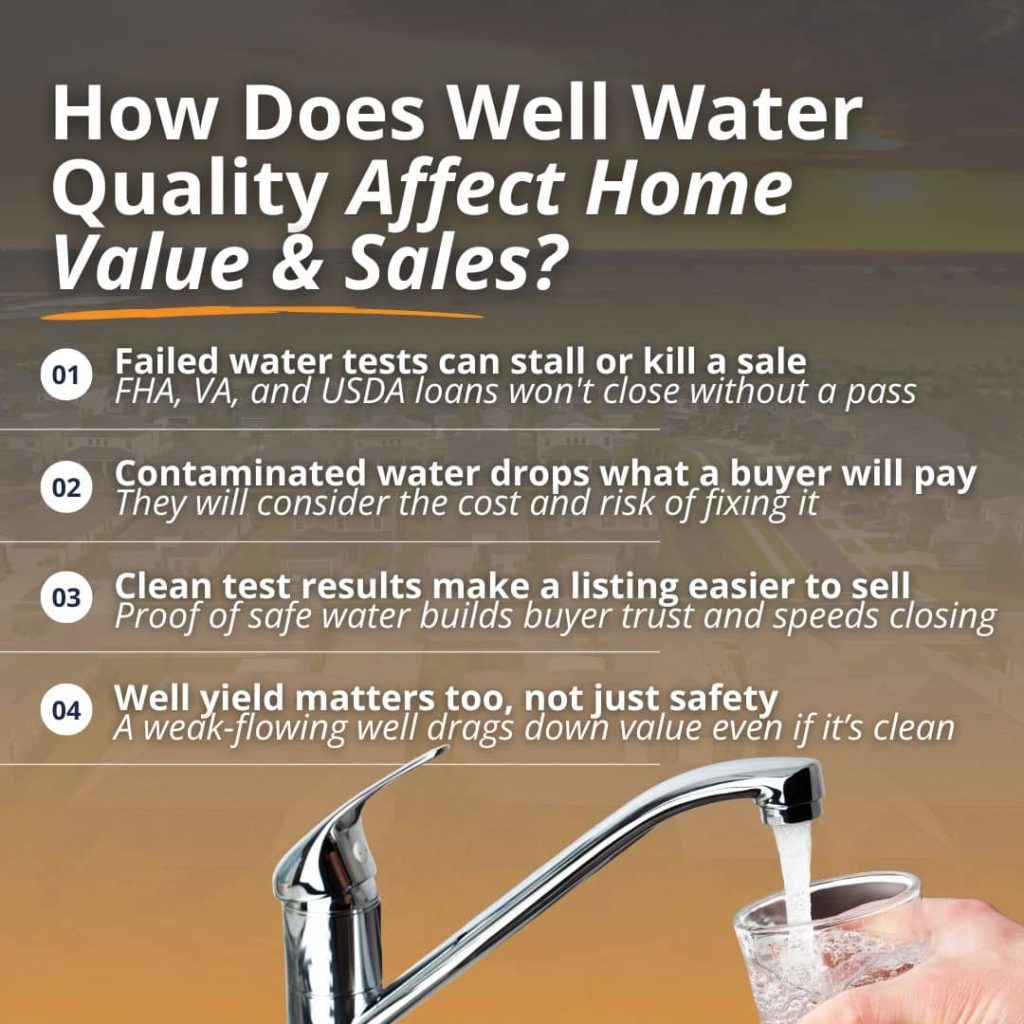
Well water quality has a direct effect on what a home is worth and how smoothly it sells. Clean, safe well water protects a property’s value and reassures buyers, while contaminated water can lower the price, delay closing, or end a deal entirely. For homes bought with an FHA, VA, or USDA loan, a passing water test is not optional, because the lender requires it before closing.
If you are buying or selling a home with a private well in Central Florida, here is how water quality shapes the sale and what you can do to stay ahead of it.
Why Does Well Water Quality Affect a Home’s Value?
A home is only as valuable as it is livable, and safe drinking water is part of that. A property with clean, well-maintained well water holds its value and appeals to today’s health-conscious buyers.
A home with contaminated water or a failing well is worth far less than a comparable property, because the buyer inherits the cost and the risk of fixing it. In the most serious cases, a home without a reliable source of safe water is considered uninhabitable, and the value drops sharply.
Buyers actually weigh two things when it comes to a well. The first is quality, meaning whether the water is safe to drink. The second is quantity, meaning whether the well produces enough water for the household. Both affect value. A well that tests clean and delivers a steady flow supports the full appraised value of the home. A well with bacteria, high nitrates, or a weak yield becomes a bargaining chip that pulls the price down.
Documented proof of good water works in your favor. Because private wells are not regulated the way city water is, the responsibility for proving the water is safe falls on the homeowner. That means a recent, clean water test carries real weight with buyers and helps a listing stand out from comparable homes.
How Does Well Water Quality Affect a Home Sale?
Water quality does not just affect price. It affects whether the sale closes at all. Water testing problems are one of the most common reasons FHA and VA closings get delayed. When a test comes back with bacteria, high nitrates, or another issue, the deal can stall while the seller arranges treatment, the parties renegotiate, or the buyer walks away.
Here is how a water issue usually plays out during a sale:
- The water is tested as part of the buyer’s due diligence or a loan requirement.
- Results come back. A clean result keeps the timeline on track. A failed result starts the clock on a fix.
- The seller addresses the problem, for example, shock chlorination for bacteria or a treatment system for nitrates, and the water is retested.
- If the fix works and there is enough time, the sale moves forward. If not, the buyer can renegotiate or use an inspection contingency to walk away.
For buyers, this is why water testing belongs in your due diligence from the very start. It helps to understand what a well inspection can reveal about your water quality before you commit to a property. Catching problems early keeps you in control of the timeline instead of racing a closing deadline.
Well Water Testing Requirements for FHA, VA, and USDA Loans
If a buyer is financing a home with a government-backed loan and the property uses a private well, the lender requires a water test before closing. The exact rules vary by program.
| Loan program | Standard the water must meet | Who collects the sample | Good to know |
|---|---|---|---|
| FHA | Local health authority standard, or EPA drinking water standards if no local one exists (HUD Minimum Property Requirements) | Independent third party | No passing test, no approval |
| VA | VA Minimum Property Requirements; may require connecting to public water if it is available and affordable | Disinterested third party (not buyer, seller, or agent) | Test is valid for 90 days |
| USDA | EPA minimum thresholds | Independent third party | Required when the financed home uses a well |
All three programs typically test for total coliform bacteria, E. coli, nitrates, nitrites, and lead. The common thread is simple: no passing test, no loan approval.
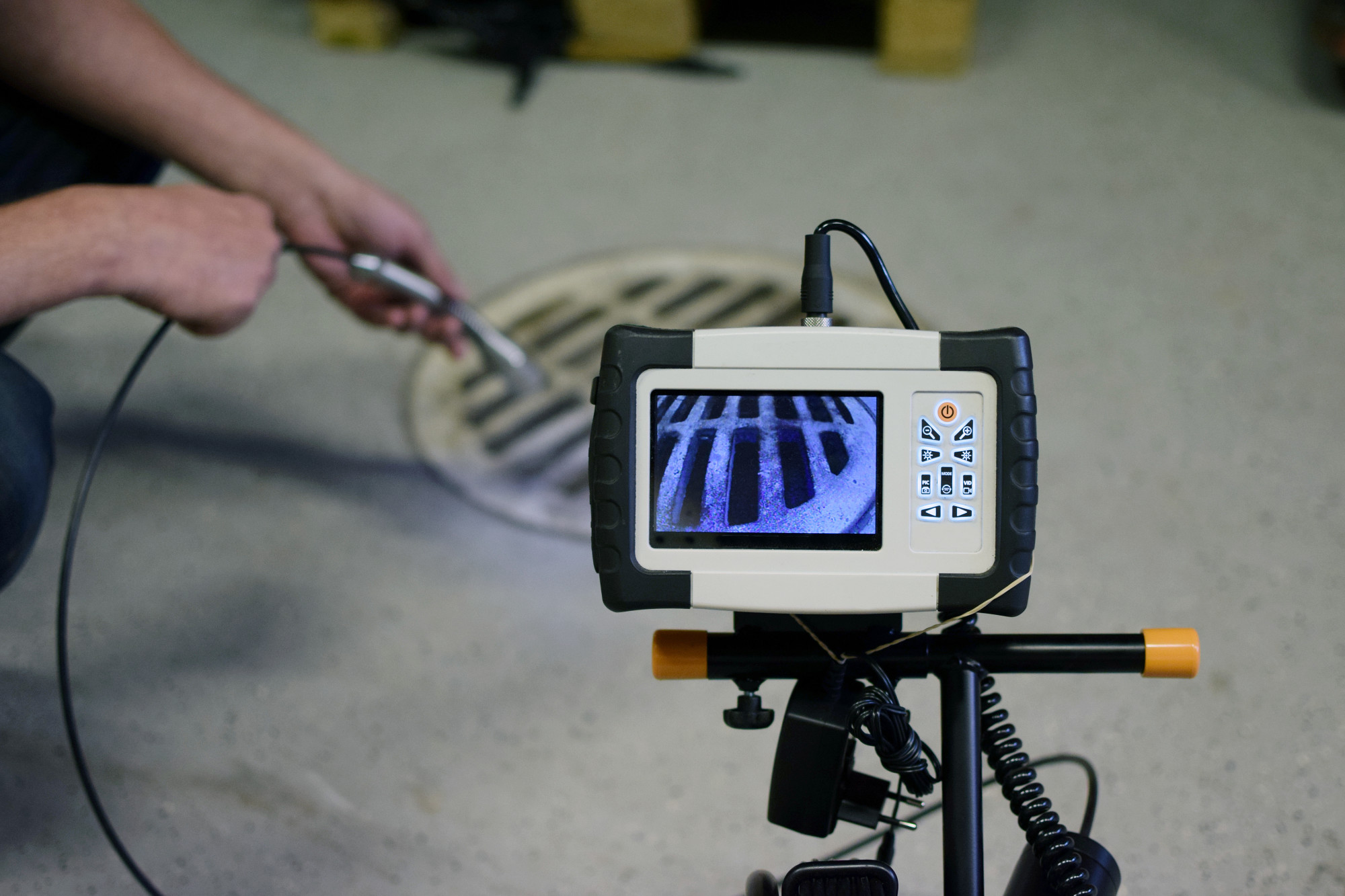
That third-party rule matters in practice. Because the sample cannot be collected by anyone involved in the sale, a licensed home inspector is often the one who collects it as part of professional well water quality testing and sends it to a state-certified lab. That keeps the result clean, neutral, and acceptable to the lender.
What Central Florida Buyers and Sellers Should Know
Central Florida sits on porous limestone, which makes the groundwater that feeds private wells especially vulnerable to contamination. Agricultural runoff from groves and farms, nearby septic systems, and the region’s frequent heavy rain can all push contaminants into a well.
The most common problems around Orlando and the surrounding counties include bacteria, nitrates, hard water, iron, and a sulfur or rotten-egg smell.
Florida does not require ongoing well testing once you have closed and moved in, which surprises a lot of homeowners. The Florida Department of Health recommends testing private well water every year for bacteria and nitrates, and the EPA makes the same annual recommendation.
For buyers, that means a single passing test at closing is a starting point, not a lifetime guarantee. Plan to test yearly once the home is yours.
For sellers in Orange, Seminole, Lake, and Osceola counties, a recent clean water test is one of the easiest ways to build buyer trust and keep a deal moving. It shows the water has been cared for and removes a common last-minute surprise that can stall a closing.
Common Well Water Contaminants That Affect Value
A well water test can flag several contaminants, and each one affects safety, livability, and value in a different way.
| Contaminant | Where it comes from | Why it matters |
|---|---|---|
| Total coliform & E. coli | Surface water intrusion, a cracked well cap, nearby septic | Signals a contamination pathway and fails most loan tests |
| Nitrates & nitrites | Fertilizer, agricultural runoff, septic systems | Health risk, especially for infants, and common in farm areas |
| Lead | Older plumbing and fixtures | Serious health risk, flagged on FHA and VA tests |
| Arsenic & heavy metals | Naturally occurring in some groundwater | Long-term health risk |
| Iron & manganese | Naturally occurring minerals | Staining, metallic taste, and appliance wear |
| Low pH (acidic) & sulfur | Local geology and decaying organic matter | Corrosion, rotten-egg odor, and shorter equipment life |
Some of these you can taste or smell. Many you cannot, which is why testing is the only reliable way to know what is in the water. Water quality also affects the equipment that delivers it, since sediment and minerals influence how long a well pump lasts.
A buyer is inheriting both the water and the system behind it, so both deserve a look before closing.
What Should Sellers and Buyers Do?
A little preparation keeps a water issue from derailing a sale. Here is where each side should focus.
| If you are selling | If you are buying |
|---|---|
| Test the water before you list | Add a water test to your inspection contingency |
| Keep records of past tests and well work | Use a neutral third party to collect the sample |
| Treat and retest any issues early | Ask for the well log, age, and depth |
| Share clean results with buyers up front | Budget for annual testing after you move in |
The theme on both sides is the same: test early and keep records. Time is what turns a small water problem into a deal-breaker, and good documentation is what keeps a buyer confident.
Related Questions to Explore
Does well water lower a home’s value?
Not on its own. Clean, safe well water does not lower value, and many buyers prefer it. What lowers value is poor water quality or a failing well, because the buyer takes on the cost and the health risk. Documented proof of clean water can actually be a selling point.
Do you need a water test to sell a house with a well?
Florida does not require a test simply to sell, but if the buyer uses an FHA, VA, or USDA loan, a passing test is required before closing. Many sellers test before listing anyway to avoid last-minute delays.
Who can collect the water sample during a home sale?
For VA and most lender-required tests, the sample must be collected by a neutral third party, not the buyer, seller, or agent. A licensed home inspector or local health authority typically handles it.
How often should well water be tested in Florida?
The Florida Department of Health and the EPA both recommend testing private well water at least once a year for bacteria and nitrates, and more often if you notice a change in the water’s taste, smell, or color.
What happens if the well water fails the test?
The sale does not have to fall through. The seller can install treatment, the parties can renegotiate, or the buyer can request repairs. The key is leaving enough time before closing to address it and retest.
When to Call a Professional
If you are buying or selling a home with a private well in Central Florida, have the water tested by a licensed professional rather than a store-bought kit, especially when a loan is involved. A professional collects the sample correctly, sends it to a state-certified lab, and delivers results that lenders will accept.
A pro can also spot well and equipment problems that a water sample alone will not reveal, like a cracked cap or an aging pump. Central Florida Building Inspectors has been inspecting Orlando-area homes since 1988 and can handle well water quality testing as part of your inspection.
Conclusion
Well water quality is not a small detail in a home sale. It can raise a property’s value and reassure buyers, or it can delay closing and cost thousands to fix. Whether you are listing a home with a well or buying one, testing the water early puts you in control of the timeline and the negotiation.
Schedule well water quality testing with Central Florida Building Inspectors and know exactly what is in the water before it affects the deal.