A sewer scope is a video inspection of the underground lateral sewer line that carries waste from your house to the city main or your septic tank. An inspector feeds a small waterproof camera on a flexible cable through a cleanout or drain access point and watches a live feed, looking for cracks, blockages, and root intrusion that a standard home inspection never sees.
For anyone buying a Central Florida home, it is one of the cheapest ways to avoid a five-figure repair surprise after closing.
What Is a Sewer Scope?
A sewer scope is a camera inspection of your home’s lateral sewer line: the pipe you own that runs from your foundation out to the municipal sewer main or a septic tank. A waterproof camera on a flexible push cable travels the length of that pipe while the inspector reviews the footage in real time, recording the condition of the line and marking where any problems sit.
The reason this matters is simple. A standard pre-purchase home inspection covers what an inspector can see and reach: the roof, visible plumbing fixtures, the electrical panel, HVAC, and structure. It does not include the pipe buried three or four feet underground. A sewer scope fills that gap. You may also hear it called a sewer camera inspection or a sewer line inspection, and they all describe the same process.
How a Sewer Scope Inspection Works
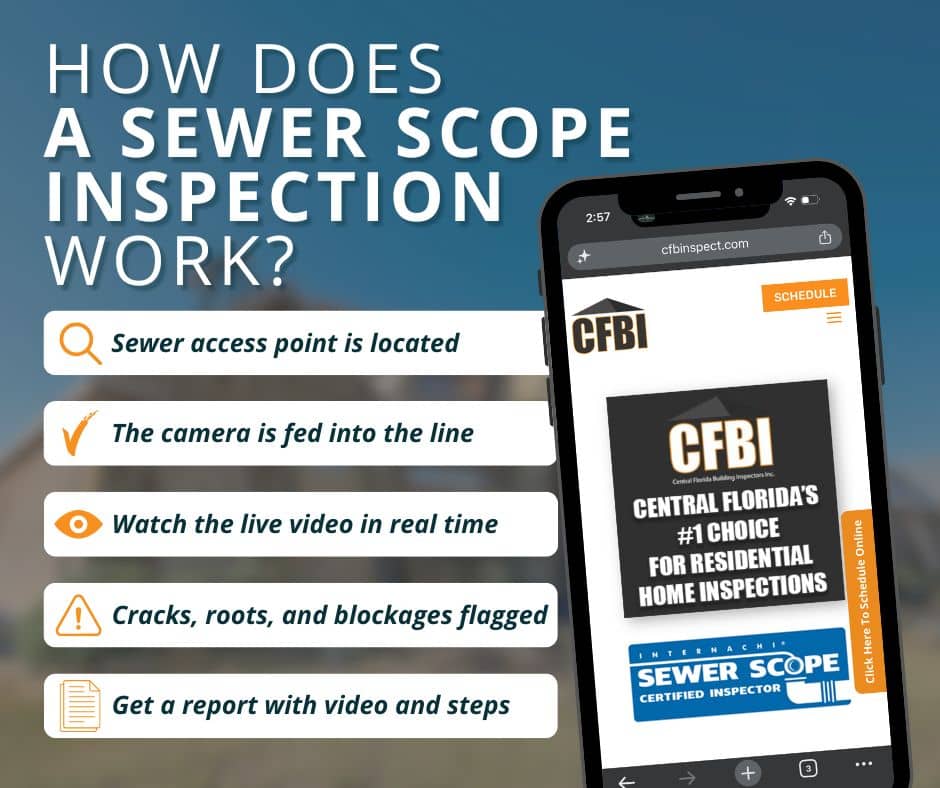
The process is quick, non-invasive, and involves no digging. Here is what happens on site:
- Locate the access point. The inspector finds a cleanout or a suitable drain opening that connects to the main line.
- Feed the camera. A waterproof camera mounted on a flexible cable is pushed through the pipe toward the municipal connection or septic inlet.
- Review the live feed. The inspector watches a monitor in real time, noting the location of anything unusual along the run.
- Deliver the report. After the run, you receive a written report with recorded video, still images, and a plain-language summary of what was found and what it means.
Most inspections take roughly 30 to 60 minutes depending on the length of the line and how easy the access point is to reach. CFBI’s inspectors follow InterNACHI’s sewer scope inspection standards, the same national standards our team is certified under.
What Problems a Sewer Scope Finds
A sewer scope catches damage long before it becomes a backup in your bathroom. The most common findings fall into a few categories:
- Tree root intrusion. Roots seek out moisture and work into the pipe through joints and small cracks, then grow until they choke the line. This is the single most common issue inspectors find.
- Cracks, breaks, and collapses. Ground movement, age, and soil pressure crack pipe walls. Left alone, a hairline crack becomes a full break or collapse.
- Bellies (sagging sections). When a section of pipe sinks, waste and debris pool there instead of flowing through, causing repeat clogs.
- Blockages. Grease, debris, and foreign objects restrict flow.
- Corrosion and offset joints. Older metal pipe corrodes from the inside, and shifting soil pulls joints out of alignment.
A cracked or broken sewer line also becomes an easy entry route for pests. Roaches and rodents travel up compromised lines and floor drains, so unexplained signs of a cockroach problem near drains can point back to a damaged pipe.
Hidden leaks are another downstream effect: waste seeping into soil under a slab holds moisture, and that moisture can drive the same kind of persistent musty odor homeowners often blame on humidity.
If sewage exposure has gone on long enough, it is worth pairing the scope with a mold inspection.
Common Issues in Older Central Florida Homes
Pipe material tells you a lot about risk. Many older Central Florida homes still have cast iron or clay sewer lines, and some built between the 1940s and early 1970s have Orangeburg pipe, a tar-paper product that deforms and collapses with age.
Cast iron corrodes and scales from the inside; clay joints crack and invite roots. Add Florida’s sandy, shifting soil and heavy tree cover, and a line that looked fine on the surface can be failing underground. Age of the home and nearby mature trees are two of the strongest reasons to scope before you buy.
Why a Sewer Scope Matters When You’re Buying a Home
The whole point of a sewer scope is to find expensive problems while you still have leverage to do something about them. Sewer line repairs are not small: depending on the fix, they run from about $1,000 for a minor repair to $25,000 or more for a full replacement, and trenchless or dig-and-replace work in a mature neighborhood sits at the high end.
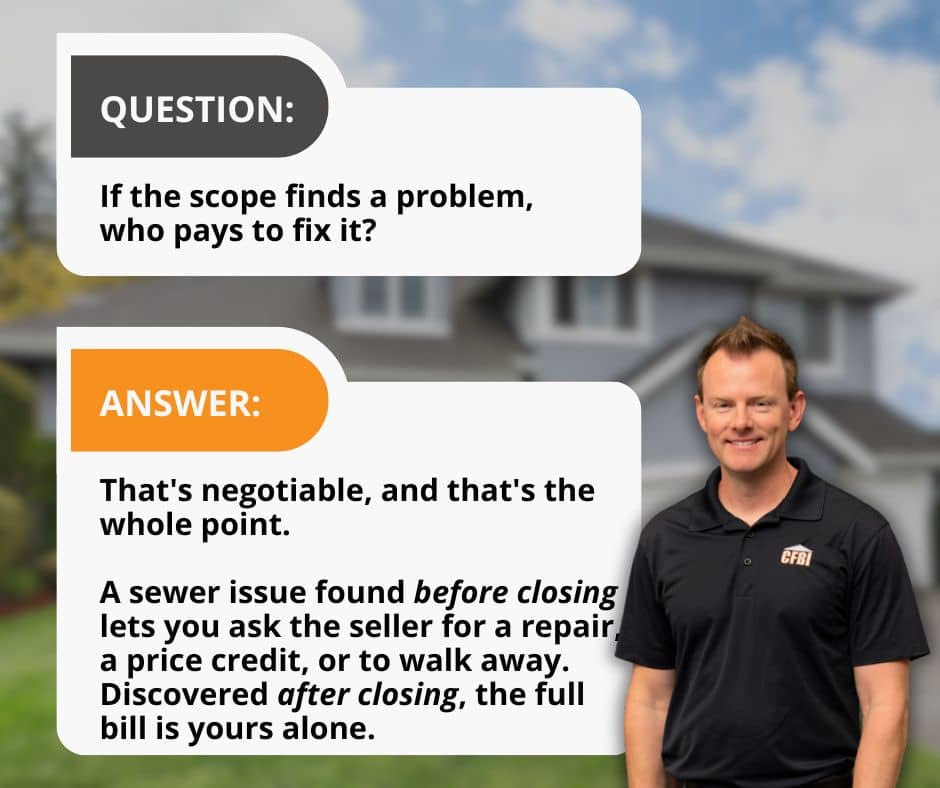
Because the underground line is outside a standard inspection, a buyer who skips the scope often discovers the damage only after moving in, when it is entirely their bill. A buyer who scopes during the due-diligence window has options: negotiate a repair, ask for a credit, or walk away.
For a small upfront cost, you trade an unknown for a documented picture of one of the most expensive systems in the house. This is the same reason a scope belongs alongside the rest of your due diligence, right there with the main inspection and any specialty testing.
How Much Does a Sewer Scope Cost, and How Long Does It Take?
A standalone sewer scope typically costs between $100 and $500 nationally, and it is often less when added to a full home inspection because the inspector is already on site. The exact price depends on your location, line length, and access. For current Central Florida pricing, see CFBI’s pricing and rates or contact our office.
On timing, most inspections wrap in 30 to 60 minutes. A short, accessible line with a clean cleanout goes fast; a long run or a hard-to-find access point takes longer.
Related Questions to Explore
Do I need a sewer scope if the home is newer?
Newer homes are lower risk, but not zero risk. Poor installation, settling, and construction debris left in the line all show up in newer builds. If the home is under about 10 years old with no mature trees nearby, a scope is optional. Older than that, or with big trees near the line, it is worth doing.
Is a sewer scope worth it?
For most buyers, yes. A scope costs a few hundred dollars at most and can flag a repair that costs tens of thousands. Even when the line comes back clean, you get a recorded baseline of its condition, which is useful documentation to keep.
Can a sewer scope damage my pipes?
No. The camera is small, flexible, and designed to travel through the pipe without force. A trained inspector will not push through a hard obstruction or a collapsed section, which protects both the equipment and your line. If the camera cannot pass a certain point, that itself is a finding worth investigating.
How often should you get a sewer scope?
Beyond the home-purchase scope, a good rule of thumb is every few years for older homes, homes with recurring drain issues, or properties with large trees near the line. If you have had backups or slow drains, scope sooner rather than waiting for the next failure.
When to Call a Professional
Call a licensed inspector for a sewer scope any time you are buying a home, especially an older one or one with mature landscaping, and whenever you notice warning signs in a home you already own: repeated drain clogs, gurgling toilets, sewage odors, unusually lush or soggy patches in the yard, or slow drains across multiple fixtures.
These often trace back to the line. A camera inspection tells you exactly what is wrong and where, so any repair is targeted instead of guesswork. It also takes an inspector with the right equipment and the certification to read what the camera shows, which is not part of a standard visual home inspection.
Conclusion
A sewer scope turns the most expensive guess in a home purchase into a documented answer. For a small cost, you find out whether the line under the property is sound or hiding a five-figure repair, while you still have room to negotiate.
If you are buying, selling, or just want peace of mind on an older Central Florida home, schedule a sewer scope inspection with CFBI’s certified team. Contact us today to set up an appointment or ask a question.