A pool inspection is a professional evaluation of a swimming pool’s structure, equipment, electrical systems, and safety features, done before you buy a home so you know the condition of one of the most expensive things in the backyard. It is usually a separate add-on to a standard home inspection, not part of it.
This checklist walks through exactly what a licensed inspector examines, what falls outside the inspection, and what it costs, so you know what you are paying for and what the report should tell you.
What Is the Scope of a Pool Inspection?
A pool inspection is a visual, operational evaluation of the pool and its systems by a qualified inspector. It confirms the shell and deck are sound, the equipment runs, the electrical is safe, and the required safety barriers are in place. The goal is to catch expensive or dangerous problems before closing, while you still have room to negotiate.
Most buyers assume the pool is part of the home inspection. It usually is not. A standard home inspection covers the house itself, and the pool is typically excluded or offered as a specialty add-on because it takes different equipment and training to evaluate. If a pool matters to your purchase, ask for a dedicated pool inspection in writing so it is not skipped.
Buyers are not the only ones who benefit. Sellers use a pre-listing pool inspection to fix problems before they surface in a buyer’s report and stall the deal, and existing owners use one to catch small issues before they turn into expensive repairs. In Central Florida, where pools run close to year-round, this matters more than it does in colder states.
Equipment rarely gets a winter rest, and constant sun, humidity, and salt air wear on finishes, screen enclosures, and metal hardware faster than most buyers expect.
The Pool Inspection Checklist
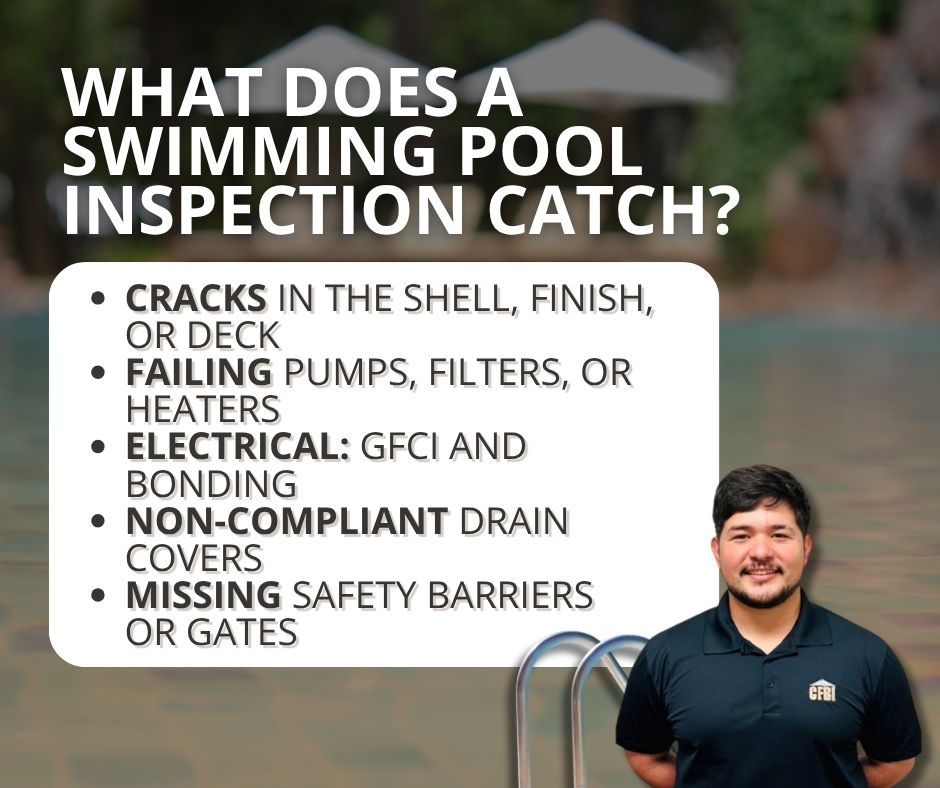
A thorough pool inspection follows the same logic every time: structure first, then the systems that keep it running, then the features that keep people safe. Here is what a licensed inspector examines, grouped by system. This mirrors InterNACHI’s pool inspection checklist, the national standard our inspectors are certified under.
Pool structure and interior finish
- Interior surface (plaster, pebble, tile, fiberglass, or vinyl liner) for cracks, hollow spots, staining, and wear
- Waterline tile and grout for looseness or missing pieces
- Visible shell cracks that could point to structural movement or leaks
- Signs of past patching or resurfacing
Cracks in the shell are not always cosmetic. A hairline surface crack is common, but a structural crack can signal soil movement under the pool, the same forces that cause warning signs of foundation cracks in a house. An inspector notes the location and pattern so you know whether it is minor or worth a specialist’s look.
The finish type also tells the inspector what to expect. Plaster and pebble surfaces show their age through rough spots, etching, and staining, and typically need resurfacing every 10 to 15 years. Fiberglass shells can develop surface blisters or spider cracks in the gelcoat. Vinyl liners tear and fade and have the shortest lifespan.
Resurfacing a pool is not cheap, often several thousand dollars and up, so knowing where the finish sits in its life cycle is real information when you are negotiating a price.
Deck, coping, and safety barriers
- Coping (the cap around the pool edge) for cracks, separation, and trip hazards
- Deck surface for cracking, settling, and drainage that runs toward the pool instead of away
- Safety barrier: a fence at least four feet high, or an approved alternative
- Self-closing, self-latching gates and any door or pool alarms
Florida takes pool safety seriously. Under Florida’s Residential Swimming Pool Safety Act, a residential pool must have at least one approved safety feature, such as a barrier, an approved cover, or self-latching gates and door alarms. An inspector flags where the pool falls short so you know what a compliant fix would take.
Pump, filter, and circulation equipment
- Pump and motor operation, noise, and leaks
- Filter type and condition (sand, cartridge, or DE)
- Heater operation, if present
- Salt chlorine generator cell, if the pool is a saltwater system
- Valves, timers, automation panels, skimmers, and return jets
- Visible plumbing for leaks and proper water circulation
Equipment is where the surprise costs hide. A pool pump replacement runs several hundred dollars, a heater can be well over a thousand, and a salt cell, common on Central Florida pools, is a wear item that needs periodic replacement. An inspector confirms each component actually runs and flags anything near the end of its life, so you are not discovering a dead heater the first cold week after closing.
Dead or weak circulation is a red flag. When a pump or filter is not moving water, the pool turns stagnant, and in Florida a stagnant pool quickly becomes a mosquito breeding ground. If the equipment is not running during the inspection, that is worth investigating before you close.
Electrical safety: GFCI and bonding
- GFCI (ground-fault) protection on pool receptacles and equipment
- Equipotential bonding of metal components to prevent shock
- Underwater light and wet-niche condition
- Panel and any sub-panel serving the pool
Water and electricity are the most dangerous combination at a pool, so this section matters more than any other. Missing GFCI protection or improper bonding is a serious safety defect, not a maintenance item.
Drains and anti-entrapment covers
- Main drain and suction outlet covers for compliance with anti-entrapment standards
- Signs of missing, cracked, or outdated drain covers
Modern anti-entrapment drain covers exist to prevent swimmers, especially children, from being trapped by suction. An inspector confirms the covers are present and compliant.
Screen enclosure and surrounding area
- Screen cage structure, fasteners, and corrosion (common in Florida’s humidity and salt air)
- Screen panels for tears and gaps
- Enclosure roof and any attachment to the house
What a Pool Inspection Does Not Cover
Knowing the limits keeps expectations realistic. A standard pool inspection is visual and operational, so it generally does not include:
- Water chemistry testing. Balancing chlorine, pH, and alkalinity is a maintenance task, not part of the structural and safety inspection.
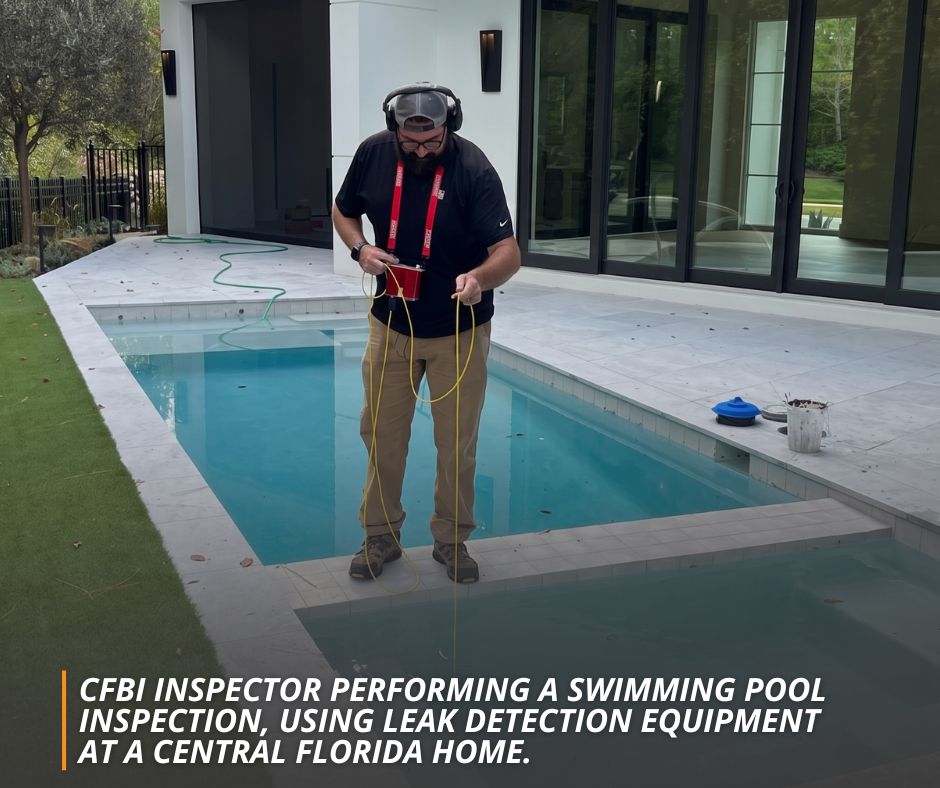
- Underground leak location. An inspector can flag signs of a leak, but pinpointing an underground pipe leak usually requires a separate leak-detection test.
- A guarantee of future performance. The report reflects condition on the day of the inspection, not a warranty that equipment will keep running.
If any of these matter to you, ask up front so you can arrange the right specialty test.
How Much Does a Pool Inspection Cost, and How Long Does It Take?
A standalone pool inspection typically runs between $125 and $300 nationally, and it is often less when bundled with a full home inspection since the inspector is already on site. Price depends on the pool’s size, type, and equipment. For current Central Florida pricing, see CFBI’s pricing and rates or contact our office.
A few things push the price toward the higher end: a spa or attached hot tub, a saltwater system, a heater, a screen enclosure, and older equipment that takes longer to evaluate. Weigh that against what it protects you from. A single missed defect, a cracked shell, a failing heater, or a non-compliant safety barrier costs far more to fix than the inspection costs to catch it.
On timing, most pool inspections take 30 to 60 minutes. A small, well-maintained pool goes quickly; a larger pool with a heater, spa, and screen enclosure takes longer.
Related Questions to Explore
Does a standard home inspection include the pool?
Usually not. A standard home inspection focuses on the house, and the pool is typically excluded or offered as a specialty add-on. If the home has a pool, request a dedicated pool inspection in writing so it is not overlooked.
How much does a pool inspection cost?
Most standalone pool inspections run $125 to $300, and less as an add-on to a full home inspection. Pool size, equipment, and whether there is a spa or heater all affect the price.
How long does a pool inspection take?
Typically 30 to 60 minutes, depending on the pool’s size and equipment. It is often done at the same visit as the home inspection, which is why buyers ask how long a home inspection takes overall.
Is it worth inspecting a green or neglected pool?
Yes, and arguably more so. A green or stagnant pool often hides equipment failures, structural problems, and safety issues, and it can be an active mosquito source. An inspection tells you whether the pool is restorable or a costly liability before you commit.
When to Call a Professional
Call a licensed inspector for a pool inspection any time you are buying a home with a pool, especially an older pool, a screened enclosure, or a pool that looks neglected.
Warning signs in a pool you already own are worth a professional look too: cracks in the shell or deck, equipment that will not run, tripped breakers around the pool, a barrier or gate that does not self-latch, or water you cannot keep clear.
A qualified inspector has the training to tell a cosmetic issue from a structural or safety defect, and the report gives you documentation to act on, whether that means negotiating a repair or planning maintenance.
Conclusion
A pool can be the best part of a Central Florida home or its most expensive surprise, and the only way to know which before closing is a real inspection. This checklist is what a professional covers: structure, equipment, electrical, drains, and safety.
If you are buying, selling, or want a straight answer on the condition of your pool, schedule a swimming pool inspection with CFBI’s certified team. Contact us today to book or ask a question.