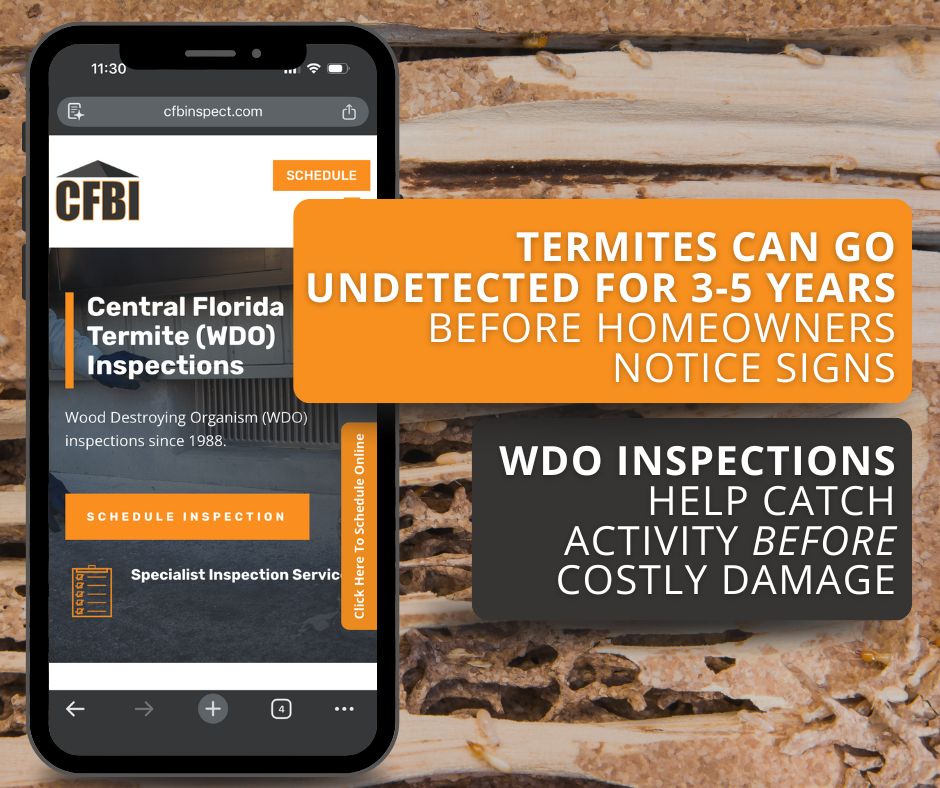
Termite inspections are not required by Florida law for most home purchases, but your lender almost certainly requires one before closing. VA loans and FHA loans both mandate a wood-destroying organism (WDO) inspection. Even with a conventional loan, your bank may request one depending on the property’s location and age.
At Central Florida Building Inspectors (CFBI), we perform licensed WDO inspections across the Orlando metro and Central Florida. Here is what every buyer needs to know about when termite inspections are required, what they cover, and what happens when issues are found.
Are Termite Inspections Required by Law?
Florida law does not require a termite inspection for cash purchases or private sales. The requirement comes from your lender and your insurance company, not the state.
That said, Florida statutes and the Florida Administrative Code do require that buyers using financing must file a WDO inspection report with their mortgage company before closing.
Per HUD’s guidelines for FHA and VA loan property requirements, wood-destroying organism inspections are a standard part of the underwriting process for government-backed loans in high-risk states like Florida.
This means that while the law itself does not mandate the inspection for every sale, the practical reality for most buyers is that their lender will require one. Skipping it is only an option if you are paying cash and your homeowner’s insurance policy does not have its own inspection clause.
When Does Your Lender Require a Termite Inspection?
Lender requirements vary by loan type. Here is how each one works in Florida:
VA Loans
VA loans require a WDO inspection for all Florida purchases. Florida is classified as a high-risk state for termite activity, which means the VA mandates the inspection before the loan can close.
The inspection must be completed by a licensed pest control professional and documented on the standard NPMA-33 form. The seller is typically required to pay for the inspection, though this can be negotiated in the purchase contract.
FHA Loans
FHA loans also require a WDO inspection in Florida. The inspection is a prerequisite before the mortgage insurance agent approves the loan.
If the inspector finds active infestation or significant damage, the mortgage company may hold the loan until the seller addresses the issues. This protects the lender’s investment and gives the buyer documented proof of the home’s condition before closing.
Conventional Loans
Conventional loans leave the WDO inspection requirement to the individual lender’s discretion. Many conventional lenders do require one, particularly for older homes or properties in areas where subterranean and drywood termites are common.
Even when not technically required, waiving the inspection on a conventional loan in Florida is a financial risk. Termite damage is typically not covered by homeowner’s insurance, and repairs can run into the thousands.
What Does a Termite Inspection Cover in Florida?
A Florida WDO inspection is broader than a basic termite check. It is a full evaluation for wood destroying organisms, which includes termites, wood decaying fungi, powderpost beetles, and carpenter ants. A licensed WDO inspector, not a standard home inspector, must perform the inspection.
What Inspectors Look For
The inspector will walk the interior and exterior of the property, including the attic and any crawlspace, looking for:
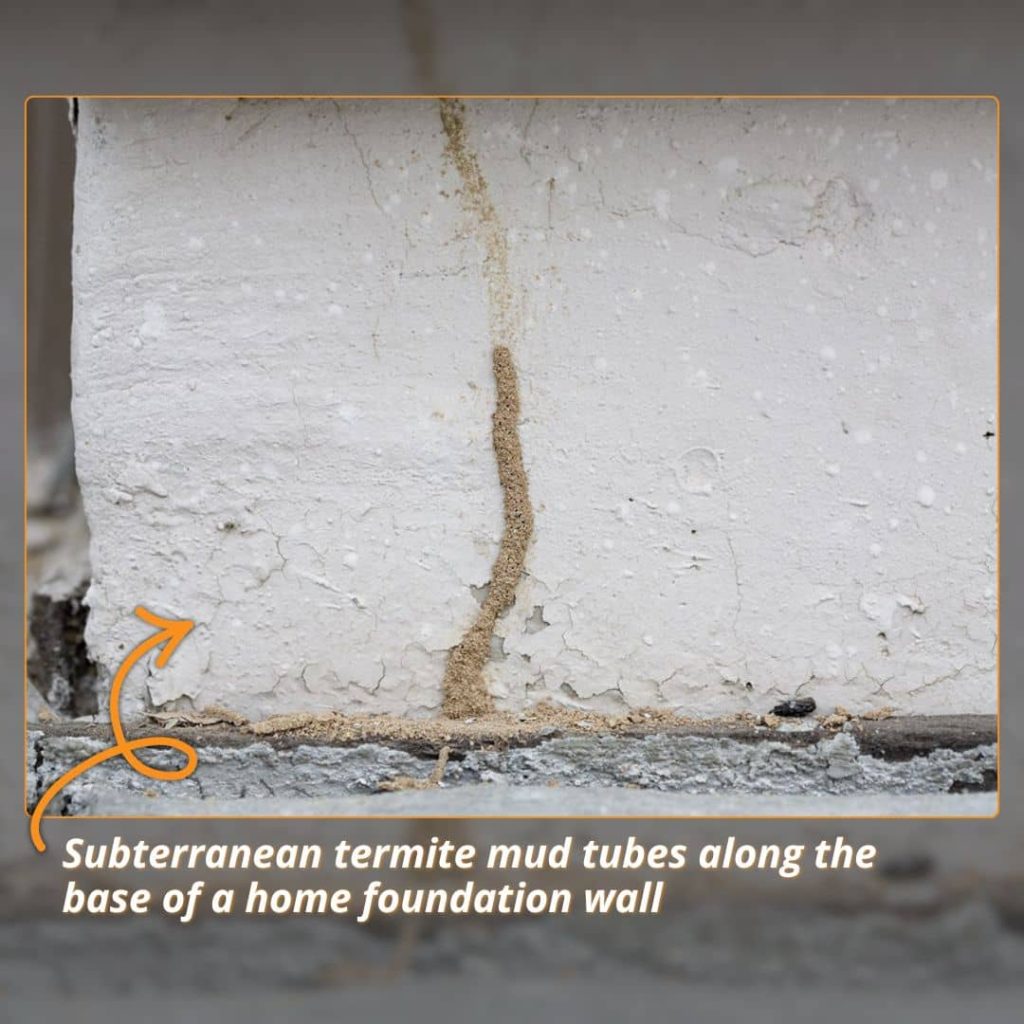
Mud tubes along the foundation or plumbing entry points (subterranean termites)
Wood decay or soft spots at sill plates, beams, and baseboards
Earth-to-wood contact, flower beds against the home, or wood debris near the foundation
Evidence of prior infestations that were treated but not disclosed
The interior portion covers baseboards, window and door frames, and visible wood structural members. The exterior covers foundation walls, deck posts, garage framing, and any wood that contacts soil. A thorough inspection of a home of average size takes 30 to 60 minutes.
The FDACS-13645 Form
After the inspection, the licensed inspector completes Florida State Form FDACS-13645, which is the official WDO inspection report. The form documents active infestations, past infestations, evidence of damage, and conditions that are conducive to future activity. Your lender will request this form directly.
If you are purchasing through CFBI’s WDO termite inspection service page, you will receive the completed form and a detailed report the same day.
What Happens If the Inspection Finds Termites?
Finding termite activity does not automatically kill the deal. What happens next depends on the extent of the damage and the type of loan you are using.
For VA and FHA loans, the seller is generally required to treat any active infestation and repair structural damage before the loan can close. The lender may require a clearance letter from the pest control company confirming the property is now free of active activity.
For conventional loans and cash purchases, the discovery is a negotiating point. You can ask the seller to remediate as a condition of closing, request a price reduction to cover treatment and repairs, or walk away if the damage is extensive enough.
Either way, knowing about a problem before closing is far better than finding it after. Termite damage often looks like water damage from the inside, with buckled floors, soft drywall, or sagging ceilings that do not show up until the problem is advanced. The CFBI inspection report includes photos of any findings along with a clear explanation of what the evidence means.
You can also review our home inspection pricing and rates [LINK] to see how WDO services are bundled with a standard inspection.
How Much Does a Termite Inspection Cost?
A standalone WDO inspection in Florida typically runs between $75 and $175, depending on the size of the property and whether it is bundled with a standard home inspection.
When added on as part of a full CFBI home inspection, the cost is lower than a standalone appointment because the inspector is already at the property.
The cost is small relative to the risk. Termite treatment alone can run from $500 for a localized treatment to several thousand dollars for tent fumigation on a larger home with drywood termites.
Structural repairs from long-term undetected infestations can reach $10,000 or more in severe cases. A $100 inspection is straightforward protection against that exposure.
Related Questions to Explore
What does a termite inspection include? A Florida WDO termite inspection covers the full interior, exterior, attic, and crawlspace of the home. The inspector checks all wood components and surrounding areas for active infestations, past damage, fungal decay, and conditions that attract wood-destroying organisms. The result is a completed FDACS-13645 form plus a photo-documented report. You can learn more about what to expect from a CFBI home inspection [LINK].
Should I get a termite inspection when buying a new home? Yes. New construction homes are not immune to termite activity. Termites can enter during construction through soil disturbed by grading, and builders sometimes leave wood debris under or near the foundation. New homes also may not yet show visible signs of an infestation that started during the build. A WDO inspection gives you a documented baseline.
How long does a termite inspection take? Most WDO inspections at a typical single-family home take 30 to 60 minutes. Larger homes, homes with extensive crawlspace areas, or properties with known prior activity may take longer. The inspector will not rush this: checking inside wall cavities, attic trusses, and foundation perimeter takes time to do correctly.
What is often mistaken for termites? Carpenter ants are the most common mix-up. They also swarm, produce frass, and cause wood damage, but they remove wood rather than eating it. Powderpost beetles leave behind a fine sawdust-like frass in wood grain. Winged carpenter ants have a pinched waist and bent antennae; winged termites have a straight body and straight antennae.
A licensed WDO inspector can tell the difference on sight. Grand Slam Pest Control in Texas has a useful breakdown of common termite look-alikes if you want to compare before scheduling an inspection.
When to Call a Professional for a Termite Inspection
If you are buying a home in Florida, do not wait until a lender requires the inspection to schedule one. Getting the WDO inspection done early in the due diligence period gives you more time to negotiate if problems are found.
It also means you are not rushing the inspection at the end of the contract window.
Call a licensed WDO inspector if you notice any of these signs before or after purchase:
Small piles of sawdust-like frass near baseboards or window sills
Wings discarded near windowsills or doorways (sign of a recent swarm)
Hollow-sounding wood when you knock on walls or floors
Buckling or soft spots in floors that are not explained by water damage
Mud tubes along the exterior foundation wall
CFBI’s WDO-licensed inspectors serve the Orlando area and across Central Florida, including Volusia County, Polk County, and Wesley Chapel. Inspections can typically be scheduled within a few business days. Use our online quote tool [LINK] to get an accurate price based on your home’s size and to book your appointment directly.
Conclusion
Most Florida buyers need a termite inspection before their loan can close. VA and FHA loans require one, and many conventional lenders do as well. Even when it is not required, a WDO inspection for $75 to $175 is one of the smartest protections a buyer can add to their due diligence checklist.
Key takeaways:
Florida law does not require a termite inspection for cash sales, but lenders almost always do
VA and FHA loans mandate a WDO inspection and the FDACS-13645 form before closing
A licensed WDO inspector, not a standard home inspector, must perform the inspection
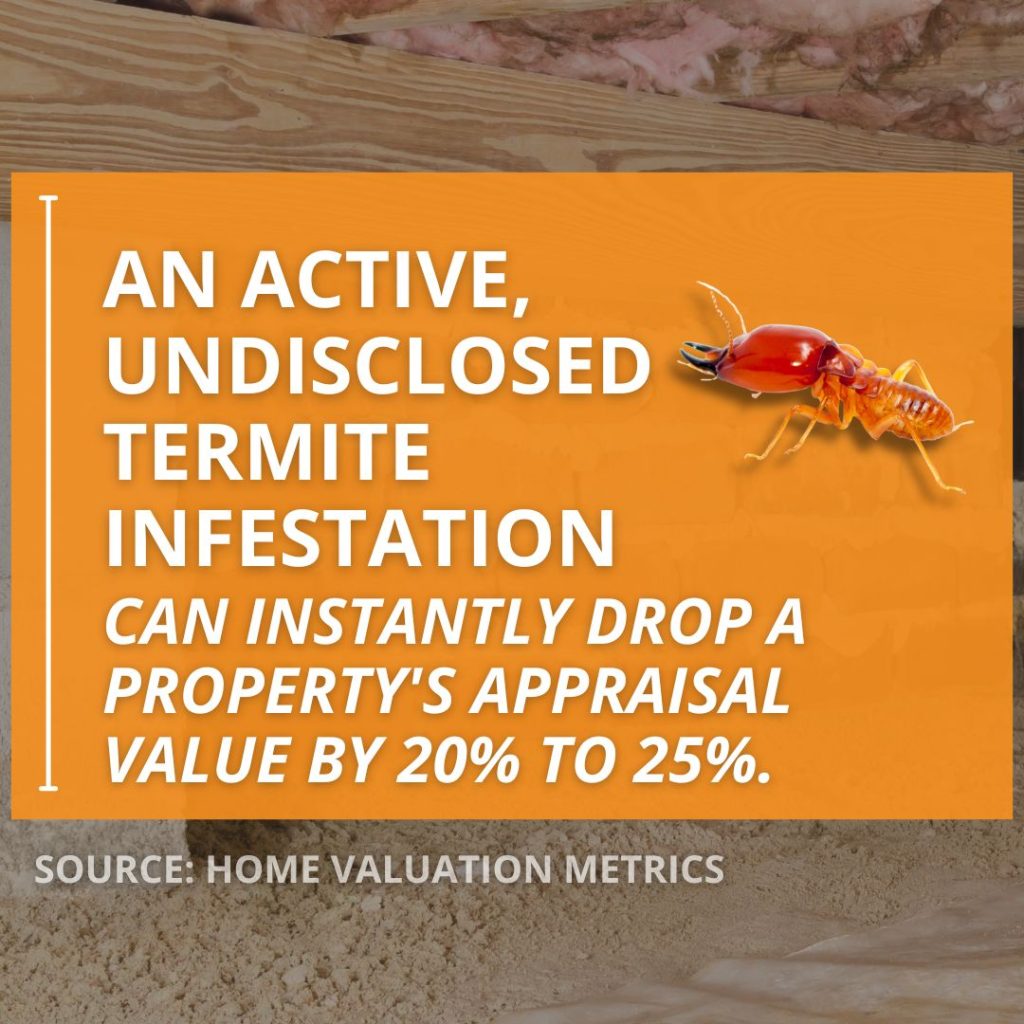
Termites cause more than $5 billion in property damage across the United States every year. And here in Central Florida, our warm, humid climate makes us one of the most termite-active regions in the country. These pests work silently behind walls, under floors, and inside wood structures, often causing significant damage before homeowners notice anything wrong.
The good news is that termites leave clues. Knowing what signs to look for helps you catch an infestation early, before repair costs spiral out of control.
Whether you’re a longtime local homeowner or buying your first place in Central Florida, understanding termite warning signs protects your biggest investment.
Are Central Florida Homes at High Risk?
Termites thrive in warm, moist environments, which makes Central Florida ideal termite territory. Our subtropical climate, frequent afternoon rain showers, and high humidity create perfect conditions for colonies to flourish year-round.
Factors that increase termite risk in our area:
Climate: Warm temperatures allow termites to remain active all 12 months
Soil conditions: Sandy Florida soil is easy for subterranean termites to tunnel through
Moisture: Humidity and rain create the damp wood that termites prefer
Mature landscaping: Established trees and mulch beds near homes provide food sources and pathways
Homes throughout the Central FL region face consistent termite pressure, making regular vigilance essential.
Common Signs of Termites in Your Home
Termites are secretive by nature. They avoid light and open air, which means you’re unlikely to see the insects themselves until an infestation is well established. Instead, look for these telltale signs.
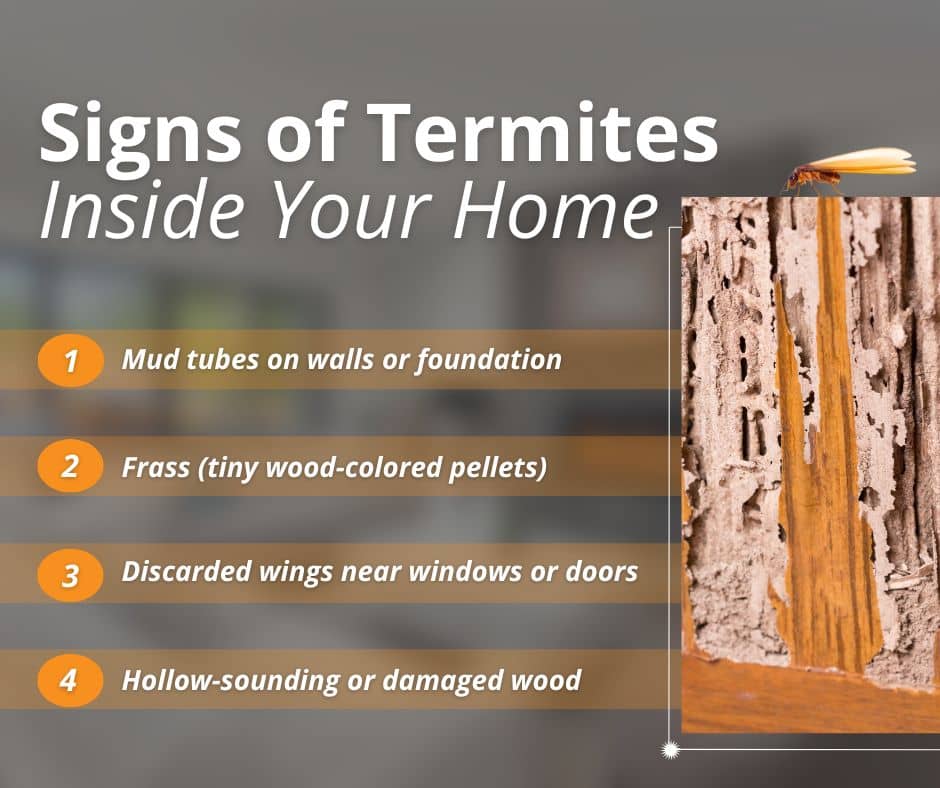
Mud Tubes on Walls or Foundation
Subterranean termites, the most common and destructive type in Florida, build pencil-sized mud tubes to travel between their underground colonies and food sources. These tubes protect them from predators and dry air.
Check your foundation walls, crawl spaces, and areas where concrete meets wood. Mud tubes may appear on interior or exterior walls, often in corners or along pipes where they’re less noticeable.
Discarded Wings Near Windows and Doors
Termite swarmers, the reproductive members of a colony, emerge to mate and start new colonies. After landing, they shed their wings. If you or your inspector find small piles of translucent wings near windowsills, door frames, or light fixtures, that indicates termites are nearby.
In Central Florida, swarm season typically peaks in spring, though our warm climate can trigger swarms almost any time of year.
Hollow-Sounding or Damaged Wood
Termites eat wood from the inside out, leaving a thin outer shell intact. Tap on wooden baseboards, door frames, and window sills. If they sound hollow or papery rather than solid, termites may have been feeding inside.
Drywood termites, also common in Florida, push their droppings out of small holes near their nests. These droppings, called frass, look like tiny wood-colored pellets or sawdust piles.
Finding frass near wooden furniture, door frames, or window areas indicates drywood termite activity. Unlike subterranean termites that stay connected to soil, drywood termites live entirely within the wood they consume.
Stuck Doors and Windows
As termites consume wood around door and window frames, the structural changes can cause frames to warp. If doors or windows that previously operated smoothly now stick or won’t close properly, termites could be the culprit.
Of course, Florida’s humidity also causes wood to swell seasonally. But if sticking is combined with other warning signs, termite damage becomes more likely.
Subterranean vs. Drywood Termites in Florida
Central Florida homeowners need to watch for two main termite types. Understanding their differences helps you recognize signs specific to each.
Characteristic
Subterranean Termites
Drywood Termites
Colony location
Underground, in soil
Inside wood, no soil contact needed
Entry point
Foundation, ground contact
Can occur anywhere, often in furniture or framing
Telltale sign
Mud tubes
Frass pellets
Damage pattern
Any exposed wood, often on the upper floors
Can occur anywhere, often furniture or framing
Colony size
Large (up to millions)
Smaller (thousands)
Moisture needs
High (requires soil contact)
Lower (extracts moisture from wood)
Both types cause serious damage, but subterranean termites typically work faster due to larger colony sizes. At CFBI, we find that many Central Florida homes face pressure from both species simultaneously.
What to Do If You Spot Signs of Termites
Discovering potential termite evidence is alarming, but quick action limits damage. Here’s what to do.
Don’t disturb the area. Your instinct might be to poke at mud tubes or damaged wood, but disturbing termites can cause them to relocate and continue feeding elsewhere in your home.
Document what you found. Take photos of mud tubes, frass, damaged wood, or discarded wings. Note the location and when you discovered it. This information helps inspectors assess the situation.
Schedule a professional inspection. A qualified WDO (wood-destroying organism) inspector can identify termite species, locate colony activity, and assess damage extent. This inspection goes beyond what’s visible to untrained eyes.
Get multiple treatment quotes. If termites are confirmed, obtain estimates from licensed pest control companies. Treatment options vary based on termite type, infestation severity, and your home’s construction.
Address moisture issues. Termites need moisture to survive. Fixing leaky pipes, improving drainage, and ensuring proper ventilation make your home less hospitable to future infestations.
How Do Professional Termite Inspections Work?
A WDO inspection is a thorough evaluation specifically designed to detect termites and other wood-destroying organisms like carpenter ants, wood-boring beetles, and wood-decay fungi.
Inspectors use specialized tools, including moisture meters, probing devices, and sometimes thermal imaging, to detect hidden activity. We know where termites typically enter Central Florida homes and focus attention on high-risk areas.
After the inspection, you’ll receive a detailed report documenting any evidence of current or previous termite activity, visible damage, and conditions conducive to future infestations.
Preventing Future Termite Problems
Once you’ve addressed an active infestation or confirmed your home is clear, prevention becomes the priority.
Reduce wood-to-soil contact. Keep mulch, firewood, and debris at least 12 inches away from your foundation. Ensure wooden siding, lattice, and door frames don’t directly contact the ground.
Control moisture around your home. Fix leaky faucets, air conditioners, and irrigation systems promptly. Ensure gutters drain away from the foundation and that crawl spaces are properly ventilated.
Seal entry points. Caulk cracks in your foundation and gaps around utility penetrations. While termites can breach most barriers eventually, eliminating easy entry points helps.
Schedule regular inspections. Annual WDO inspections catch new activity before it becomes a major problem. In Central Florida’s high-risk environment, this preventive step is well worth the investment.
Consider ongoing treatment plans. Many pest control companies offer monitoring and baiting systems that provide continuous protection. These can be especially valuable for homes with a previous termite history.
Other Related Questions for Florida Homes
What’s the difference between a WDO inspection and a full home inspection? A WDO inspection focuses specifically on wood-destroying organisms like termites, carpenter ants, and wood-decay fungi. A comprehensive home inspection evaluates all major systems, including roofing, electrical, plumbing, HVAC, and structural components. Many buyers schedule both to get a complete picture of a property’s condition.
How does moisture affect a home’s structure beyond attracting termites? Excess moisture leads to mold growth, wood rot, foundation issues, and poor indoor air quality. Florida’s humidity makes proper ventilation, drainage, and waterproofing essential. Addressing moisture problems protects against multiple threats, not just termites.
Should I get an inspection before buying a home in Florida? Absolutely. A pre-purchase home inspection reveals issues that aren’t visible during a typical walkthrough, from roof damage and electrical problems to plumbing leaks and foundation concerns. Knowing what you’re buying helps you negotiate repairs or budget for future maintenance.
When to Call a Professional
Schedule a WDO inspection with CFBI if you notice:
Mud tubes on your foundation or walls
Piles of discarded wings indoors
Frass pellets near wood surfaces
Hollow-sounding wood or visible damage
Doors and windows that suddenly stick
Any signs during the spring swarm season
Even without visible signs, annual inspections make sense for Central Florida homeowners. Termites work invisibly, and catching activity early saves thousands in repair costs.
Conclusion
Termites are a fact of life in Central Florida, but serious damage doesn’t have to be. Knowing what signs to watch for puts you ahead of most homeowners who don’t discover infestations until significant harm is already done.
If you’ve spotted mud tubes, frass, damaged wood, or swarmer wings, don’t wait to take action. Early detection protects your home’s structure and your wallet.
For most people in Florida, finding their home has termites instantly fills them with fear. For a homeowner trying to eradicate termites and kill them off is very difficult to do. The only successful way to remove the the problem is have it treated by professionals. They use specialized equipment and treatments.
Termites often go unnoticed and are difficult to locate and find, hiring a professional home inspection company that includes a termite inspection as part of their services is the way to go. A professional inspector can help advise homeowners on the current damage, and the next steps to get rid of the pests and wipe them out of the home.
The subterranean termites found in Florida build their nests underground and create multiple tunnels to gain access to food sources. Unfortunately, food sources are sometimes the wood that is used in the foundation and joist holding up the house. Termites are veracious and can make easy progress through damp and dying wood.
As a homeowner it is wise to check crawl spaces and the foundation area for termite activity and presence. The key to limiting termite damage and their presence is catching it early and getting a specialist to strategize the best treatment plans.
Termites are very small and can enter your building through tiny cracks in the foundation walls and through small holes in the structure at ground level. Termites have the ability to infest any building and cause serious damage to the foundation and that can bring your house crumbling down.
If you are, in any way, concerned about the presence of termites in and around your property it would be highly recommended that you contact a local professional home inspection company. Ask about the different types of inspections they provide and if a termite inspection is included in the services.