A Zinsco panel is an older brand of electrical panel that was installed in homes mostly from the 1950s through the mid-1970s. Inspectors flag it because the breakers can fail to trip during an overload or short circuit, which can lead to overheating, arcing, and in some cases a fire.
The danger is often hidden inside the panel, so a Zinsco can look fine and still be unsafe. If one turns up on your inspection, it is not a small note to ignore. It can affect your safety, your home insurance, and your sale. Here is what a Zinsco panel is, why it gets flagged, how to spot one, and what to do next.
What Is a Zinsco Panel?
A Zinsco panel is an old brand of electrical service panel, the metal box that holds your circuit breakers and sends power to every circuit in your home.
The Zinsco brand was popular for a few decades, and the panels were common in homes built or updated from the 1950s into the mid-1970s.
The company was sold to GTE-Sylvania in 1973, and panels kept rolling out under names that still included Zinsco. Production wound down by the mid-1970s, but the panels that were already made kept getting installed for years after that. That is why you can still find them in older homes today.
Zinsco panels were installed across the country and were especially common in the Western United States, but plenty of them ended up in Florida homes too. The brand showed up under a few different labels over the years, including Zinsco, GTE-Sylvania, Sylvania, and Magnetrip. That mix of names is part of why some homeowners do not realize what they have.
The problem is not the age alone. It is a design flaw that did not become clear until electricians and home inspectors had seen enough of these panels fail.
Why Are Zinsco Panels Considered a Safety Risk?
A breaker has one job. When a circuit pulls too much power or shorts out, the breaker is supposed to trip and cut the flow before the wiring overheats. A breaker that cannot do that turns a normal electrical problem into a fire risk. That is the core issue with Zinsco panels.
Breakers That Can Fail to Trip
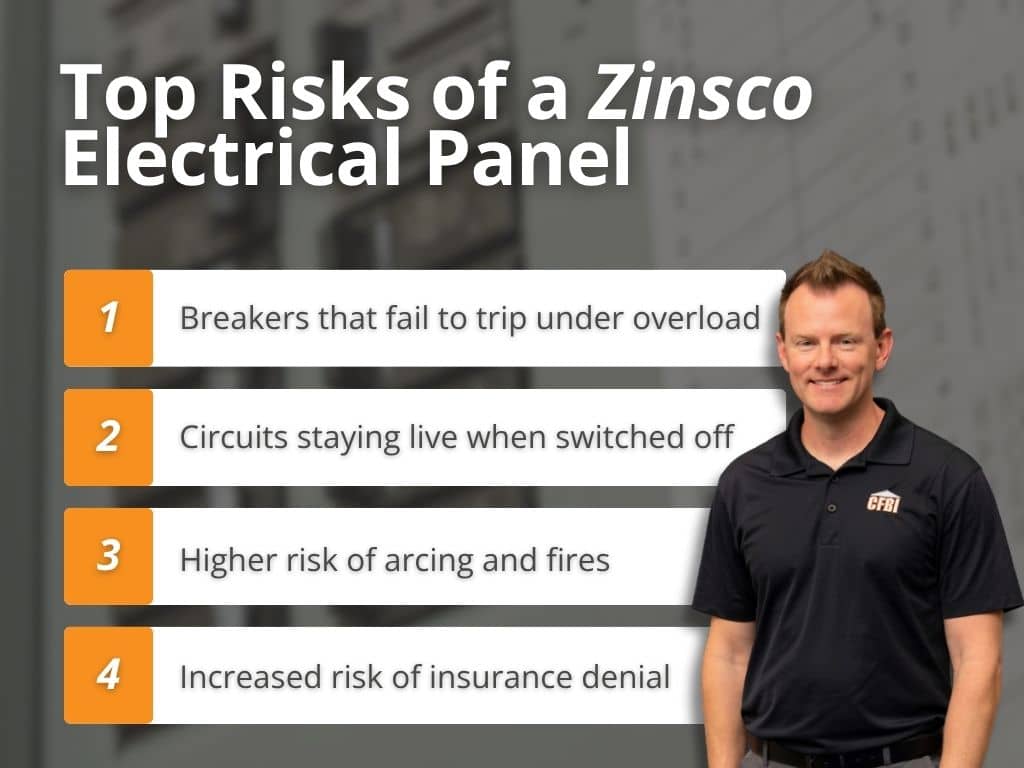
Independent testing over the years has found that a large share of Zinsco breakers failed to trip the way they should, with some lab results putting the failure rate around a quarter or more of the breakers tested. When a breaker does not trip, power keeps flowing through an overloaded circuit. The wires heat up, and that heat is what starts fires inside walls.
What makes it worse is the design of the connection. Zinsco breakers attach to the panel’s bus bar with an aluminum clip. Over time, that clip and the bus bar expand and contract with heat, and the connection can loosen or corrode. A loose or corroded connection causes arcing, which is a small electrical fire jumping across a gap. The arcing can melt the breaker and even weld it to the bus bar.
Here is the part that surprises people. Once a breaker melts to the bus bar, flipping the handle to “off” may not actually cut the power. The circuit can stay live even when it looks shut down. That is both a fire hazard and a shock hazard for anyone working on the system.
The Damage You Cannot See
You cannot judge a Zinsco panel by looking at the outside. Even with the cover off, the breakers can look normal while the real damage is happening at the connection points behind them. A panel that has worked fine for thirty years can still be one overload away from a problem.
Modern energy demands make this harder on old panels. Homes today run far more devices than they did in the 1970s, and that extra load is exactly what pushes a weak Zinsco connection past its limit. These panels also no longer meet current safety standards and would not earn today’s UL listing, which is the safety certification modern panels carry.
How to Tell If You Have a Zinsco Panel
You can do a quick visual check yourself, as long as you only look and do not touch the breakers or remove the inner cover. Leave that to a licensed electrician.
| What to look for | What it tells you |
|---|---|
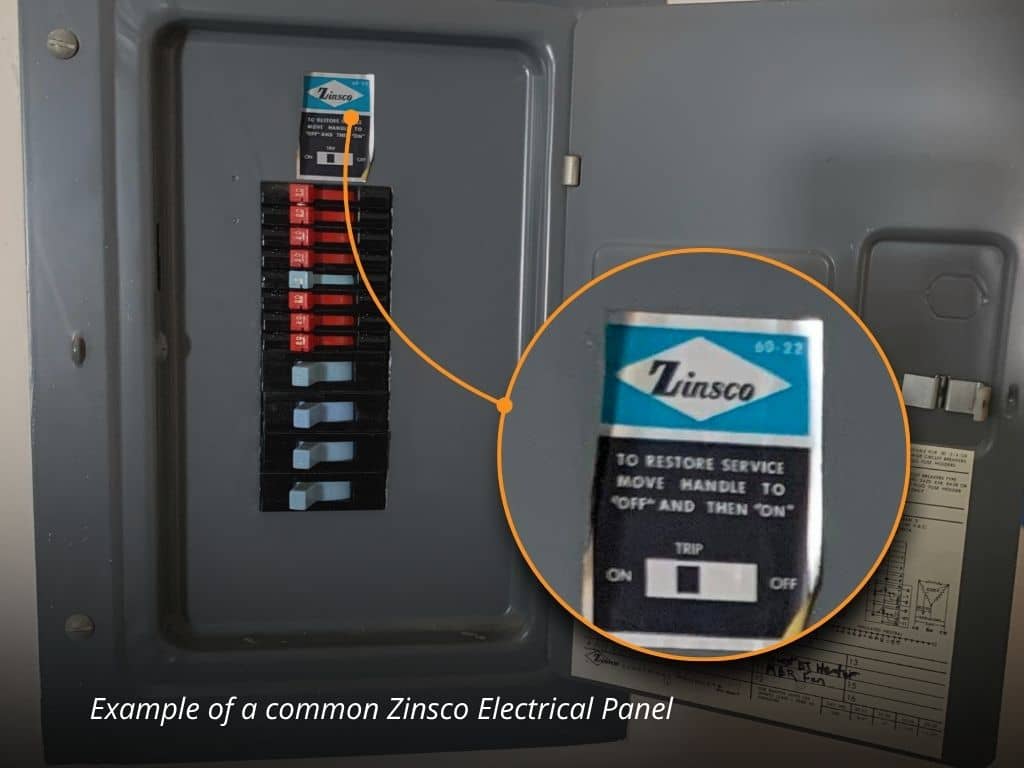
| A name on the panel door or breakers | Look for Zinsco, GTE-Sylvania, Sylvania, or Magnetrip |
| Breaker handle colors | Red, blue, and green handles are a common Zinsco sign |
| Layout | A vertical row of color-coded breaker handles down the center of the panel |
| Age of the home | Homes built or rewired from the 1950s to mid-1970s are more likely to have one |
If you spot these signs, do not start pulling breakers to investigate. The safest move is to have the panel evaluated by a licensed electrician or flagged during a professional inspection.
Why Do Home Inspectors Flag Zinsco Panels?
A home inspector will note a Zinsco panel on the report regardless of how it looks on the day of the inspection. That is not the inspector being overly cautious. It is the inspector doing the job correctly.
Two things drive that call. First, the known failure history means the panel is a recognized hazard even when it appears to be working. Second, the real danger lives inside the panel and behind the breakers, which is past the scope of a standard home inspection. An inspector can identify the brand and the risk, but confirming the internal condition takes a licensed electrician.
So the report will name the panel, explain the risk, and recommend a licensed electrician evaluate it. If you are buying the home, that note gives you room to ask questions and negotiate before you close. A thorough Orlando home inspection is built to catch exactly this kind of hidden issue. CFBI inspections also include infrared thermal imaging as part of our building inspection services, which can reveal heat building up in an electrical panel before it ever shows on the surface.
This is the same reason inspectors flag other problem panels. There are similar reasons why a Federal Pacific panel gets flagged during inspections, and the logic is nearly identical: a known design flaw that you cannot confirm from the outside.
What a Zinsco Panel Means for Your Florida Home Insurance
This is where a Zinsco panel hits hardest in Florida, and it is the part many homeowners do not see coming.
If your home is 20 years or older, your insurer will usually require a 4-point insurance inspection before they write or renew a policy. That inspection looks at four systems: roof, plumbing, HVAC, and electrical. On the electrical side, insurers specifically watch for known problem panels like Zinsco and Federal Pacific. A Zinsco panel is one of the findings that can get a policy denied or non-renewed.
For many carriers, a Zinsco panel is a hard stop. Some will refuse to write a new policy until the panel is replaced. Others may non-renew an existing policy once they learn about it. And if a panel goes unreported and later causes a fire, there is a real chance the claim gets denied.
Here is how that plays out in a sale:
- The buyer’s inspection or 4-point flags the Zinsco panel.
- The buyer tries to line up home insurance, and the carrier balks at the panel.
- No insurance means no mortgage, because lenders require coverage to close.
- The deal stalls until the panel is replaced or the parties renegotiate.
A Zinsco panel can quietly derail a closing even when the rest of the home is in great shape. Catching it early, before you are days from the closing table, is what keeps it from becoming an emergency.
What to Do If an Inspection Finds a Zinsco Panel
Do not panic, and do not try to fix or inspect it yourself. The next steps are straightforward.
- Get a licensed electrician to evaluate it. They can confirm the internal condition and lay out your options. Many will do a safety check at little or no cost.
- Plan for replacement, not repair. Because of the design flaw, the standard recommendation is to replace a Zinsco panel with a modern, UL-listed one rather than patch it. Replacement cost commonly runs from about $1,500 to $4,000 or more, depending on the amperage and what it takes to bring the system up to current code. Your electrician gives the real number.
- Use it in your negotiation. If you are buying, a flagged panel is a fair point to raise with the seller on price or repairs.
- Tell your insurer the truth. Once the panel is replaced with a compliant one, you clear the insurance hurdle and remove the hazard at the same time.
When to Call a Pro
Call a licensed electrician any time a Zinsco panel is confirmed or suspected. They are the only ones who should open the panel, test the breakers, or handle a replacement. Electrical panels carry serious shock and arc risk, and a Zinsco panel can be live even when it reads as off.
Call a professional home inspector before you buy an older Central Florida home, or before you list one. An inspection identifies a Zinsco panel and the other hidden issues that affect safety, insurance, and value, so you find out early instead of at the closing table. You can meet our licensed inspectors and see the certifications behind every CFBI report.
Related Questions
How can I tell if I have a Zinsco panel?
Open the outer door of your panel and look for the name Zinsco, GTE-Sylvania, Sylvania, or Magnetrip on the label or breakers. Red, blue, and green breaker handles in a vertical row down the center are another common sign. Do not remove the inner cover or touch the breakers. Leave that to an electrician.
Are Zinsco panels illegal?
No, they are not illegal to own, and there was never a formal recall. But they no longer meet current safety standards and are no longer approved for sale to the public, which is why inspectors flag them and insurers often require replacement.
Will a Zinsco panel fail a home inspection?
A home inspection does not pass or fail a home. It reports conditions. A Zinsco panel will be noted as a safety concern with a recommendation to have a licensed electrician evaluate and likely replace it. On a 4-point inspection for insurance, a Zinsco panel can be the finding that gets a policy denied.
Does a Zinsco panel affect home insurance in Florida?
Yes. Many Florida insurers will not write or renew a policy on a home with a Zinsco panel, and they watch for it on the 4-point inspection required for older homes. Replacing the panel usually clears the issue.
How much does it cost to replace a Zinsco panel?
Replacement commonly ranges from about $1,500 to $4,000 or more, depending on the amperage of the new panel and whether the system needs updates to meet current code. A licensed electrician can give you an exact quote.
Conclusion
A Zinsco panel is an outdated electrical panel with a known design flaw that can keep its breakers from tripping when they should. Inspectors flag it because the risk is real and hidden, and Florida insurers treat it as a serious red flag that can stall a sale. The good news is that it is a fixable problem once you know it is there.
If you are buying or selling an older home in the Greater Orlando area, the smartest move is to have it checked by a licensed, certified team before a hidden panel becomes a closing-day surprise.
Contact CFBI to schedule your inspection and get a clear, detailed report you can act on.